Compare 576 Travel Destinations
173 of 576 guides match

Prague
Czech Republic
Prague is a fairy-tale city that somehow survived centuries of war intact. Gothic spires, baroque palaces, and art nouveau facades line cobblestone streets. The beer is world-class and cheaper than water, the food is hearty and satisfying, and the Charles Bridge at dawn is one of Europe's most magical experiences.

Provence
France
The first Roman province outside Italy (Provincia Romana, 121 BCE) and the lavender-and-ochre southeast of France — a region rather than a single city, comprising Avignon's Palais des Papes (the largest Gothic palace in Europe, seat of seven popes 1309–1376), Aix-en-Provence's plane-tree boulevards and Cézanne's Mont Sainte-Victoire, and the Luberon hill villages of Gordes, Roussillon, Bonnieux, and Ménerbes. The Plateau de Valensole's 800 km² of cultivated lavender produces half of France's crop and peaks for three weeks in late June through mid-July; outside that window the fields are green or dormant. Roman engineering survives at the Pont du Gard aqueduct and the Arles Arena (still hosting bullfights), and Europe's deepest canyon — the 700-metre Verdon Gorge — runs 25 km through limestone with a turquoise river at the bottom. Gateway airport: Marseille (MRS).

Pula
Croatia
The biggest city on Croatia's Istrian peninsula, anchored by the Pula Arena — the 6th-largest surviving Roman amphitheatre on earth and one of only six anywhere with all four side towers still standing. Built in the 1st century under Vespasian, the limestone oval still hosts summer concerts and the Pula Film Festival every July. Around it sit the Temple of Augustus on the Forum, the Triumphal Arch of the Sergii and a working harbour. Pula is also the gateway to Brijuni Islands National Park and the heart of Istria's truffle and olive oil country. About 2 hours by car from Trieste.

Reykjavik
Iceland
The world's northernmost capital is a tiny, colorful city that punches way above its weight. Reykjavik is the base for Iceland's otherworldly landscapes — the Golden Circle, Blue Lagoon, northern lights, and glacier hikes are all accessible as day trips. The city itself has excellent restaurants, a lively bar scene, and that unmistakable Nordic cool.

Rhodes
Greece
The largest of the Dodecanese (1,400 km², 90K residents) wraps a UNESCO Old Town that’s the largest inhabited medieval town in Europe — 4 km of intact Knights Hospitaller walls, the Street of the Knights, and the Palace of the Grand Master. Plus the cliff-top Acropolis of Lindos above twin azure bays, the Valley of the Butterflies (June–September Jersey tiger moths in the millions), the Acropolis of Rhodes on Monte Smith, Mandraki Harbour where the Colossus once stood, and 220 km of beaches along both Meltemi-cooled western and calm eastern coasts.

Riga
Latvia
Latvia's capital holds the world's finest collection of Art Nouveau architecture — over 800 buildings along Alberta iela and Elizabetes iela, designed in the early 1900s when Riga was the Russian Empire's third-largest city. The UNESCO Old Town (Vecrīga) has medieval guild halls and the House of the Blackheads; the Central Market occupies repurposed Zeppelin hangars. A Baltic gem that delivers a serious European city for budget prices.

Rome
Italy
The Eternal City layers 2,800 years of history into a living, breathing metropolis. Ancient ruins sit alongside Renaissance palaces and bustling trattorias. Rome rewards slow exploration — every alley reveals a hidden piazza, a crumbling fountain, or a neighborhood trattoria serving the best carbonara you've ever had.

Rothenburg ob der Tauber
Germany
Germany's best-preserved medieval walled town — a 11,000-person Bavarian time capsule sitting on a hilltop above the Tauber River, surrounded by an unbroken 2.5 km circuit of 14th-century ramparts you can walk in their entirety. The Plönlein corner (a half-timbered house wedged between two gate towers) is one of Europe's most-photographed viewpoints. The Käthe Wohlfahrt Christmas Museum runs year-round, the Schneeballen pastries are unique to the town, and the Romantic Road threads through. By night, after the day-trip buses leave for Munich and Nuremberg, the town belongs to a few hundred overnight guests and the Nightwatchman tour.

Rotterdam
Netherlands
Europe's largest port and one of the world's great modern architecture cities — bombed flat in 1940 and rebuilt as a laboratory of 20th and 21st-century design. Piet Blom's Cube Houses, MVRDV's Markthal (Europe's largest food market hall), the Erasmus Bridge (nicknamed 'the Swan'), and the SS Rotterdam ocean liner form an architectural tour unlike any other European city.

Rovaniemi
Finland
The official capital of Finnish Lapland, straddling the Arctic Circle line (66°33'N) — home to Santa Claus Village with Santa's official post office, the Arktikum Arctic research museum, and Ranua Wildlife Park with polar bears and lynx 2 hours south. Aalto-designed post-WWII city plan after 1944 razing. Aurora visible September to March, midnight sun in June–July, and a dense menu of reindeer and husky safaris. Accessible from Helsinki by 1hr flight or 8hr overnight VR sleeper train.

Salamanca
Spain
Salamanca is the golden city — a small UNESCO old town in Castilla y León built almost entirely from Villamayor sandstone that turns honey-orange at sunset. The University of Salamanca (founded 1218) is Spain's oldest and the third-oldest in continuous operation in Europe; the 18th-century Plaza Mayor is regularly cited as Spain's most beautiful square; the carved facade of the old university hides the famous frog-on-a-skull that students must spot to pass exams. Half the population are students, which gives a town of 145,000 the bar density of a city three times its size.

Salzburg
Austria
Mozart's birthplace is a Baroque masterpiece nestled against Alpine peaks. The Altstadt (Old Town) is a UNESCO site of domes, spires, and elegant plazas, while the Hohensalzburg Fortress towers above. Sound of Music fans will recognize the surroundings, but Salzburg's real draw is its combination of culture, mountain scenery, and Austrian charm.

San Sebastián
Spain
Europe's pintxos capital with the highest density of Michelin stars per capita. La Concha beach is one of the continent's finest, and Basque culture adds a unique flavor to everything.

Santorini
Greece
Santorini is the Greek island of dreams — whitewashed villages clinging to volcanic cliffs above a sapphire caldera. Oia's sunset is legendary, Fira's clifftop bars are unforgettable, and the black sand beaches are unlike anywhere else. Visit the ancient Akrotiri ruins, taste Assyrtiko wine, and take a boat trip to the volcanic hot springs.

Sarajevo
Bosnia and Herzegovina
The city where WWI started (Latin Bridge, 1914) and where the longest siege of a modern capital ended (1,425 days, 1992–1995). Ottoman Baščaršija bazaar, the Gazi Husrev-bey Mosque, the War Tunnel Museum, and the haunting War Childhood Museum sit in a valley where Orthodox, Catholic, Muslim, and Jewish monuments stand within 400 metres of each other — "Jerusalem of Europe." The 1984 Winter Olympics ski slopes are 45 minutes away.

Sarandë
Albania
Sarandë is the southern anchor of the Albanian Riviera — a horseshoe bay of pebble beach and pastel apartment blocks staring across 18 km of Ionian Sea at the Greek island of Corfu. From the hilltop Lëkurësi Castle (a 30-minute climb or a €5 taxi) you get the photogenic two-bay sunset; from the harbour ferries cross to Corfu in 30 minutes (€19, multiple daily); and from the bus station the Ksamil islets (turquoise coves, swim-out distance) and the UNESCO Butrint ruins (Greek-Roman-Byzantine-Venetian, 2,500 years of city stacked on an island) are 15 and 25 minutes south. The town itself is honest about being a beach resort first — most architecture is post-1991 — but the location is hard to beat in Europe at €60/day all-in.

Sardinia
Italy
The Mediterranean's second-largest island after Sicily, sitting halfway between Italy and Tunisia and reached in an hour by air from Rome or Milan. The northeast Costa Smeralda, developed by the Aga Khan and Berlusconi-era investors, is one of Europe's premier yachting strips, with turquoise water that fades from emerald to deep blue against pink granite headlands. Cagliari, the southern capital, climbs from a working port up to the Bastione di Saint Remy. Inland, more than 7,000 prehistoric nuraghi stone towers from the Bronze Age are scattered across the hills, and pasta sa malloreddus with pecorino sardo defines the table.

Scottish Highlands
United Kingdom
The Scottish Highlands are raw, wild, and hauntingly beautiful — ancient mountains, deep lochs, and vast empty landscapes stretching to the horizon. Drive the NC500 coastal route, hike in Glen Coe, visit the Isle of Skye, and sample single malt whisky at the source. One of Europe's last great wildernesses.

Seville
Spain
Seville is Spain at its most passionate — flamenco, tapas, orange trees, and a cathedral that took a century to build. The Alcazar palace rivals the Alhambra, the barrio of Santa Cruz is endlessly wanderable, and the energy of Feria de Abril and Semana Santa processions is electric. Extremely hot in summer but magical in spring and fall.

Sibiu
Romania
The most polished of the seven Saxon walled cities of Transylvania — a UNESCO-listed medieval centre founded by German colonists in 1190 and stitched together by tiered Upper Town and Lower Town squares connected by the Liars' Bridge. The houses with the famous narrow attic windows, the eyes of Sibiu, peer down from terracotta rooftops onto Piata Mare. The Brukenthal National Museum, opened in 1817, is one of the oldest in Eastern Europe; ASTRA, on the southern outskirts, is the largest open-air ethnographic museum in Europe. Sibiu was the 2007 European Capital of Culture and has stayed at that level since.

Sighișoara
Romania
The only inhabited fortified medieval town in southeastern Europe still in continuous use — a UNESCO World Heritage citadel of cobbled lanes, pastel Saxon townhouses, and nine surviving guild towers wrapped around the hilltop above the Tarnava Mare valley. The Clock Tower's hour-marking automatons have rotated since 1648, the covered wooden Scholars' Stairs from 1642 climb 175 steps to the Church on the Hill, and the ochre house at Strada Cositorarilor 5 is the registered birthplace of Vlad the Impaler in 1431. Two and a half hours by train from Brasov puts you inside the walls by lunch.

Sintra
Portugal
A UNESCO Cultural Landscape of romantic palaces perched above Atlantic mist — the yellow-and-terracotta Pena Palace (1854) crowns a forested hill; the Quinta da Regaleira hides an Initiation Well that spirals 27 meters through 9 floors into the earth; Cabo da Roca is the westernmost point of continental Europe. Sintra is 40 minutes by train from Lisbon and frequently its most memorable day trip.

Skopje
North Macedonia
North Macedonia's capital and Europe's cheapest, where the controversial Skopje 2014 government project blanketed the centre in giant marble statues, neoclassical facades and bridges of warriors over the Vardar river. Cross the 15th-century Stone Bridge into the Old Bazaar — the largest surviving Ottoman-era bazaar in the Balkans outside Istanbul, a warren of caravanserais, hammams, mosques and copper-beating workshops. Mother Teresa was born here in 1910 and her birthplace is marked with a memorial house. The Mt Vodno cable car climbs to the world's largest standing cross. Daily mid-range budget under €60.
Snæfellsnes Peninsula
Iceland
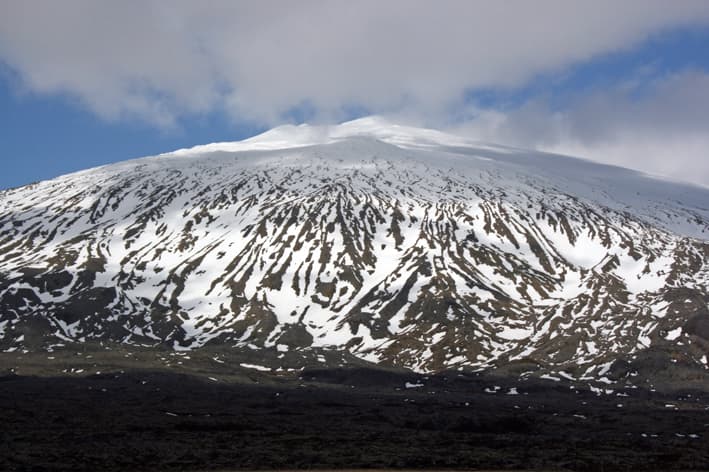
A 90 km finger of land on Iceland's west coast nicknamed "Iceland in miniature" — glacier-volcano Snæfellsjökull at the tip, lava fields, black-pebble beaches, basalt cliffs, the cone of Kirkjufell rising over Grundarfjörður, and the tiny black church of Búðakirkja standing alone on a moss field. Two hours and 190 km from Reykjavík via the Hvalfjörður tunnel; one of the most rewarding two-day drives in the country and a credible substitute for the South Coast when the queues at Reynisfjara feel like too much.