
Hoi An
THE QUICK VERDICT
By Anthony · Updated June 2026
Choose Hoi An if you want lantern-lit streets, world-class Vietnamese food, custom tailoring, and a UNESCO ancient town on bicycles.
- Best for
- lantern-lit Old Town nights, custom tailoring at Yaly, cao lau noodles, basket-boat coconut groves, An Bang beach bikes
- Best window
- Feb–May
- Budget anchor
- $80/day mid-range
- Worth a look
- My Son Cham temple ruins at sunrise feel like a private Angkor — book the 5am tour to beat tour buses
Vietnam's most charming town — a UNESCO-listed ancient trading port where lantern-lit streets meet world-class tailoring, extraordinary cuisine, and bicycle-friendly riverside life.
The two links below are affiliate links — MapSorted earns a small commission if you book through them, at no extra cost to you. How this works.
Tours & Experiences
Bookable tours, activities, and day trips in Hoi An
Where to Stay
Compare hotels and rentals in Hoi An
📍 Points of Interest
Ancient Town
UNESCO-listed historic quarter of merchant houses and assembly halls
Japanese Covered Bridge
16th-century covered bridge with small temple inside
An Bang Beach
Relaxed white sand beach with beach bars and seafood restaurants
Central Market
Bustling riverside market with fresh produce and street food
Tra Que Vegetable Village
300-year-old organic farming village with cooking classes
Cham Islands· 20 km E
UNESCO Biosphere Reserve with snorkeling and diving
★ Local Picks
Cam Thanh Coconut Village
Basket boat rides through coconut palm waterways
Banh Mi Phuong
Legendary banh mi stall recognized by Anthony Bourdain
At a Glance
- Pop.
- 120,000
- Timezone
- Ho Chi_Minh
- Dial
- +84
- Emergency
- 113 / 115
Hoi An's Ancient Town is a UNESCO World Heritage Site, recognized as an exceptionally well-preserved Southeast Asian trading port from the 15th to 19th centuries
Every full moon (14th of the lunar month), the Ancient Town switches off electric lights and illuminates the streets with thousands of silk lanterns and candles
Hoi An is Vietnam's tailoring capital — over 400 tailor shops can produce custom suits, dresses, and shoes in as little as 24 hours from high-quality fabrics
The Japanese Covered Bridge, built in the 16th century by the Japanese trading community, is the most iconic symbol of Hoi An and appears on the 20,000 VND banknote
Hoi An has its own distinct cuisine featuring dishes like cao lau, white rose dumplings, and banh mi — each unique to this town and found nowhere else in Vietnam
The Thu Bon River was once one of the busiest trading ports in Southeast Asia, connecting Hoi An to Japan, China, India, and Portugal by the 16th century
Top Sights
Ancient Town
🗼A remarkably preserved historic quarter of low-rise yellow buildings, Chinese assembly halls, Japanese merchant houses, and French colonial facades. Best explored in the golden light of late afternoon.
Japanese Covered Bridge (Cau Chua Pagoda)
📌A 16th-century covered bridge built by Japanese traders, featuring a small temple inside and ornate carvings of dogs and monkeys — the years construction began and ended in the Japanese zodiac.
Full Moon Lantern Festival
📌On the 14th of each lunar month, electric lights are switched off and the Ancient Town glows with thousands of colored silk lanterns and candle-lit paper boats on the Thu Bon River.
An Bang Beach
🏖️A beautiful stretch of white sand 4 km from the Ancient Town with a laid-back atmosphere, beach bars, and seafood restaurants. Less developed and more relaxed than nearby Da Nang beaches.
Tra Que Vegetable Village
📌A 300-year-old organic farming village where visitors can join cooking classes, harvest herbs, and learn traditional Vietnamese agricultural methods surrounded by lush green plots.
Cham Islands (Cu Lao Cham)
🌿A UNESCO Biosphere Reserve archipelago 18 km offshore, offering excellent snorkeling, diving among coral reefs, and quiet beaches. Accessible by speedboat from Cua Dai pier.
Tan Ky Old House
📌A 200-year-old merchant house open to visitors, showcasing the blend of Japanese, Chinese, and Vietnamese architectural styles that defines Hoi An. Still inhabited by the original family's descendants.
Central Market
🏪A bustling riverside market where locals shop for fresh produce, seafood, flowers, and street food. The best time to visit is early morning when fishermen bring in the day's catch.
Climate & Best Time to Go
Hoi An has a tropical monsoon climate with two distinct seasons. The dry season (February to August) brings hot, sunny weather ideal for beaches and sightseeing. The wet season (September to January) brings heavy rains and occasional flooding, especially in October and November when the Ancient Town can be partially submerged.
Dry Season
February - May72-90°F
22-32°C
Warm and increasingly hot with low rainfall. The best months for visiting — pleasant for cycling, beach days, and exploring the Ancient Town. March and April are ideal.
Hot Season
June - August77-97°F
25-36°C
Very hot and humid with intense midday sun. Still mostly dry. Best for beach time. Explore the Ancient Town in the early morning or evening. Air conditioning is essential.
Wet Season
September - November72-86°F
22-30°C
Heavy rainfall, especially October and November. The Ancient Town can flood knee-deep. Dramatic weather but challenging for sightseeing. Lowest prices and fewest tourists.
Cool Dry Season
December - January66-77°F
19-25°C
Cooler and drier after the monsoon. Occasional drizzle but mostly pleasant. Christmas and New Year bring crowds. The Ancient Town is refreshed and green after the rains.
Best Time to Visit
February through May offers the best combination of warm, dry weather and manageable crowds. March and April are ideal. Avoid October and November when heavy rains can flood the Ancient Town. The Full Moon Lantern Festival (monthly) is worth timing your visit around.
Dry & Warm (February - May)
Crowds: Moderate — busier around Easter and late AprilThe best time to visit with warm temperatures, low rainfall, and comfortable humidity. Perfect for beach days, cycling, and exploring the Ancient Town.
Pros
- + Best weather overall
- + Ideal beach conditions
- + Comfortable for cycling
- + All attractions open and accessible
Cons
- − Prices higher than wet season
- − Some crowds at peak heritage sites
- − Heating up significantly in May
Hot & Dry (June - August)
Crowds: High — summer holiday seasonVery hot and humid with intense sun. Beach weather is excellent but sightseeing in the Ancient Town is exhausting by midday. Early mornings and evenings are best.
Pros
- + Best beach weather
- + Long daylight hours
- + Dry conditions
- + Lively summer atmosphere
Cons
- − Extreme heat and humidity
- − Midday sightseeing is draining
- − Peak prices and crowds
- − Heat can be oppressive by July-August
Wet Season (September - November)
Crowds: Very lowHeavy monsoon rains, especially in October and November. The Ancient Town can flood knee to waist-deep. Dramatic but challenging. Lowest prices and fewest tourists.
Pros
- + Lowest prices of the year
- + Fewest tourists
- + Lush green landscapes
- + Dramatic skies for photography
Cons
- − Flooding risk in Ancient Town
- − Beach conditions poor
- − Some tours cancelled
- − Typhoon risk
Cool & Recovering (December - January)
Crowds: Moderate around holidays, low otherwiseThe rains ease and temperatures cool. Occasional drizzle but mostly pleasant. Christmas and New Year bring a brief spike in visitors.
Pros
- + Pleasant temperatures
- + Freshly green after monsoon
- + Good value outside holiday weeks
- + Comfortable for exploring
Cons
- − Occasional light rain
- − Holiday week prices spike
- − Some flood damage may linger
- − Cooler than expected for beach days
🎉 Festivals & Events
Full Moon Lantern Festival
14th of each lunar monthThe Ancient Town switches off electric lights and glows with silk lanterns and candle-lit paper boats on the river. The most magical night to visit Hoi An.
Tet (Vietnamese New Year)
January or February (lunar calendar)The biggest holiday in Vietnam. Hoi An is decorated with flower displays and traditional performances, but many shops close for several days.
Mid-Autumn Festival
September (lunar calendar)Children parade with lanterns through the Ancient Town, mooncakes are shared, and the streets come alive with dragon dances and performances.
Hoi An-Japan Cultural Exchange Festival
August (biennial)A celebration of the historic Japanese connection to Hoi An with cultural performances, food, and exhibitions around the Japanese Bridge.
Off the Beaten Path
Cam Thanh Coconut Village
A water coconut palm village where local fishermen take visitors on circular basket boat rides through the palm-shaded waterways, demonstrating traditional netting and singing folk songs.
The basket boat spinning trick has become a viral sensation, but visiting in the early morning before tour buses arrive reveals the village's genuine fishing community atmosphere.
Banh Mi Phuong
A legendary street food stall recognized by Anthony Bourdain as serving the best banh mi in the world. Crispy baguettes stuffed with pork, pate, herbs, chili, and pickled vegetables.
Hoi An's banh mi uses a unique bread recipe influenced by the town's history as a trading port — the crust is crispier and the fillings more complex than elsewhere in Vietnam.
Cam Kim Island
A quiet island across the Thu Bon River, home to traditional woodcarving and mat-weaving villages. Easily reached by local boat and explored by bicycle on empty village roads.
While the Ancient Town overflows with tourists, a 5-minute boat ride to Cam Kim reveals rural Vietnamese life — rice paddies, water buffalo, and artisans working in open workshops.
Morning Glory Restaurant Cooking Class
One of Hoi An's most respected cooking classes, run by chef Trinh Diem Vy. Starts with a market tour, then teaches traditional Hoi An dishes including cao lau and white rose dumplings.
Learning to make cao lau reveals why the dish is unique to Hoi An — the noodles require water from a specific ancient Cham well and lye from local wood ash.
Hidden Beach (Cua Dai to An Bang path)
A quiet stretch of beach between Cua Dai and An Bang, accessible by cycling along a sandy path through casuarina trees. Fewer tourists and local fishermen pulling in nets.
Most visitors only know An Bang or Cua Dai, but the unmarked stretches between the named beaches are where you find empty sand and authentic fishing activity.
Safety Breakdown
Very Safe
out of 100
Hoi An is one of the safest destinations in Vietnam and Southeast Asia. Violent crime against tourists is almost unheard of. The main risks are petty theft, cycling accidents, and flooding during the wet season. The local community is welcoming and tourism-dependent, making visitor safety a high priority.
Things to Know
- •Lock your bicycle when leaving it unattended — bike theft is the most common crime targeting tourists
- •Beware of motorbike bag-snatching in the evening — carry bags on your inside shoulder when walking along roads
- •Negotiate prices for tailoring clearly upfront and get written quotes — disputes over quality and pricing do occur
- •During flood season (October-November), check conditions before booking — the Ancient Town can flood waist-deep
- •Wear a helmet when cycling — Vietnamese traffic is chaotic and tourists on bikes are frequent accident victims
- •Avoid swimming at unguarded beaches during rough seas — currents can be strong, especially at Cua Dai
Natural Hazards
Emergency Numbers
General Emergency
113
Police
113
Ambulance
115
Fire Department
114
Tourist Hotline (Vietnam-wide)
1900 6469
Costs & Currency
Where the money goes
USD per dayBackpacker = hostel dorm + street food + public transit. Mid-range = 3-star hotel + neighbourhood restaurants + transit cards. Luxury = 4/5-star + fine dining + taxis. How we calibrate these numbers →
Quick cost estimate
Customize per category →Estimates based on regional averages. Flight prices vary by season and airline.
budget
$25-40
Hostel dorm, street food and market meals, free bicycle, walking the Ancient Town
mid-range
$60-100
Boutique hotel, restaurant meals, cooking class, tailor visit, Cham Islands day trip
luxury
$200+
Luxury resort (Four Seasons, Anantara), fine dining, private tours, spa, bespoke tailoring
Typical Costs
| Item | Local | USD |
|---|---|---|
| AccommodationHostel dorm bed | VND 150,000-250,000 | $6-10 |
| AccommodationBoutique hotel (double) | VND 600,000-1,500,000 | $24-60 |
| AccommodationLuxury resort | VND 5,000,000-15,000,000 | $200-600 |
| FoodBanh mi from street stall | VND 15,000-25,000 | $0.60-1 |
| FoodCao lau at market | VND 30,000-40,000 | $1.20-1.60 |
| FoodRestaurant lunch | VND 80,000-150,000 | $3.20-6 |
| FoodRestaurant dinner with drinks | VND 200,000-400,000 | $8-16 |
| FoodBia hoi (fresh draft beer) | VND 5,000-10,000 | $0.20-0.40 |
| TransportBicycle rental (per day) | VND 30,000-50,000 | $1.20-2 |
| TransportGrab to Da Nang airport | VND 250,000-350,000 | $10-14 |
| AttractionsAncient Town ticket (5 sites) | VND 120,000 | $4.80 |
| AttractionsCooking class (half-day) | VND 500,000-800,000 | $20-32 |
| AttractionsCustom suit (tailored) | VND 2,000,000-4,000,000 | $80-160 |
💡 Money-Saving Tips
- •Eat at the Central Market stalls — a bowl of cao lau costs VND 30,000 and is better than most restaurant versions
- •Most hotels offer free bicycle use — ask before renting elsewhere
- •The Ancient Town ticket covers 5 of 22 heritage sites — choose carefully and visit all five
- •Street food in Hoi An is among the cheapest and best in Vietnam — banh mi costs under $1
- •Visit during the shoulder or wet season for hotel prices up to 50% lower than peak
- •Take the local bus to Da Nang (VND 30,000) instead of a taxi (VND 300,000) for huge savings
- •Bia hoi (fresh beer) costs as little as VND 5,000 (~$0.20) — the cheapest beer in the world
- •Negotiate tailoring prices firmly — walk into 3-4 shops for quotes before committing
Vietnamese Dong
Code: VND
1 USD is approximately 25,000 VND (as of early 2026). ATMs are widely available in the Ancient Town and along the main roads (Vietcombank, Sacombank, Agribank). Most ATMs dispense up to VND 2-3 million per transaction. US dollars are sometimes accepted at hotels and tailors but at poor rates.
Payment Methods
Cash (VND) is essential for markets, street food, small shops, and local restaurants. Mid-range to upscale restaurants and tailor shops accept Visa and Mastercard. Hotels accept cards. Some places accept USD but give unfavorable rates. Mobile payments via MoMo or ZaloPay are growing.
Tipping Guide
Tipping is not traditional in Vietnam but is increasingly appreciated in tourist areas. Leaving VND 20,000-50,000 (~$1-2) or 5-10% of the bill is generous.
VND 20,000-50,000 per bag for porters. VND 30,000-50,000 per day for housekeeping is appreciated but not expected.
VND 100,000-200,000 (~$4-8) per person for group tours. More for private guides or full-day excursions.
Agree on price before the ride. A small tip of VND 20,000-30,000 for good service is appreciated.
Tipping is not expected at tailor shops — focus on negotiating a fair price upfront.
How to Get There
✈️ Airports
Da Nang International Airport(DAD)
30 km northGrab or taxi from the airport to Hoi An takes 30-45 minutes and costs VND 250,000-350,000 (~$10-14). Some hotels offer free airport pickup. No direct public bus. Shared shuttle services available for VND 110,000 (~$4.40).
✈️ Search flights to DAD🚆 Rail Stations
Da Nang Railway Station
30 km north (same as the airport)The nearest train station, 30 km north. The Reunification Express connects Da Nang to Hanoi (15-17h, VND 500,000-800,000), Hue (2.5-3h, VND 80,000-150,000), and Ho Chi Minh City (15-18h, VND 600,000-900,000). Take Grab to Hoi An from the station.
🚌 Bus Terminals
Hoi An Bus Station
Local buses connect to Da Nang (route 1, VND 30,000, every 20 min). Tourist buses and open-tour buses run to Hue (3-4h, VND 120,000-200,000), Nha Trang (10h, VND 250,000-350,000), and Ho Chi Minh City (18-20h, VND 350,000-500,000). Sleeper buses available for overnight routes.
Getting Around
Hoi An is best explored by bicycle — the Ancient Town is car-free and the flat terrain makes cycling easy. Most hotels provide free or cheap bike rentals. For trips to the beach, Tra Que village, or Da Nang, grab a taxi or use the Grab ride-hailing app.
Bicycle
Free from most hotels or VND 30,000-50,000/day (~$1.20-2) rentalThe quintessential Hoi An transport. Most hotels provide free bikes or rent them for a few dollars per day. The flat terrain and short distances make cycling ideal. The Ancient Town is pedestrian/bicycle only.
Best for: Exploring the Ancient Town, beach trips, Tra Que village, and Cam Thanh coconut village
Motorbike Rental
VND 100,000-150,000/day (~$4-6)Available from shops throughout town. Automatic scooters are easy to ride. An international driving permit with motorcycle endorsement is technically required but rarely checked.
Best for: Day trips to My Son, Marble Mountains, or the Hai Van Pass
Grab / Taxi
VND 250,000-350,000 (~$10-14) Hoi An to Da Nang airportGrab (ride-hailing app) is widely available and the most reliable way to get between Hoi An and Da Nang. Mai Linh and Vinasun are reputable metered taxi companies.
Best for: Airport transfers, trips to Da Nang, rainy day transport
Thu Bon River Boats
VND 50,000-150,000 (~$2-6) for river rides; VND 300,000-400,000 (~$12-16) Cham Islands speedboatTraditional wooden boats offer rides along the Thu Bon River, especially atmospheric during the Lantern Festival. Also used for transport to Cam Thanh coconut village and Cham Islands.
Best for: Lantern Festival experience, Cam Thanh basket boats, sunset river cruises
Walkability
The Ancient Town is compact, flat, and entirely walkable — you can cross it in 15 minutes. The pedestrian-only streets are pleasant for strolling, especially in the evening when lanterns glow. The beach is 4 km east and better reached by bicycle. Sidewalks outside the Ancient Town are often blocked by parked motorbikes.
Travel Connections

Hanoi
Vietnam's atmospheric capital with a chaotic Old Quarter, street food culture ranked among the world's best, Ho Chi Minh Mausoleum, and a gateway to Ha Long Bay and Sapa.

Ho Chi Minh City
Vietnam's largest, most dynamic city with French colonial landmarks, frenetic motorbike traffic, the Cu Chi Tunnels, and a thriving street food and nightlife scene.

Da Nang
A modern coastal city with the famous Dragon Bridge, Marble Mountains, My Khe beach, and the surreal Ba Na Hills theme park with the Golden Bridge held by stone hands.

Hue
Vietnam's former imperial capital with a vast Citadel, royal tombs, the Perfume River, and one of the country's most refined cuisines. The scenic Hai Van Pass connects it to Da Nang.

My Son Sanctuary
A UNESCO-listed complex of Hindu temple ruins built by the Champa kingdom between the 4th and 13th centuries. Often compared to Angkor Wat on a smaller scale.
Entry Requirements
Vietnam requires most visitors to obtain an e-visa before arrival. The e-visa system is straightforward and grants single or multiple entries for up to 90 days. Some nationalities qualify for visa-free stays of 15-45 days. Entry for Hoi An is through Da Nang International Airport.
Entry Requirements by Nationality
| Nationality | Visa Required | Max Stay | Notes |
|---|---|---|---|
| US Citizens | Yes | 90 days (e-visa) | Apply for e-visa online at least 5 business days before travel. Single or multiple entry available. Cost: $25 USD. |
| UK Citizens | Visa-free | 45 days | Visa-free for up to 45 days. For longer stays, apply for an e-visa (90 days, $25). |
| Australian Citizens | Yes | 90 days (e-visa) | E-visa required. Apply online. Processing takes 3-5 business days. |
| Canadian Citizens | Yes | 90 days (e-visa) | E-visa required. Cost: $25 USD. Passport must be valid for 6 months. |
| EU Citizens | Visa-free | 45 days | Most EU citizens enjoy 45-day visa-free entry. For longer stays, apply for an e-visa. |
| Indian Citizens | Yes | 90 days (e-visa) | E-visa required. Apply online with passport photo and scan. Cost: $25 USD. |
Visa-Free Entry
Visa on Arrival
Tips
- •Apply for the e-visa at least 5-7 business days before travel — processing can take up to 3 business days
- •Print your e-visa approval letter — you may need it at immigration even though it is electronic
- •Passport must be valid for at least 6 months from your date of entry
- •If you are visa-exempt, you must wait 30 days before re-entering Vietnam for another visa-free stay
- •Da Nang International Airport has efficient immigration — expect 15-30 minutes at passport control
Shopping
Hoi An is famous for custom tailoring, silk lanterns, and leather goods. The Ancient Town is packed with shops offering made-to-measure clothing, hand-painted ceramics, and Vietnamese art. Quality varies enormously — research specific tailors before committing and always check stitching and fit.
Tailor Row (Le Loi & Tran Phu Streets)
tailoring districtHundreds of tailor shops line these streets, offering custom suits, dresses, coats, and shoes from a wide selection of fabrics. Most can complete orders in 24-48 hours with fittings.
Known for: Custom suits from $80-150, dresses from $30-80, leather shoes from $40-100, silk ao dai (Vietnamese dress)
Central Market
traditional marketA vibrant riverside market selling fresh produce, spices, Vietnamese coffee, dried goods, and local street food. Best visited early morning.
Known for: Vietnamese coffee, spices, dried fruits, fresh produce, and the best cao lau stalls in town
Lantern Workshops (Nguyen Hoang Street)
artisan workshopsSmall workshops where artisans make the iconic Hoi An silk lanterns by hand. Visitors can join lantern-making classes and buy finished products.
Known for: Silk lanterns (collapsible for travel), lantern-making workshops, handmade paper goods
An Hoi Night Market
night marketA small night market across the river from the Ancient Town, open every evening with stalls selling lanterns, paintings, clothing, and street food.
Known for: Affordable lanterns, paintings, handicrafts, and the atmosphere of the lantern-lit riverside
🎁 Unique Souvenirs to Look For
- •Custom-tailored clothing — suits, dresses, and ao dai from Hoi An's legendary tailor shops
- •Handmade silk lanterns — many shops sell collapsible versions designed for luggage
- •Vietnamese coffee (ca phe) and traditional phin filters from the Central Market
- •Hand-painted ceramics from Thanh Ha pottery village, a short bike ride from town
- •Silk scarves and fabrics from shops along Tran Phu Street
- •Leather bags and handmade shoes from local cobblers
- •Hoi An-specific food items: cao lau noodles, white rose dumpling kits, and local spice mixes
Language & Phrases
Vietnamese uses Latin script with diacritical marks (tones). It is a tonal language with six tones, making pronunciation challenging. Most people in Hoi An's tourist areas speak basic English. Attempting Vietnamese phrases, even imperfectly, is warmly received.
| English | Translation | Pronunciation |
|---|---|---|
| Hello | Xin chao | sin CHOW |
| Thank you | Cam on | kahm UHN |
| Yes / No | Vang / Khong | vahng / kohm |
| How much? | Bao nhieu? | bow NYEW? |
| Too expensive! | Dat qua! | daht KWAH! |
| Delicious! | Ngon qua! | ngon KWAH! |
| Sorry / Excuse me | Xin loi | sin LOY |
| I don't understand | Toi khong hieu | toy kohm HEE-oo |
| Where is...? | O dau...? | uh DOW...? |
| The bill, please | Tinh tien | tin TEE-en |
| Beautiful | Dep qua | dep KWAH |
| Cheers! | Mot, hai, ba, yo! | moht, hi, bah, YO! |
If you like Hoi An, you'll love…
4 cities with a similar vibe, outside of the same country.
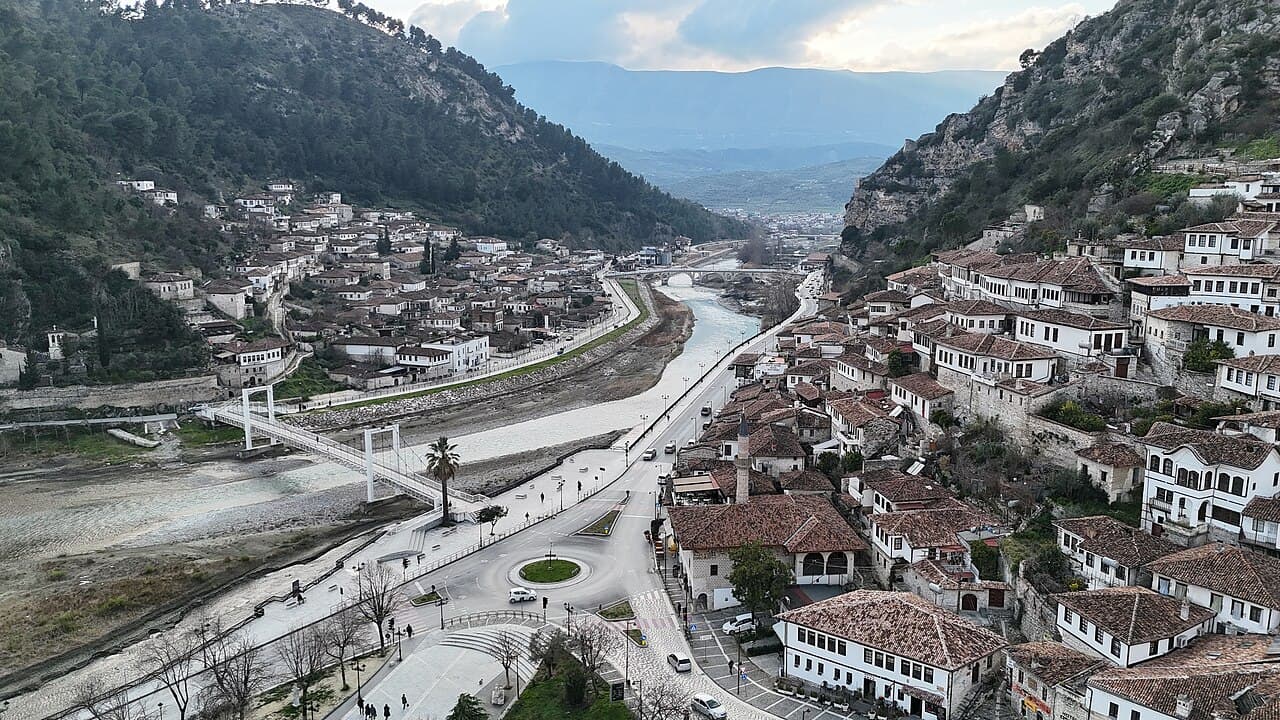
Albania · OVR 76
eminently walkable core · genuinely affordable

Laos · OVR 71
compact, pedestrian-first layout · easy on the wallet

Morocco · OVR 71
eminently walkable core · easy on the wallet

Malaysia · OVR 79
legendary food scene · eminently walkable core