
Europe
United Kingdom
Historic castles, rolling countryside, and world-class cities spanning four nations.
United Kingdom at a glance
GBP
English
$115–$300
Apr–Oct
19° / 4°C
85/100
Visa-free entry for 🇺🇸 US, 🇬🇧 UK, 🇪🇺 EU passport holders. Always confirm requirements with the embassy before booking.
Destinations in United Kingdom
9 guides available
London
United Kingdom
London is a city of villages — each neighborhood has its own personality, from the royal grandeur of Westminster to the edgy markets of Camden and the hipster cafes of Shoreditch. World-class museums (most free!), a legendary theater scene, and one of the most diverse food cultures on earth make it endlessly explorable.

Scottish Highlands
United Kingdom
The Scottish Highlands are raw, wild, and hauntingly beautiful — ancient mountains, deep lochs, and vast empty landscapes stretching to the horizon. Drive the NC500 coastal route, hike in Glen Coe, visit the Isle of Skye, and sample single malt whisky at the source. One of Europe's last great wildernesses.

Edinburgh
United Kingdom
Edinburgh is a city of two halves — the medieval Old Town cascading down from the Castle to Holyrood, and the elegant Georgian New Town below. The world's largest arts festival (the Fringe) takes over every August, Harry Potter was born in its cafes, and Arthur's Seat offers a proper hike without leaving the city limits.

Belfast
United Kingdom
Northern Ireland's capital has transformed from the epicenter of the Troubles into one of the UK's most vibrant cities. Titanic Belfast is the world's largest Titanic exhibition. The political murals of Falls and Shankill Roads are among the most powerful pieces of public art in Europe. The Cathedral Quarter's Victorian pubs and the covered St. George's Market are the social heart of modern Belfast.

Bath
United Kingdom
Britain's most perfectly preserved Georgian city, and the only British city designated entirely as a UNESCO World Heritage Site. The Roman Baths — a 2,000-year-old complex fed by Britain's only natural hot spring at 46°C — rank among the finest Roman remains in Northern Europe. The Royal Crescent (1767–1775), The Circus, and Pulteney Bridge (shops on both sides, one of only four in the world) form the Georgian masterwork that inspired Jane Austen, who lived here from 1801 to 1806.

Cotswolds
United Kingdom
England's largest Area of Outstanding Natural Beauty (790 sq miles) — a region of honey-coloured Jurassic limestone villages, ancient wool-trade churches, and rolling green countryside spread across Gloucestershire, Oxfordshire, Worcestershire, Wiltshire, and Warwickshire. The villages built their wealth on Cotswold Lion sheep wool from the 12th-18th centuries and the prosperity built the elaborate stone houses and 'wool churches' you see today. Bibury's Arlington Row appears inside every UK passport; Bourton-on-the-Water is the 'Venice of the Cotswolds' with the River Windrush flowing through the village green; Castle Combe is regularly named Britain's prettiest village; and the 102-mile Cotswold Way long-distance trail threads from Chipping Campden to Bath. Add Daylesford organic farm shops, Highgrove (King Charles III's home), and the antique capitals of Stow and Tetbury — and you have the most concentrated rural England in the country.
Lake District
United Kingdom
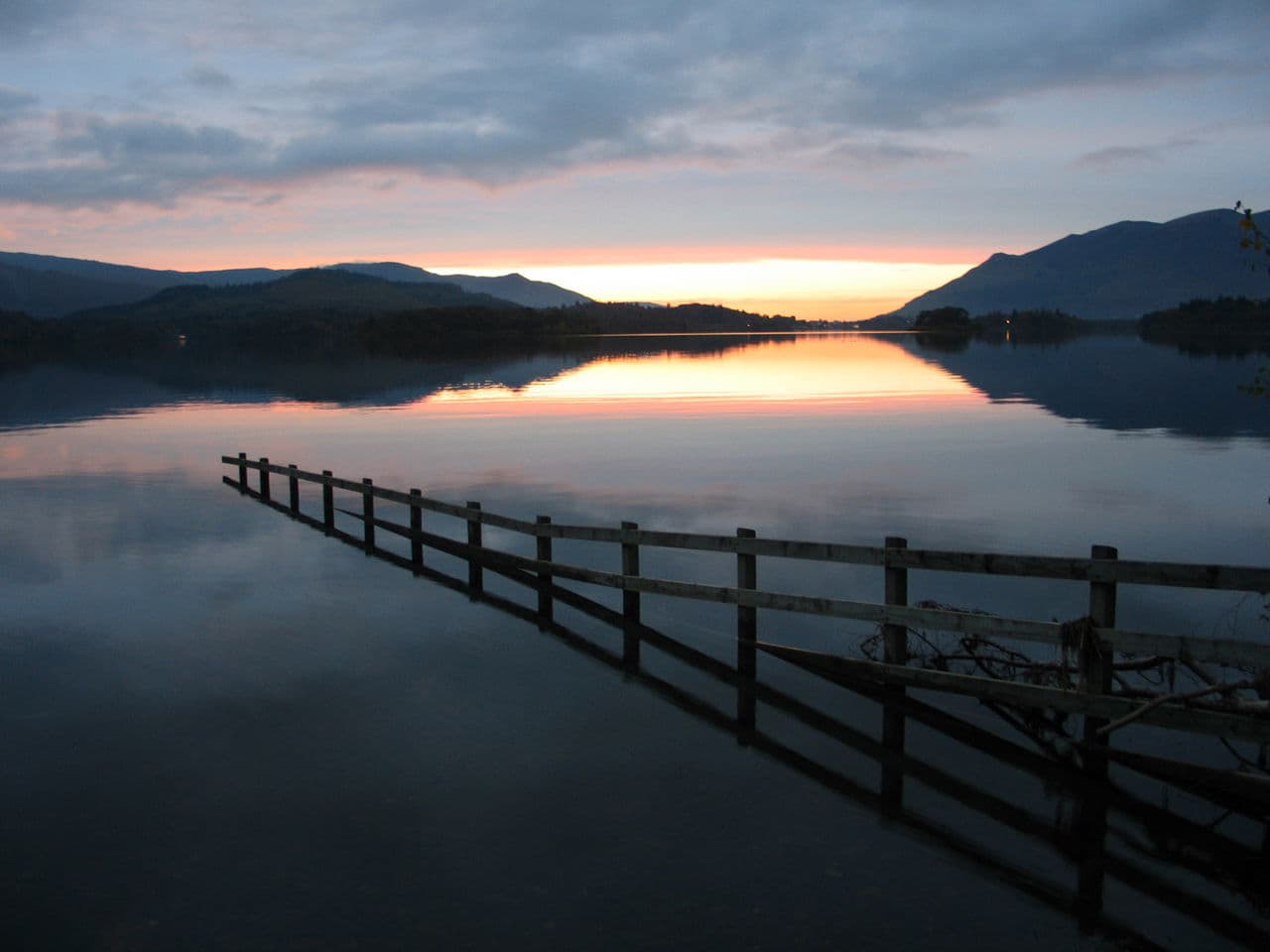
The UK's largest national park (2,362 km²) and a UNESCO World Heritage Site since 2017 — a glacier-carved Cumbrian landscape of slate-grey peaks, ribbon lakes, and dry-stone-walled fell farms. Despite the name, only Bassenthwaite Lake is technically a 'lake'; the rest are 'meres' (Windermere, Buttermere, Grasmere) or 'waters' (Derwentwater, Ullswater, Coniston Water) — Old Norse and Anglo-Saxon remnants. Scafell Pike (978 m) is England's highest mountain, a serious 6–7 hour return walk in often atrocious weather. The Romantic poetry movement was effectively born here — William Wordsworth's Dove Cottage in Grasmere is preserved as he left it, and Beatrix Potter (Peter Rabbit royalties) bought 4,000 acres of fellside farmland over her lifetime and bequeathed every acre to the National Trust. Seathwaite in Borrowdale receives 3,500 mm of rain a year — the wettest inhabited place in the British Isles. Pack waterproofs even in July. Closest airport: Manchester (MAN); the train to Windermere connects via Oxenholme.

Isle of Skye
United Kingdom
The largest of the Inner Hebrides at 1,656 km², connected to mainland Scotland by the Skye Bridge since 1995 (the toll abolished in 2004 after a long civil-disobedience campaign by islanders refusing to pay). The population is just 10,000 but the island receives 600,000+ tourists a year — a 60-to-1 ratio that has caused real strain on infrastructure (Fairy Pools car-park gridlock is famous). The Old Man of Storr basalt pinnacle, the Quiraing landslip ridge, and the green Trotternish hills define the photogenic north; the Cuillin range divides into the technical Black Cuillin (gabbro and basalt, the Inaccessible Pinnacle is the only Munro requiring rock climbing) and the walkable Red Cuillin. Skye is the spiritual heartland of Gaelic Scotland — about 30% of residents have some Gaelic, and Sabhal Mòr Ostaig on Sleat is the main Gaelic-medium college. Talisker (founded 1830) on the western shore is the island's only legal distillery. Closest airport: Inverness (INV), then a 2.5-hour drive across the Skye Bridge.

York
United Kingdom
York is England's medieval time capsule — a walled city in North Yorkshire where Roman ramparts, Viking street names, and a Gothic minster the size of a small mountain coexist inside a 3.4 km loop you can walk in two hours. York Minster is the largest Gothic cathedral in northern Europe; the Shambles (15th-century overhanging timber-frame butchers' lane) was J.K. Rowling's reference for Diagon Alley; the Jorvik Viking Centre sits over the actual 10th-century Viking dig at Coppergate. It's a 2-hour direct LNER train from London King's Cross and the most visited UK city outside London.