Quick Verdict
Pick Chiang Mai for 300 Old City temples, Sunday Walking Street markets, and Asia Scenic cooking classes. Pick Railay if longtail-only access, 700 bolted climbing routes, and Phra Nang Cave decide the southern half.
🏆 Chiang Mai wins 77 OVR vs 73 · attribute matchup 1–7

Railay
Thailand
Chiang Mai
Thailand
Railay
Chiang Mai
How do Railay and Chiang Mai compare?
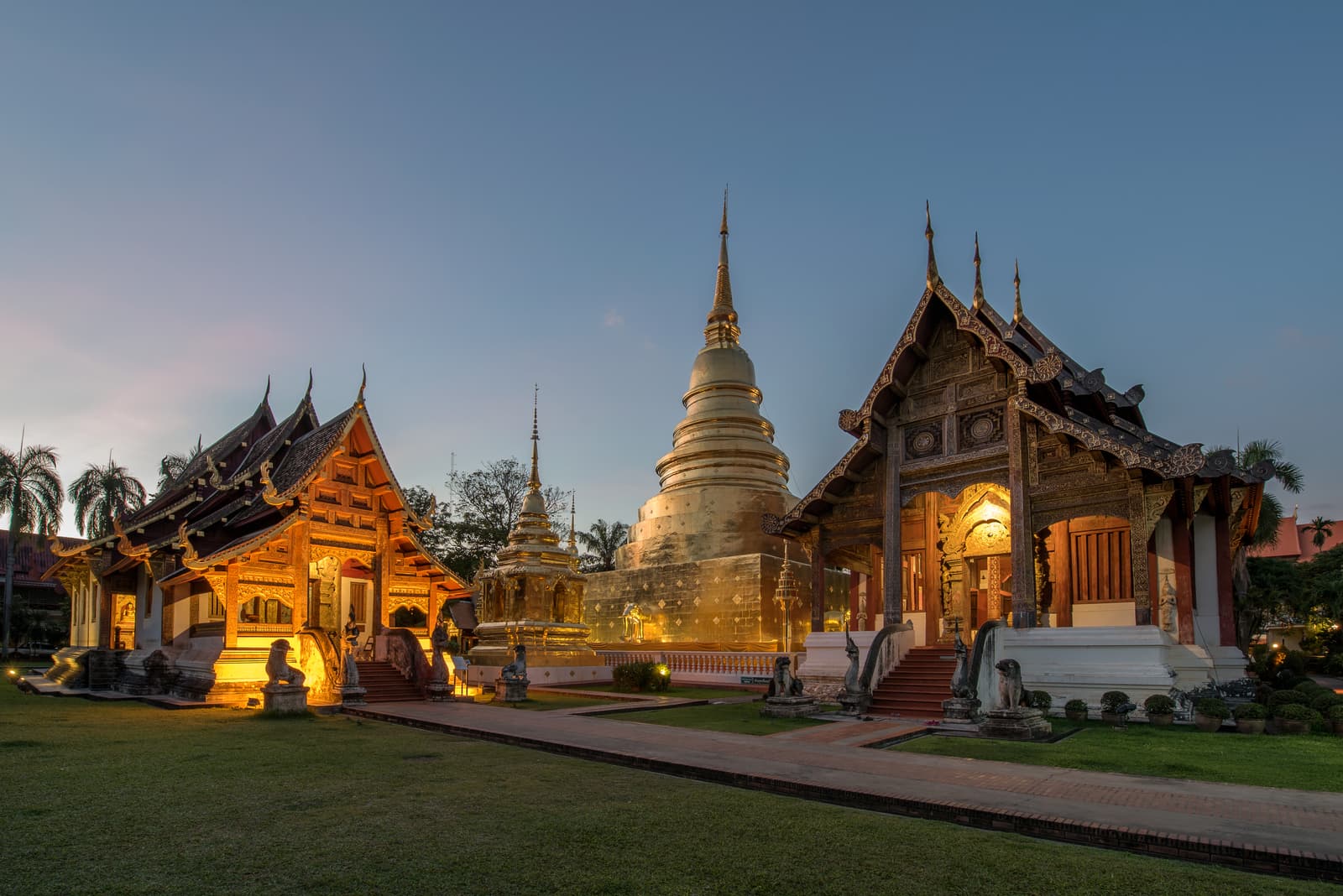
The classic North-South Thailand split. Chiang Mai is the cultural anchor of the north — a moat-enclosed Old City packed with 300 Buddhist temples, Sunday Walking Street markets that fill Ratchadamnoen Road, half-day cooking schools at Asia Scenic, ethical elephant sanctuaries an hour out, and digital-nomad cafes anchoring Nimmanhaemin. Railay is the postcard coast — a peninsula on mainland Krabi province cut off by towering limestone karsts, reached only by 10-minute longtail boat from Ao Nang, with no roads, no cars, and four beaches (West, East, Phra Nang, Tonsai) within a 15-minute walk of each other.
Mid-range budgets sit close on paper — Chiang Mai roughly $40 a day, Railay $80 — but the gap is real once you account for boat-only logistics on the peninsula. Chiang Mai has cheap street pad krapow, ¥150 Burmese-massage hours, and $25 boutique guesthouses inside the Old City walls. Railay charges a captive-audience premium for everything from beer to bottled water, and the resort range runs from $40 backpacker huts on Tonsai to $700 Rayavadee suites on Phra Nang. Chiang Mai peaks November-February when the air is cool and dry; Railay's dry season runs the same stretch through April, with monsoon May-October.
These pair beautifully — fly into Chiang Mai for four or five nights of culture and cooking, then hop the 1.5-hour AirAsia flight south to Krabi, taxi 25 minutes to Ao Nang, and longtail across to Railay for four more on the beach. Pro tip: book a Railay West Beach hotel rather than East — the West side has the swimmable sand and sunset, the East is a tidal mudflat where the boats land. Pick Chiang Mai for temples, cooking classes, mountain treks, and the slower northern-Thailand rhythm; Railay for limestone-karst beaches, world-class climbing on 700 bolted routes, and the most dramatic mainland beach landscape in Thailand.
💰 Budget
🛡️ Safety
Railay
Railay is one of the safer places in Thailand — small, contained, no roads, no road accidents (the main cause of tourist injury elsewhere in Thailand). The main risks are climbing accidents (use only certified operators), monkey aggression at Phra Nang Beach, occasional jellyfish, and the standard risk of being stranded by a sudden storm if your longtail leaves and the weather turns.
Chiang Mai
Chiang Mai is one of the safest cities in Southeast Asia for travelers. Violent crime against tourists is extremely rare, though petty theft and scams exist. The biggest health concern is air quality during burning season (February-April).
🌤️ Weather
Railay
Railay sits on Thailand's Andaman coast and follows the same monsoon pattern as Phuket — November-April is dry season (the climbing and tourist peak), May-October is wet season (frequent rain, rough seas, and some longtail boat cancellations). Temperatures stay in the 27-33°C range year-round with high humidity.
Chiang Mai
Chiang Mai has a tropical savanna climate with three distinct seasons: hot, rainy, and cool. The city sits in a valley which traps heat and, unfortunately, smoke during the burning season (February-April).
🚇 Getting Around
Railay
Railay has no roads, no cars, and no scooters — the only transport is on foot or by longtail boat. The peninsula is small enough that everything is within 15-20 minutes' walk. Longtails connect Railay East to Ao Nang (10-15 min, 150 baht each way) and Krabi Town (45 min, 200 baht). For day trips to Phi Phi, Four Islands, or distant destinations, longtails and speedboats depart from East Railay.
Walkability: Railay is one of the most walkable destinations in Thailand because there are no other options. The full peninsula is walkable in 30 minutes end-to-end. Phra Nang Beach is 10 minutes from East Railay along a flat path through the Rayavadee resort grounds. Hidden Lagoon hike is 30 minutes one-way and demanding.
Chiang Mai
Chiang Mai lacks a metro or rail system, so getting around relies on songthaews (red shared trucks), tuk-tuks, Grab ride-hailing, and rented scooters. The Old City is compact enough to walk or cycle. The city is currently building a light rail system planned for future years.
Walkability: The Old City is very walkable — roughly 1.5 km on each side — and most major temples are within easy walking distance of each other. The Nimmanhaemin area is also pedestrian-friendly. Beyond these areas, distances grow and motorized transport is needed.
📅 Best Time to Visit
Railay
Jan–Mar, Nov–Dec
Peak travel window
Chiang Mai
Jan–Feb, Nov–Dec
Peak travel window
The Verdict
Choose Railay if...
you want a no-cars Thai beach peninsula reachable only by longtail boat — limestone karst cliffs, Phra Nang Cave, Railay West sunsets, world-class rock climbing, and viewpoint hikes above turquoise water
Choose Chiang Mai if...
you want northern Thailand's temple city — Doi Suthep sunsets, Sunday Walking Street, ethical elephant sanctuaries, and Songkran soaked to the bone
Chiang Mai
You might also compare
RailayvsChiang Mai
Try another