Quick Verdict
Pick Chiang Mai for Old City moats, Doi Suthep temple roads, and Sunday Walking Street cooking schools. Pick Pai for dawn balloons over karst ridges, Pai Canyon sunsets, and bamboo bungalows above misted rice paddies.
🏆 Chiang Mai wins 77 OVR vs 68 · attribute matchup 1–6

Pai
Thailand
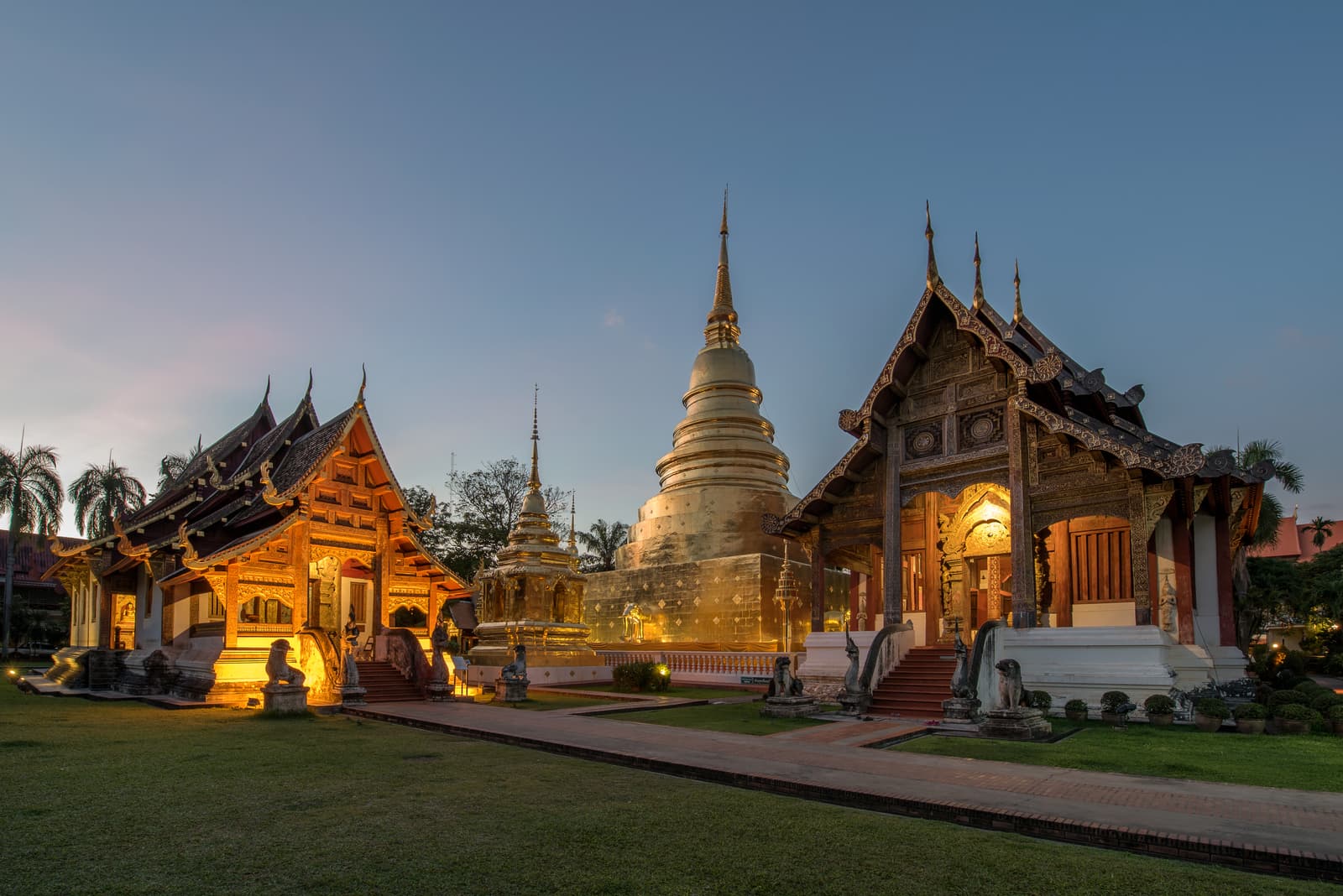
Chiang Mai
Thailand
Pai
Chiang Mai
How do Pai and Chiang Mai compare?
This one barely qualifies as a comparison because almost everyone who reaches Chiang Mai eventually pushes the extra three hours northwest to Pai. From Bangkok the chain is the same — overnight train or $40 flight to Chiang Mai (CNX), then a minivan up the 762-curve mountain road to Pai for around $5 and three queasy hours. Bring motion-sickness pills; locals are not joking about the curves. Chiang Mai is the proper city base; Pai is the hippie valley you escape to once Chiang Mai's temple circuit starts to blur.
Chiang Mai delivers depth — Old City moats, the Doi Suthep temple road, ethical elephant sanctuaries in Mae Taeng, cooking schools at Thai Farm, the Sunday Walking Street, and food scoring a flat 5 on the city scorecard. Daily mid-range budgets sit at $55. Pai is cheaper at $60 and runs on a different rhythm entirely: dawn balloons over karst ridges, the Pai Canyon at sunset, hot springs at Tha Pai, Mo Paeng Waterfall, fire shows at the walking-street market, and reggae bars where the same Bob Marley playlist has been spinning since 2003.
Both peak November through January when the north is dry and cool. Avoid February through April for both — the burning season turns the sky brown and the air genuinely hazardous. The right call for a 10-day northern Thailand trip is Chiang Mai for four nights, then Pai for two or three. Pick Chiang Mai alone if you want temples, food, and a real city. Add Pai if you want to wake up in a bamboo bungalow with mist rising off the rice paddies and zero plans for the afternoon.
💰 Budget
🛡️ Safety
Pai
Pai is a small, low-crime town where violent incidents against tourists are very rare. The main safety concerns are environmental and self-imposed: burning season air quality is a genuine health hazard, motorbike accidents on mountain roads kill and seriously injure tourists every year, and the winding approach road demands real riding skill. Treat the "Pai tattoo" (road rash from motorbike falls) as a warning — if you see half the backpackers in town bandaged, that tells you something.
Chiang Mai
Chiang Mai is one of the safest cities in Southeast Asia for travelers. Violent crime against tourists is extremely rare, though petty theft and scams exist. The biggest health concern is air quality during burning season (February-April).
🌤️ Weather
Pai
Pai sits at around 800 meters elevation in a mountain valley, giving it a noticeably cooler and more pleasant climate than Chiang Mai year-round. Mornings can be genuinely chilly in the cool season and humidity is lower than the Thai lowlands. There are three distinct seasons — and one period, February through April, that should be avoided entirely due to catastrophic air quality from agricultural burning.
Chiang Mai
Chiang Mai has a tropical savanna climate with three distinct seasons: hot, rainy, and cool. The city sits in a valley which traps heat and, unfortunately, smoke during the burning season (February-April).
🚇 Getting Around
Pai
Pai's town center is small enough to walk in 15 minutes end to end, but the best attractions — hot springs, canyon, waterfalls, viewpoints, bamboo bridges, and cave — are spread across a 15-30 km radius and require independent transport. A motorbike is essentially mandatory for a full Pai experience. There is no Grab, no metered taxi service, and songthaews are rare. If you can't or won't ride a motorbike, negotiate with a driver for full-day songthaew hire.
Walkability: Pai's town center — the Walking Street, river area, and surrounding blocks of guesthouses and cafes — is entirely walkable. However, every major attraction except the town itself requires a motorbike or hired vehicle. The town is not designed for car traffic and has no public transport network.
Chiang Mai
Chiang Mai lacks a metro or rail system, so getting around relies on songthaews (red shared trucks), tuk-tuks, Grab ride-hailing, and rented scooters. The Old City is compact enough to walk or cycle. The city is currently building a light rail system planned for future years.
Walkability: The Old City is very walkable — roughly 1.5 km on each side — and most major temples are within easy walking distance of each other. The Nimmanhaemin area is also pedestrian-friendly. Beyond these areas, distances grow and motorized transport is needed.
📅 Best Time to Visit
Pai
Jan, Nov–Dec
Peak travel window
Chiang Mai
Jan–Feb, Nov–Dec
Peak travel window
The Verdict
Choose Pai if...
you want a Northern Thai backpacker mountain town — dawn balloons, hot springs, and rice paddies (avoid the Feb-April burning season)
Choose Chiang Mai if...
you want northern Thailand's temple city — Doi Suthep sunsets, Sunday Walking Street, ethical elephant sanctuaries, and Songkran soaked to the bone
Chiang Mai
You might also compare
PaivsChiang Mai
Try another