Quick Verdict
Pick Minneapolis if 22-lake summers, First Avenue nights, and Owamni dinners trump red-rock hikes. Pick Zion National Park National Park if Angels Landing chains, the Narrows wade-up, and Virgin River canyons beat city lakefront.
🏆 Minneapolis wins 72 OVR vs 71 · attribute matchup 6–2

Minneapolis
United States
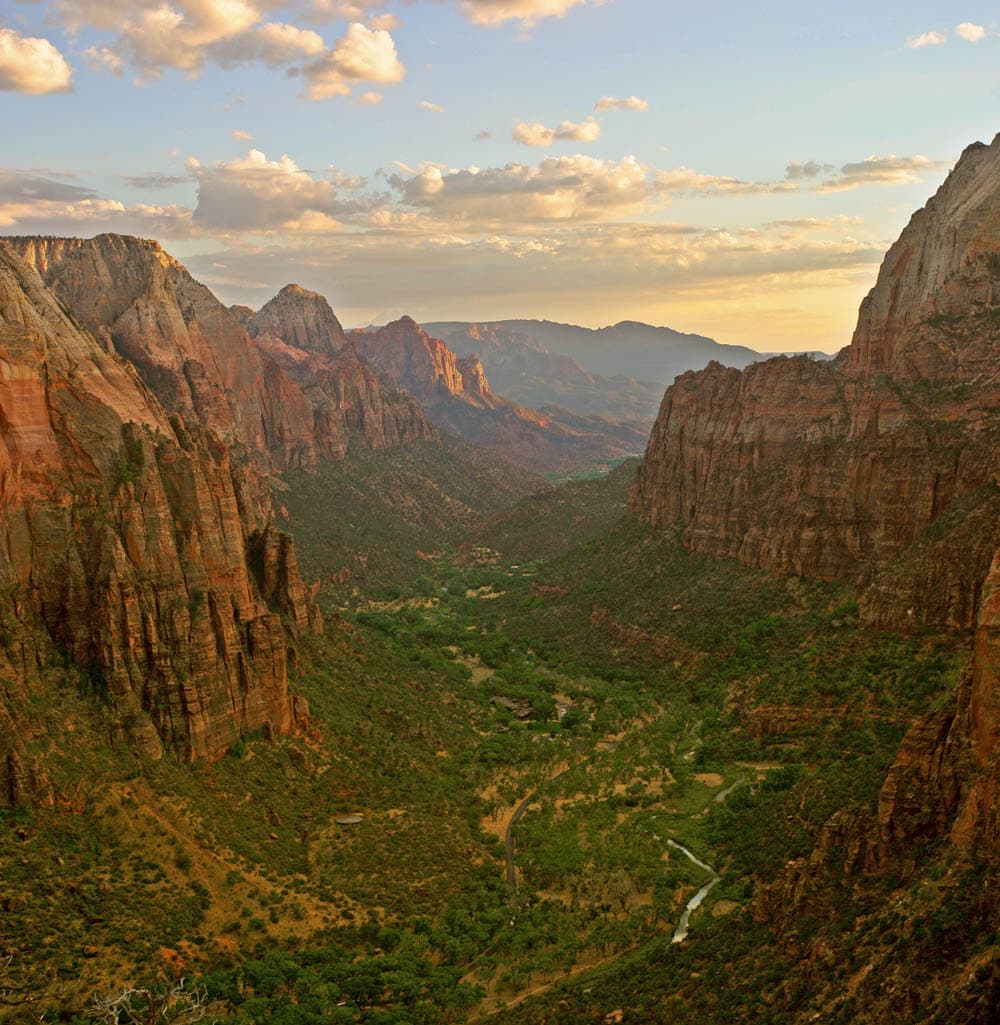
Zion National Park
United States
Minneapolis
Zion National Park
How do Minneapolis and Zion National Park compare?
By March of a Midwest winter, the dilemma between a lakeside river city and a red-rock canyon escape is real — and they answer opposite trip needs. Minneapolis is a four-season Mississippi metropolis with 22 city lakes, the Walker Art Center's Spoonbridge sculpture, First Avenue music nights (Prince's home stage), and a Skyway system that makes January walkable indoors. Zion is the vertical opposite — the Virgin River cutting a 2,000-foot Navajo Sandstone slot, Angels Landing chains traversing a knife-edge ridge, the cottonwood gold of the canyon floor in late October, and the smell of juniper bark warming in afternoon sun.
Mid-range lands $260 in Minneapolis versus $310 near Zion — Springdale's gateway-town hotels charge national-park premiums and the closest budget option (Hurricane or St. George) sits 30+ minutes out. Minneapolis wins on food (Owamni's Indigenous tasting menu, Spoon and Stable, Glam Doll Donuts), nightlife, transit (light rail to MSP airport in 25 minutes), and value. Zion wins decisively on nature access — there's no urban substitute for Angels Landing or the Narrows wade-up — and on shoulder-season hiking weather.
Pro tip: Zion's main canyon shuttle is mandatory March–November — your car can't enter Zion Canyon Scenic Drive — and Angels Landing now requires a permit lottery applied two months ahead. Minneapolis peaks June–September and rewards winter visitors with the Holidazzle market in December. They combine via a 4-hour Delta hop through Salt Lake but rarely justify pairing.
💰 Budget
🛡️ Safety
Minneapolis
Minneapolis is overall a moderately safe US city — violent crime is concentrated in specific neighborhoods (parts of North Minneapolis, parts of South Minneapolis around Lake Street) that visitors rarely enter. Tourist neighborhoods (Downtown, North Loop, Mill District, Uptown, the Chain of Lakes, Northeast, Whittier) are comfortable day and night. The city saw elevated crime concerns 2020–2022 following the Floyd protests and police staffing changes; rates have moderated since 2023 but remain higher than pre-2020 baseline.
Zion National Park
Crime at Zion is a non-issue — the real hazards are natural and they kill people every year. Flash floods, falls from Angels Landing, heat illness, hypothermia in the Narrows, and dehydration are the big five. The single most important pre-hike habit: check the NPS flash flood forecast at the visitor center or nps.gov/zion before ANY slot canyon or Narrows trip. "Probable" or "Expected" risk means do not enter — a storm 10 miles upstream can kill you even in bright sunshine at the trailhead.
🌤️ Weather
Minneapolis
Minneapolis has one of the most extreme four-season climates of any major US city — hot humid summers (highs 28–32°C with serious thunderstorms), brutally cold winters (lows -25°C in January, snow on the ground November–March), and pleasant transitional spring and autumn. The city is built for cold; the 9.5-mile downtown Skyway system means you can spend a week downtown in -20°C weather without a coat. Summers are surprisingly humid and outdoor-oriented.
Zion National Park
Zion's desert climate is defined by vertical relief — the canyon floor sits at 4,000 feet while the rims reach 6,500+ feet, meaning conditions can differ by 5-10°C between stops on the same hike. Summer is brutally hot on exposed trails (35-40°C) with dangerous afternoon monsoon thunderstorms and flash flood potential in slot canyons. Winter brings ice on Angels Landing and snow on the rims, with the canyon floor hovering between 0-15°C. Spring and fall are the ideal windows. The Virgin River stays a bracing 10-15°C year-round — plan Narrows gear accordingly.
🚇 Getting Around
Minneapolis
Minneapolis has good but not excellent public transit for an American city of its size — Metro Transit runs the Blue Line and Green Line light rail (connecting the airport, downtown Minneapolis, the U of Minnesota, and downtown St. Paul) plus an extensive bus network. The Skyway system connects 80 downtown blocks at the second floor (an indoor walking network for cold weather). Lakes and outer neighborhoods need a bike, bus, or car. Driving and parking are easy by big-city standards.
Walkability: Downtown Minneapolis is fully walkable in summer (flat, generous sidewalks, the Nicollet Mall central spine) and in winter via the Skyway system (the largest indoor walking network in the world). Uptown and the Chain of Lakes are walkable in their own context but require transit/bike to reach from downtown. Mill District, North Loop, and Northeast are all walkable internally with bike or bus connections to each other.
Zion National Park
Zion's transportation story is simple: the free park shuttle is MANDATORY on the Zion Canyon Scenic Drive April through late November — no private vehicles past Canyon Junction. The shuttle runs a 9-stop loop roughly every 10-15 minutes, takes about 45 minutes end-to-end, and stops at every major trailhead and viewpoint. Springdale (the gateway town) has its own free town shuttle connecting lodges, restaurants, and the park entrance. A private car is only useful on the main drive December through early March, for reaching Kolob Canyons (30 miles northwest, separate entrance), or for the Zion-Mt. Carmel Highway. There is no rideshare service inside the park.
Walkability: Springdale itself is extremely walkable — a linear town strung along Highway 9 with restaurants, outfitters, and lodges all within a mile of each other. Inside the park the shuttle handles the vertical distances; hiking trails are a mix of paved strolls (Riverside Walk, Pa'rus) and serious climbs (Angels Landing, Observation Point). Kolob Canyons has its own scenic drive and short trailheads but is not pedestrian-connected to the main canyon.
📅 Best Time to Visit
Minneapolis
Jun–Oct
Peak travel window
Zion National Park
Mar–May, Sep–Nov
Peak travel window
The Verdict
Choose Minneapolis if...
you want a Mississippi River city with 22 lakes, the world's largest indoor Skyway system for brutal winters, Prince pilgrimage sites (Paisley Park, First Avenue), permanently-free Minneapolis Institute of Art, and the second-largest US state fair
Choose Zion National Park if...
you want red-rock slot canyons, Angels Landing's permit-lottery ridge, and the Narrows waded up the Virgin River
Minneapolis
Zion National Park
You might also compare
MinneapolisvsZion National Park
Try another