Quick Verdict
Pick Istanbul for Hagia Sophia and Blue Mosque face-offs, the Grand Bazaar's 4,000 shops, and Galata Bridge balık ekmek. Pick Pamukkale if blinding-white travertine terraces, Hierapolis ruins above, and Cleopatra's Pool with toppled columns earn the detour.
The real difference is price
These two play in different price tiers: Pamukkale runs roughly 57% cheaper day to day ($70 vs $110 per day mid-range). Start with your budget — everything else on this page is secondary to that gap.
Can't pick? Visit both.
Build a trip that includes Istanbul and Pamukkale, with complementary stops we'll suggest.
🏆 Pamukkale wins 83 OVR vs 77 · attribute matchup 5–4
Keep exploring

Istanbul
Turkey
Pamukkale
Turkey
Istanbul
Pamukkale
How do Istanbul and Pamukkale compare?
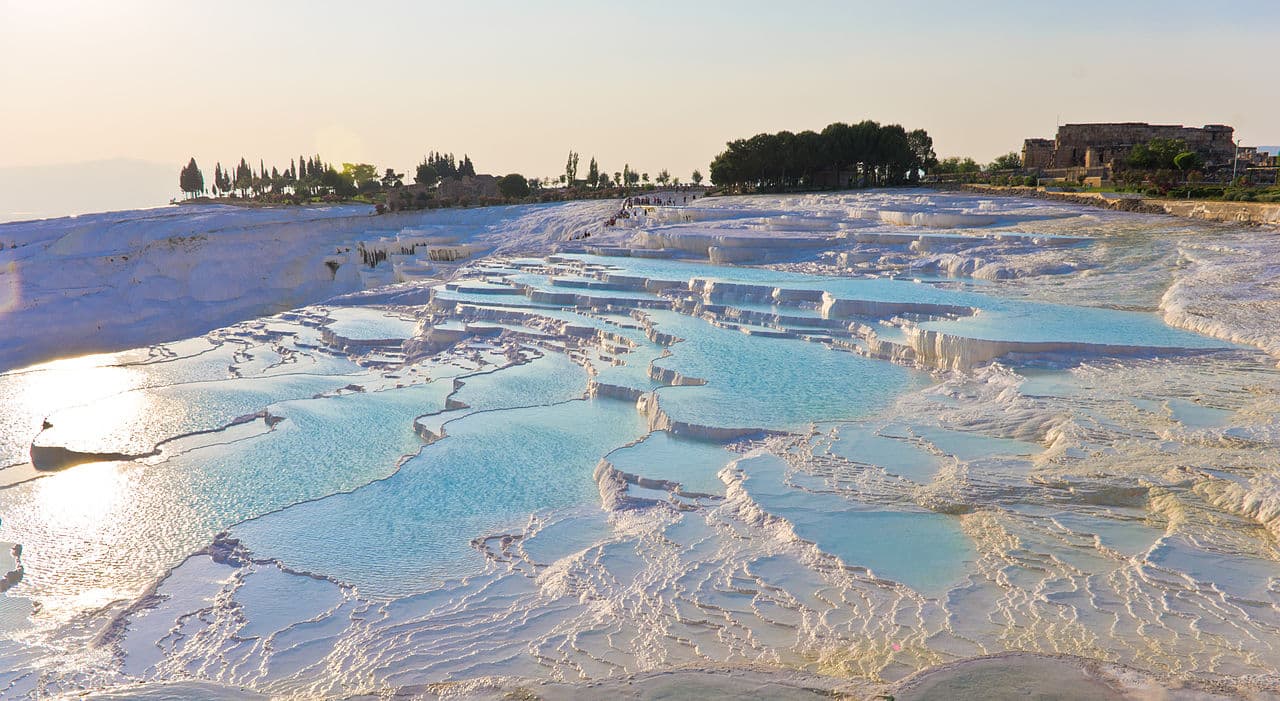
Most first-time Turkey itineraries come down to a question — can we squeeze in the white terraces? Istanbul is the only city straddling two continents, 16 million people, the Hagia Sophia and the Blue Mosque facing off across Sultanahmet, the Grand Bazaar's 4,000 shops, the Bosphorus ferries, and street-food culture from balık ekmek by the Galata Bridge to Karaköy lokanta lunches. Pamukkale is a surreal cascade of blinding-white travertine terraces — calcium carbonate platforms shaped over 14,000 years by hot mineral springs flowing down a 200 m cliff in southwestern Turkey, with the Greco-Roman spa city of Hierapolis above and Cleopatra's still-bathable Pool studded with toppled marble columns.
Connection is a 65-minute flight from Istanbul SAW or IST to Denizli (DNZ) on Pegasus or Turkish Airlines, around 1,200 to 2,500 TRY return, then a 50-minute shuttle to Pamukkale village. The overnight sleeper bus (Pamukkale, Kamil Koç) takes 11 hours and costs around 800 TRY — fine for budget travellers, brutal otherwise. Mid-range budgets land at €110 per day in Istanbul versus €70 in Pamukkale — Pamukkale being a small village with simple pansiyon stays rather than full hotel infrastructure. Most travellers do Pamukkale as a one or two-night detour, often paired with Cappadocia or the Lycian coast, rather than a destination in its own right.
Best months are April-May and September-October for both — Istanbul's summer hits 32°C with humidity, and Pamukkale's terraces become uncomfortably crowded between 10:00 and 17:00 with day-tour buses from Antalya, Kuşadası, and Marmaris. Pro tip: stay overnight in Pamukkale village and walk up the terraces for sunrise (gates open 06:30 in summer) — you get an empty UNESCO site for two hours before the first bus arrives. Combine with the underrated Laodicea ruins 10 km down the road. Pick Istanbul for a 16-million-person trans-continental megacity, Byzantine and Ottoman monuments, and the world's best street food. Pick Pamukkale for the white travertine terraces, Hierapolis Roman spa city, and a 1-2 night detour from a longer Turkey trip.
💰 Budget
🛡️ Safety
Istanbul
Istanbul is generally safe for tourists, with violent crime against visitors being uncommon. The main risks are petty scams, overcharging, and pickpocketing in crowded tourist areas. Use common sense, especially in Sultanahmet, Taksim, and the Grand Bazaar.
Pamukkale
Pamukkale is a very safe destination — small village, organised tourism site, professional spa/thermal hotels, and visible site staff. Safety concerns are largely physical (slippery travertine surface, sun exposure) rather than crime-related. The village is small enough that residents notice strangers and look out for visitors.
🌤️ Weather
Istanbul
Istanbul has a transitional climate between Mediterranean and oceanic, with hot summers and cool, rainy winters. The Bosphorus creates microclimates — the Asian side tends to be slightly warmer than the European side.
Pamukkale
Pamukkale sits in inland southwestern Turkey at 350m elevation in the Menderes Valley — Mediterranean continental climate with hot, dry summers (July–August often 35°C+) and cool, rainy winters (occasionally below freezing at night). The mineral waters maintain 36°C year-round, so swimming in Cleopatra's Pool is comfortable in any season; the travertines feel more atmospheric in cooler months without the haze.
🚇 Getting Around
Istanbul
Istanbul has an expanding metro, tram, funicular, and ferry network all accessible with the Istanbulkart rechargeable transit card. Get one immediately at any metro station or kiosk — single tickets are expensive. Traffic is notoriously bad, so use rail and ferries whenever possible.
Walkability: The historic peninsula (Sultanahmet, Eminonu, Bazaar Quarter) is very walkable but hilly. The Beyoglu/Galata area involves steep hills and stairs. The Asian side neighborhoods of Kadikoy and Moda are flat and pleasant on foot. Traffic and wide highways make some areas pedestrian-unfriendly.
Pamukkale
Pamukkale is small (~3,000 residents) and entirely walkable — the village, the lower travertine entrance, the upper Hierapolis gate, and Karahayıt 6 km away are connected by minibus (dolmuş) and easy walking paths. Most visitors arrive on day tours from İzmir, Selçuk (Ephesus), or Antalya, which include their own transport. Independent travellers use Denizli (DNZ airport, 60 km) as the gateway.
Walkability: Pamukkale village and the entire UNESCO site (travertines + Hierapolis) are walkable in a single day on foot. The 1.5 km uphill walk through the travertines from the lower gate is itself one of the highlights — a unique sensory experience walking barefoot on warm white stone with mineral water flowing around your ankles.
📅 Best Time to Visit
Istanbul
Apr–May, Sep–Oct
Peak travel window
Pamukkale
Apr–Jun, Sep–Oct
Peak travel window
The Verdict
Choose Istanbul if...
you want a city straddling two continents with Byzantine and Ottoman grandeur, incredible bazaars, and world-class kebabs
Choose Pamukkale if...
you want the white travertine terraces and Hierapolis ruins as a 1-2 night detour, often paired with Cappadocia
Istanbul
Pamukkale
Frequently asked
Is Istanbul or Pamukkale cheaper?
Pamukkale is cheaper on average. A mid-range day in Istanbul costs about $110 vs $70 in Pamukkale, so Pamukkale saves you roughly $40 per day compared to Istanbul.
Is Istanbul or Pamukkale safer?
Pamukkale scores higher on our safety index (82/100 vs 65/100). Pamukkale is a very safe destination — small village, organised tourism site, professional spa/thermal hotels, and visible site staff.
Which has better weather, Istanbul or Pamukkale?
Istanbul has the more temperate climate year-round. Istanbul has a transitional climate between Mediterranean and oceanic, with hot summers and cool, rainy winters. The Bosphorus creates microclimates — the Asian side tends to be slightly warmer than the European side.
When is the best time to visit Istanbul vs Pamukkale?
Istanbul peaks in Apr–May, Sep–Oct. Pamukkale peaks in Apr–Jun, Sep–Oct. Both peak in Apr–May, Sep–Oct, so a single trip pairs them naturally.
How long is the flight from Istanbul to Pamukkale?
Roughly 59m on a direct flight (about 344 km / 213 mi). One-way fares typically run $60-180 depending on season and how far in advance you book.
How do daily costs in Istanbul and Pamukkale compare?
In Istanbul: budget ~$30-50/day, mid-range ~$80-140/day, luxury ~$250+/day. In Pamukkale: budget ~$25-45/day, mid-range ~$50-90/day, luxury ~$150-280/day.
You might also compare
IstanbulvsPamukkale
Try another