Höfn vs Snæfellsnes Peninsula
Which destination is right for your next trip?
Last updated
Quick Verdict
Pick Höfn for Jökulsárlón icebergs, Diamond Beach dawns, and winter ice-cave tours inside Vatnajökull. Pick Snæfellsnes if Kirkjufell sunrises, Búðakirkja's black church on lava, and an easy Reykjavík loop fit better.
Can't pick? Visit both.
Build a trip that includes Höfn and Snæfellsnes Peninsula, with complementary stops we'll suggest.
🏆 Höfn wins 70 OVR vs 68 · attribute matchup 3–1
Keep exploring

Höfn
Iceland
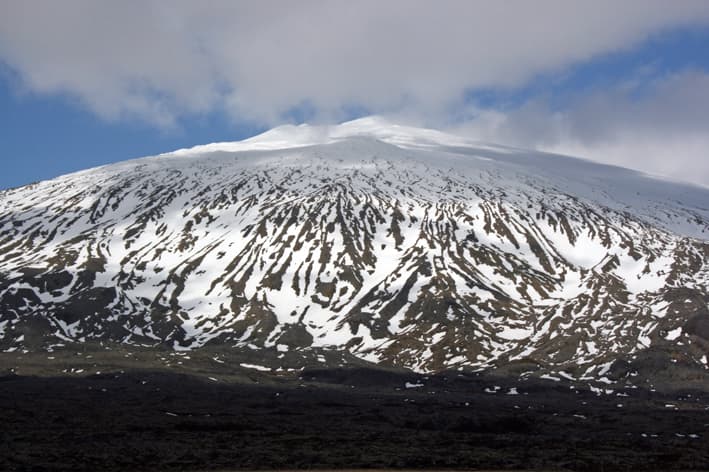
Snæfellsnes Peninsula
Iceland
Höfn
Snæfellsnes Peninsula
How do Höfn and Snæfellsnes Peninsula compare?
These are two non-Reykjavík Iceland bases on opposite sides of the country, both reached by the Ring Road but offering very different landscapes. Höfn is the 2,400-person southeast-coast langoustine port — flat, working, and unremarkable in town, but the launchpad for Vatnajökull (Europe's largest ice cap), Jökulsárlón Glacier Lagoon (80 km west), Diamond Beach, and winter ice-cave tours into the glacier. Snæfellsnes is a 90 km west-pointing peninsula 2.5 hours northwest of Reykjavík — nicknamed 'Iceland in miniature' because almost every Icelandic landscape (glacier, lava, black-sand beach, basalt cliff, fishing village) appears in a single 250 km loop, with Kirkjufell mountain at Grundarfjörður as the postcard headliner.
Connecting them is a serious drive — 660 km / 8 hours direct via the Ring Road, more like 2 days with overnight stops in Reykjavík or Borgarnes. Most travelers visit one or the other on a 5–7 day Iceland trip, not both. Costs are essentially identical at $130 budget / $240 midrange / $520 luxury. Höfn earns its place if you want winter (ice caves, dark for aurora, frozen waterfalls) and the dramatic Vatnajökull-side landscapes. Snæfellsnes is the easier 2-day overnight from Reykjavík for travelers who don't want to commit to the full Ring Road but still want every Icelandic landscape category.
Pro tip: in Snæfellsnes, base in Stykkishólmur (the prettiest small town on the peninsula at population 1,200) rather than the touristy Hellnar — Hotel Egilsen is a clapboard gem, and the Fjöruhúsið café in Hellnar is a 30-min drive lunch detour. In Höfn, dinner at Pakkhús or Humarhöfnin for langoustine is non-negotiable. Pick Höfn if Jökulsárlón icebergs, Diamond Beach, and winter ice-cave tours into Vatnajökull are the trip. Pick Snæfellsnes if Kirkjufell at sunrise, the Búðakirkja black church on lava, and a 2-day loop from Reykjavík fit your week better.
💰 Budget
🛡️ Safety
Höfn
Iceland is among the world's safest countries by every conventional measure and Höfn at 2,400 residents is even safer than the national average — violent crime is essentially zero, the police do not carry firearms, and the local concerns are entirely environmental. Glacier hazards (crevasses, calving icebergs, ice-cave collapses), Atlantic surf at the Diamond Beach, winter Ring Road conditions, and the persistent wind off Vatnajökull are the realistic risks.
Snæfellsnes Peninsula
Iceland is among the world's safest countries by every conventional measure — violent crime is essentially zero and the peninsula's tiny populations are even safer than the national average. The realistic risks are environmental: sneaker waves at Djúpalónssandur and the south coast, sudden weather changes on the Snæfellsjökull glacier, slippery wet basalt on the Arnarstapi-Hellnar path, traffic on the single-lane Route 54 in winter, and the persistent Atlantic wind across the open peninsula. Multiple Kirkjufell summit fatalities — the climb is more serious than the modest 463m height suggests.
🌤️ Weather
Höfn
Höfn has a sub-polar oceanic climate moderated by both the Gulf Stream (offshore) and the Vatnajökull ice cap (immediately inland) — cool summers, mild but stormy winters, persistent wind off the glacier, and roughly 1,400 mm of rain a year (less than Vík but more than Reykjavík). The town is famously windy: the katabatic winds rolling down off the ice cap can hit 25–30 m/s with little warning, especially in winter. Driving the Ring Road east of Vík toward Höfn is among the most weather-sensitive stretches of road in Iceland.
Snæfellsnes Peninsula
Snæfellsnes has a sub-polar oceanic climate moderated by the Gulf Stream — cool summers (12–15°C is typical), mild but stormy winters, frequent rain (around 1,000 mm/year), and persistent west wind off the Atlantic. The peninsula is famously windy: gusts of 25+ m/s are routine, especially across the open south coast and the Snæfellsnesvegur (Route 54) high passes. Weather can change dramatically from one side of the peninsula to the other — the south coast under cloud while the north is in sun is common.
🚇 Getting Around
Höfn
Höfn is overwhelmingly a rental-car destination — the town is small but the things you came for (Jökulsárlón, Diamond Beach, ice caves, Stokksnes, Skaftafell) are 15–130 km away. Public transit is one Strætó bus per day from Reykjavík (summer only), one Eagle Air flight a day from Reykjavík's domestic airport, and an active taxi service for in-town. The 2km town core is fully walkable; nothing further requires a vehicle.
Walkability: The Höfn town core is fully walkable in 25 minutes end-to-end. Everything Höfn is famous for — Jökulsárlón, Diamond Beach, Stokksnes, Vatnajökull ice caves, Skaftafell — is 15 to 130 km away and absolutely requires a vehicle (rental or guided tour). Plan accordingly.
Snæfellsnes Peninsula
Snæfellsnes is fundamentally a rental-car destination — Route 54 (the peninsula loop) is a 2-lane paved road, and the major sights are spread across 90 km with no public transit serving them directly. Strætó has one bus per day from Reykjavík to Stykkishólmur in summer; tour-bus day trips from Reykjavík cover the highlights but rush. Within Stykkishólmur the town centre is fully walkable; everything else requires a vehicle.
Walkability: Stykkishólmur town is fully walkable in 15 minutes. Everything Snæfellsnes is famous for — Kirkjufell, Búðakirkja, Snæfellsjökull NP, Arnarstapi-Hellnar — is 30 to 90 km from any town and absolutely requires a vehicle (rental or guided tour). Plan accordingly.
📅 Best Time to Visit
Höfn
Jun–Sep
Peak travel window
Snæfellsnes Peninsula
Jun–Sep
Peak travel window
The Verdict
Choose Höfn if...
You want a working port town as your base for the Glacier Lagoon, ice-cave tours, and the underrated eastern fjords — and you'll trade variety for a langoustine dinner with Vatnajökull on your plate.
Choose Snæfellsnes Peninsula if...
You want every Icelandic landscape — glacier, lava, black beach, basalt cliff, sea stacks, fishing village — in a single 90 km drive that's an easy two-day loop from Reykjavík.
Snæfellsnes Peninsula
Frequently asked
Is Höfn or Snæfellsnes Peninsula cheaper?
Höfn and Snæfellsnes Peninsula come in at roughly the same mid-range daily cost (~$240 per day), so budget alone is not a deciding factor.
Is Höfn or Snæfellsnes Peninsula safer?
Höfn and Snæfellsnes Peninsula score equally on our safety index (92/100). Specific risks differ by neighborhood — check the Safety section on each guide.
When is the best time to visit Höfn vs Snæfellsnes Peninsula?
Höfn peaks in Jun–Sep. Snæfellsnes Peninsula peaks in Jun–Sep. Both peak in Jun–Sep, so a single trip pairs them naturally.
How long is the flight from Höfn to Snæfellsnes Peninsula?
Roughly 1h 4m on a direct flight (about 414 km / 257 mi). One-way fares typically run $60-180 depending on season and how far in advance you book.
How do daily costs in Höfn and Snæfellsnes Peninsula compare?
In Höfn: budget ~$120-160/day, mid-range ~$220-300/day, luxury ~$500-1100/day. In Snæfellsnes Peninsula: budget ~$120-160/day, mid-range ~$220-300/day, luxury ~$500-1100/day.
You might also compare
HöfnvsSnæfellsnes Peninsula
Try another