Quick Verdict
Pick Galle if Dutch fort ramparts, Indian Ocean cafés, and Unawatuna beach tuk-tuks trump tea estates. Pick Kandy if Temple of the Tooth dawns, Esala Perahera elephants, and hill-country train rides beat colonial coast.
The real difference is price
These two play in different price tiers: Kandy runs roughly 107% cheaper day to day ($70 vs $145 per day mid-range). Start with your budget — everything else on this page is secondary to that gap.
Can't pick? Visit both.
Build a trip that includes Galle and Kandy, with complementary stops we'll suggest.
🤝 It's a tie — both rated 74 OVR
Keep exploring
Galle
Sri Lanka

Kandy
Sri Lanka
Galle
Kandy
How do Galle and Kandy compare?
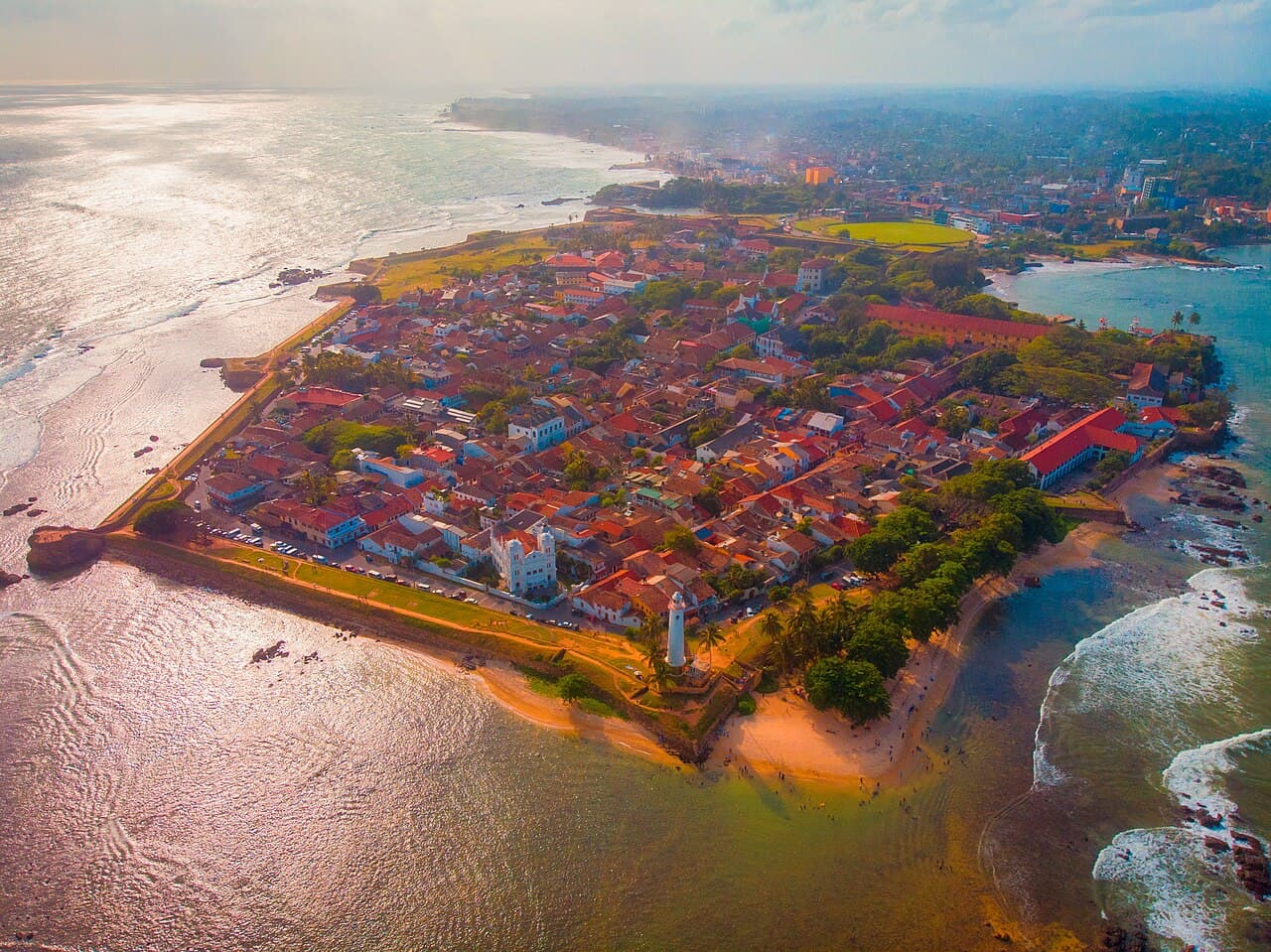
The Colombo–Kandy train climbs 500 meters into hill country in 3 hours; the Colombo–Galle train hugs the southern coast for 2 hours past palm-lined beaches. Same starting point, opposite Sri Lankan trips. Galle is colonial-Dutch ramparts at sunset, Indian Ocean breezes through Pedlar's Street cafés, and tuk-tuks rattling toward Unawatuna's beach 15 minutes east. Kandy is the lake-walk past the Temple of the Tooth at 6 AM, the smell of incense and Esala Perahera elephant processions in late July, and tea-estate buses winding toward Nuwara Eliya at 1,800 meters.
Galle costs more — $145 mid-range vs Kandy's $70 — and the gap is real because Galle Fort is dominated by boutique colonial-villa hotels while Kandy still has solid $30 guesthouses around the lake. Both rate identically on cost-of-day-living indexes (30) but Kandy's luxury cap ($225) is half Galle's ($420). Cultural sites favor Kandy (5 vs 4) thanks to the Temple of the Tooth — Sri Lanka's most sacred Buddhist site — and the surrounding peradeniya gardens. Walkability favors Galle (5 vs 4) because the Fort is genuinely 700 meters across.
Best months barely overlap — Galle's window is January–April and November–December (south coast dry); Kandy is January–March and August–September. Combine them as a 10-day loop: Negombo → Kandy → Ella → Galle → Mirissa, using the Kandy-to-Ella train (one of the world's most scenic) as the backbone. Pick Galle if Dutch fort ramparts, Indian Ocean cafés, and Unawatuna beach tuk-tuks trump tea estates. Pick Kandy if Temple of the Tooth dawns, Esala Perahera elephant processions, and hill-country train rides beat colonial coast.
💰 Budget
🛡️ Safety
Galle
Galle is one of the safer destinations in Sri Lanka — violent crime is very rare, the fort is heavily walked and well-policed, and the Sri Lankan tourist police are visible and helpful. Solo female travellers report Galle Fort as comfortable; the surrounding city of Galle and the south-coast beach towns also rank well. Main risks: ocean currents (rip currents on certain south-coast beaches), tuk-tuk overcharging, occasional pickpocketing in the crowded Pettah-style markets outside the fort, and the fixed Sri Lankan health risks (dengue, rabies via stray dogs).
Kandy
Kandy is generally safe for tourists. Sri Lanka ended its civil conflict in 2009 and the country has been stable. The main risks are traffic (chaotic driving), scams targeting tourists near the temple, and occasional gem scams.
🌤️ Weather
Galle
Galle is on Sri Lanka's south-west coast — the country's wet zone — and gets significantly more rainfall than Sigiriya or the east coast. The Yala monsoon (May–September) brings the wettest months; the inter-monsoon periods (October–November) bring heavy showers but interspersed with bright days. The dry season is December–April — coinciding with peak international tourism. Daytime temperatures are reliably 28–32°C year-round; sea temperature 27–29°C is excellent for swimming throughout.
Kandy
Kandy has a tropical highland climate at 465m elevation — cooler and less humid than the coast. Temperatures are pleasant year-round (22–28°C). Two monsoon seasons affect the city differently: the southwest monsoon (May–August) brings heavier rain to the western slopes; the northeast monsoon (November–January) brings rain from the other direction. The best weather windows are February–April and August–September.
🚇 Getting Around
Galle
Galle Fort itself is small (36 hectares) and entirely walkable — most visitors park outside and never use vehicle transport within the walls. For the south-coast hop (Unawatuna, Weligama, Mirissa), tuk-tuks are universal and cheap. For longer trips (to Colombo, Yala, Ella, the Cultural Triangle), most travellers use a private car with driver. The Southern Expressway makes Galle 2 hours from Colombo, transformed in the past decade.
Walkability: Galle Fort is one of the most walkable historic centres in Sri Lanka — small, compact, with limited motorised traffic and a uniform grid layout. The 3-km rampart walk forms the core experience. Outside the fort, the surrounding city is busy and not pleasant for walking; tuk-tuks for short hops.
Kandy
Kandy city centre is semi-walkable — the lake, temple, and market are connected on foot. The hills make some areas steep. Tuk-tuks are the standard local transport; trains are the best way to reach Colombo and the hill country.
Walkability: Moderate around the lake and temple. Hilly — some areas require tuk-tuk.
📅 Best Time to Visit
Galle
Jan–Apr, Nov–Dec
Peak travel window
Kandy
Jan–Mar, Aug–Sep
Peak travel window
The Verdict
Choose Galle if...
You want a walkable colonial fort town with great cafés and beaches a short tuk-tuk ride away.
Choose Kandy if...
you want Sri Lanka's sacred highland city — the Temple of the Tooth Relic, UNESCO Royal Botanical Gardens, Esala Perahera elephant procession, and the viewpoint above the cloud-forest Knuckles Range
Frequently asked
Is Galle or Kandy cheaper?
Kandy is cheaper on average. A mid-range day in Galle costs about $145 vs $70 in Kandy, so Kandy saves you roughly $75 per day compared to Galle.
Is Galle or Kandy safer?
Galle scores higher on our safety index (84/100 vs 78/100). Galle is one of the safer destinations in Sri Lanka — violent crime is very rare, the fort is heavily walked and well-policed, and the Sri Lankan tourist police are visible and helpful.
Which has better weather, Galle or Kandy?
Kandy has the more temperate climate year-round. Kandy has a tropical highland climate at 465m elevation — cooler and less humid than the coast. Temperatures are pleasant year-round (22–28°C). Two monsoon seasons affect the city differently: the southwest monsoon (May–August) brings heavier rain to the western slopes; the northeast monsoon (November–January) brings rain from the other direction. The best weather windows are February–April and August–September.
When is the best time to visit Galle vs Kandy?
Galle peaks in Jan–Apr, Nov–Dec. Kandy peaks in Jan–Mar, Aug–Sep. Both peak in Jan–Mar, so a single trip pairs them naturally.
How long is the flight from Galle to Kandy?
Roughly 45m on a direct flight (about 145 km / 90 mi). One-way fares typically run $60-180 depending on season and how far in advance you book.
How do daily costs in Galle and Kandy compare?
In Galle: budget ~$40-80/day, mid-range ~$120-220/day, luxury ~$400-1000/day. In Kandy: budget ~$25–40/day, mid-range ~$50–90/day, luxury ~$150–300/day.
You might also compare
GallevsKandy
Try another