Quick Verdict
Pick Fiji for Yasawa island-hopper passes, Bula village kava ceremonies, and snorkeling straight off the beach. Pick Maldives if overwater bungalows, Hammerhead Point dives, and pure resort silence are worth $500/day.
The real difference is price
These two play in different price tiers: Fiji runs roughly 125% cheaper day to day ($200 vs $450 per day mid-range). Start with your budget — everything else on this page is secondary to that gap.
Can't pick? Visit both.
Build a trip that includes Fiji and Maldives, with complementary stops we'll suggest.
🤝 It's a tie — both rated 68 OVR
Keep exploring
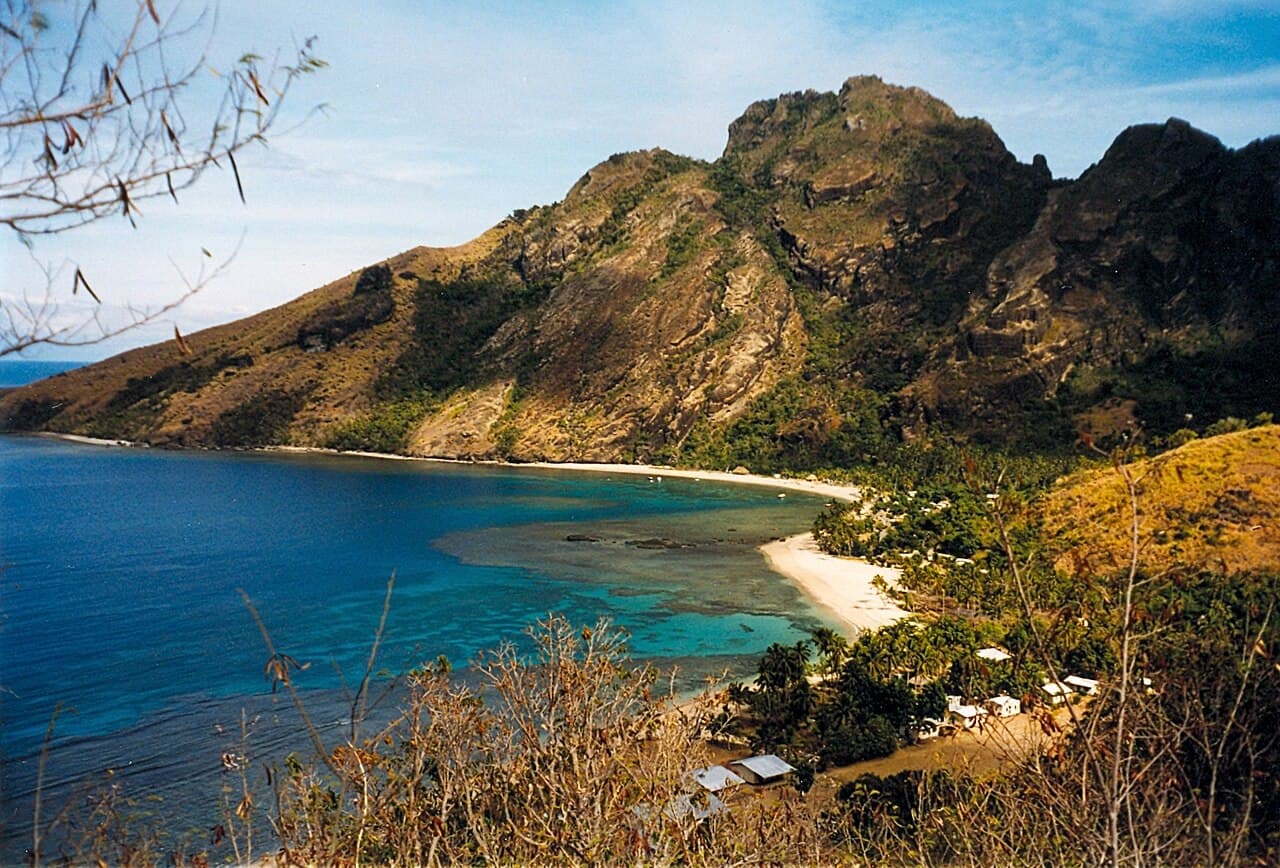
Fiji
Fiji

Maldives
Maldives
Fiji
Maldives
How do Fiji and Maldives compare?
Two island-resort destinations that sound similar and trip very differently. Fiji is the family and honeymoon mid-tier with the Yasawa Islands strung north, the Mamanuca resorts closer in for short stays, the Bula greeting that you will hear forty times a day, kava ceremonies in village visits, and dive operators running Bligh Water passages for soft coral. Maldives is the higher-tier all-inclusive — overwater bungalows on private resort islands, seaplane transfers across reef-blue water, and the genuine claim to one of the planet's strongest dive ecosystems at sites like Hammerhead Point and Manta Point.
Fiji runs about $200/day and Maldives $500/day, which is the entire conversation in one number. Fiji wins on culture (you actually meet Fijians, eat in villages, and the trip has texture beyond the resort wall), on snorkel access from the beach without paying for a boat, and on the Yasawa island-hopper Bula Pass model that lets budget travelers chain backpacker resorts. Maldives wins on luxury infrastructure, on the dive-site density, and on the private-villa overwater photo nobody can quite recreate elsewhere.
Both peak May through October for Fiji and November through April for Maldives — opposite hemispheres, easy to plan around. Practical tip: in Fiji, skip Suva entirely and fly straight to Nadi, then transfer by Awesome Adventures catamaran to the Yasawas — Suva eats two days you will regret. In Maldives, the seaplane transfer ($400+ each way) means short stays make no economic sense; commit to 6+ nights. Pick Fiji for cultural warmth and budget flexibility; pick Maldives when the trip is the resort and the resort is the trip.
Common Fiji mistake: spending two days in Suva. Suva is the capital but it's a working city with limited tourist infrastructure, and the actual reason to visit Fiji — the Yasawa Islands, the Mamanucas, the soft-coral diving in Bligh Water — is reached from Nadi on the western side. Fly into Nadi, head straight to your resort or the Awesome Adventures catamaran, and skip Suva entirely. Maldives mistake: booking a 4-night stay. The seaplane transfer is $400+ each way and the all-inclusive math only justifies 6+ nights — anything shorter and you're paying transfer fees for too few hotel nights. Family travelers and budget-conscious honeymooners should pick Fiji; pure resort luxury and divers should pick Maldives.
💰 Budget
🛡️ Safety
Fiji
Fiji is generally safe for tourists within resort areas and tourist-circuit destinations. The legendary Fijian warmth is genuine and petty crime at resorts is low. The main risks are: petty theft in Nadi town (particularly at the bus station and in crowded markets), ocean hazards (strong currents, box jellyfish in wet season, coral cuts), and the cyclone risk November–April. Suva has higher crime rates than Nadi or resort areas.
Maldives
Resort islands are extremely safe, with security and controlled access. Male city and local islands are generally safe but petty crime exists. The main risks are ocean-related: strong currents, marine stings, and coral cuts.
🌤️ Weather
Fiji
Fiji has a tropical oceanic climate — warm and humid year-round with a distinct wet season (November–April) and dry season (May–October). The wet season brings heavy rain and cyclone risk (especially January–March); the dry season brings the reliably sunny, lower-humidity weather that most tourists seek. Temperatures are stable (26–32°C year-round) and sea temperature barely varies (26–29°C).
Maldives
The Maldives has a tropical monsoon climate with warm temperatures year-round (28-32°C). Two main seasons are defined by the monsoons: the dry northeast monsoon (December-April) and the wet southwest monsoon (May-November).
🚇 Getting Around
Fiji
Getting around Fiji requires combining road transport (on Viti Levu), boats (to outer islands), and domestic flights (to more remote islands). Nadi is the hub for everything — road west to Port Denarau (island ferries), road east to Suva and the Coral Coast, and the domestic terminal for island flights. Taxis in Nadi should have meters (or negotiate price before entering); Bolt is not widely available outside Suva.
Walkability: Resort areas are walkable within their grounds. Nadi town is walkable from the resort strip (15 min). For anything beyond — Mamanucas, Coral Coast, Yasawas — water transport or road is required.
Maldives
Getting around the Maldives is primarily by water and air. Seaplanes, domestic flights, and speedboats connect the atolls. Within Male, taxis and ferries are the main options. Resorts handle transfers as part of your booking.
Walkability: Male is one of the most densely populated cities on Earth (2 sq km) and is entirely walkable end-to-end in 20 minutes. Resort islands are small enough to walk around in 10-30 minutes. Bicycles are available at many resorts.
📅 Best Time to Visit
Fiji
May–Oct
Peak travel window
Maldives
Jan–Apr, Nov–Dec
Peak travel window
The Verdict
Choose Fiji if...
you want South Pacific island paradise — Yasawa island-hopping, Rainbow Reef diving, Mamanuca overwater resorts, kava ceremonies, and Bula! warmth
Choose Maldives if...
you want 1,200 islands of overwater villas, reef snorkeling, manta rays, and the quintessential honeymoon on turquoise atolls
Frequently asked
Is Fiji or Maldives cheaper?
Fiji is cheaper on average. A mid-range day in Fiji costs about $200 vs $450 in Maldives, so Fiji saves you roughly $250 per day compared to Maldives.
Is Fiji or Maldives safer?
Maldives scores higher on our safety index (80/100 vs 72/100). Resort islands are extremely safe, with security and controlled access.
Which has better weather, Fiji or Maldives?
Fiji has the more temperate climate year-round. Fiji has a tropical oceanic climate — warm and humid year-round with a distinct wet season (November–April) and dry season (May–October). The wet season brings heavy rain and cyclone risk (especially January–March); the dry season brings the reliably sunny, lower-humidity weather that most tourists seek. Temperatures are stable (26–32°C year-round) and sea temperature barely varies (26–29°C).
Is it easier to get by with English in Fiji or Maldives?
English is more widely spoken in Fiji (5/5 vs 4/5 on our scale). You'll find it easier to order food, ask for directions, and navigate transit in Fiji.
When is the best time to visit Fiji vs Maldives?
Fiji peaks in May–Oct. Maldives peaks in Jan–Apr, Nov–Dec. Their peak windows do not overlap, so most travelers pick one and go deep rather than rushing both in one trip.
How long is the flight from Fiji to Maldives?
Roughly 14h 20m on a direct flight (about 11,688 km / 7,258 mi). One-way fares typically run $700-1800 depending on season and how far in advance you book.
How do daily costs in Fiji and Maldives compare?
In Fiji: budget ~$60-90/day, mid-range ~$150-250/day, luxury ~$500+/day. In Maldives: budget ~$60-120/day, mid-range ~$300-600/day, luxury ~$1,000+/day.
How many days do I need for Fiji vs Maldives?
Plan 7-10 days for Fiji (2-3 Mamanucas + 4-5 Yasawas via Bula Pass + buffer) and 6-10 days for Maldives (single resort, longer is better given seaplane economics). Fiji rewards island-hopping over a longer trip; Maldives works as a focused luxury reset.
Can I visit both Fiji and Maldives on one trip?
Geographically painful — opposite oceans, 20+ hours of flying with multiple connections, and combined costs land in the $20K range. Most travelers split them across separate trips. The cleaner pairing is Fiji with New Zealand or Australia, and Maldives with Sri Lanka or India.
Which is better for diving, Fiji or Maldives?
Both are world-class with different specialties. Maldives has reliable manta and shark encounters at Hammerhead Point, Manta Point, and Hanifaru Bay (during plankton season July-November), with strong channel diving. Fiji has the soft-coral diving in Bligh Water and the Rainbow Reef that's genuinely the best soft-coral diving on Earth. For sharks and mantas, Maldives; for soft coral, Fiji.
Which is better for families with kids, Fiji or Maldives?
Fiji by a margin. Fijian culture is warmly welcoming to children, the resorts (Castaway, Likuliku, Tokoriki) have established kids' clubs, and the snorkeling off the beach removes boat logistics. Maldives is family-capable (Soneva Fushi, Anantara Kihavah) but the all-inclusive prices and the 4-hour seaplane window with infants are real friction points.
Which is better for budget travelers, Fiji or Maldives?
Fiji decisively. The Yasawa Bula Pass model lets backpackers chain $50-80/night resorts on different islands using the daily catamaran, so a week in Fiji can run $1,500 all-in. Maldives has local-island guesthouses (Maafushi, Thulusdhoo, Dhigurah) at $80-150/night that cut costs but never reach Fiji's backpacker economics.
Which is better for honeymoons, Fiji or Maldives?
Maldives tilts pure luxury honeymoon — the overwater villa with reef beneath the dock is the iconic photograph, the all-inclusive removes friction, and the resort-as-island model delivers privacy. Fiji is the more cultural honeymoon — village visits, kava ceremonies, and warmer human interaction — and runs at half the day rate. For first honeymoons with budget no constraint, Maldives; for honeymoons with a cultural component, Fiji.
You might also compare
FijivsMaldives
Try another