Quick Verdict
Pick Budapest for Szechenyi thermal baths, Szimpla Kert ruin-bar courtyards, and weekend Vienna trains. Pick Chiang Mai if Doi Suthep temples, $3 cooking classes, and month-long coworking stays suit you.
The real difference is price
These two play in different price tiers: Chiang Mai runs roughly 56% cheaper day to day ($80 vs $125 per day mid-range). Start with your budget — everything else on this page is secondary to that gap.
Can't pick? Visit both.
Build a trip that includes Budapest and Chiang Mai, with complementary stops we'll suggest.
🏆 Chiang Mai wins 77 OVR vs 76 · attribute matchup 4–4
Keep exploring

Budapest
Hungary
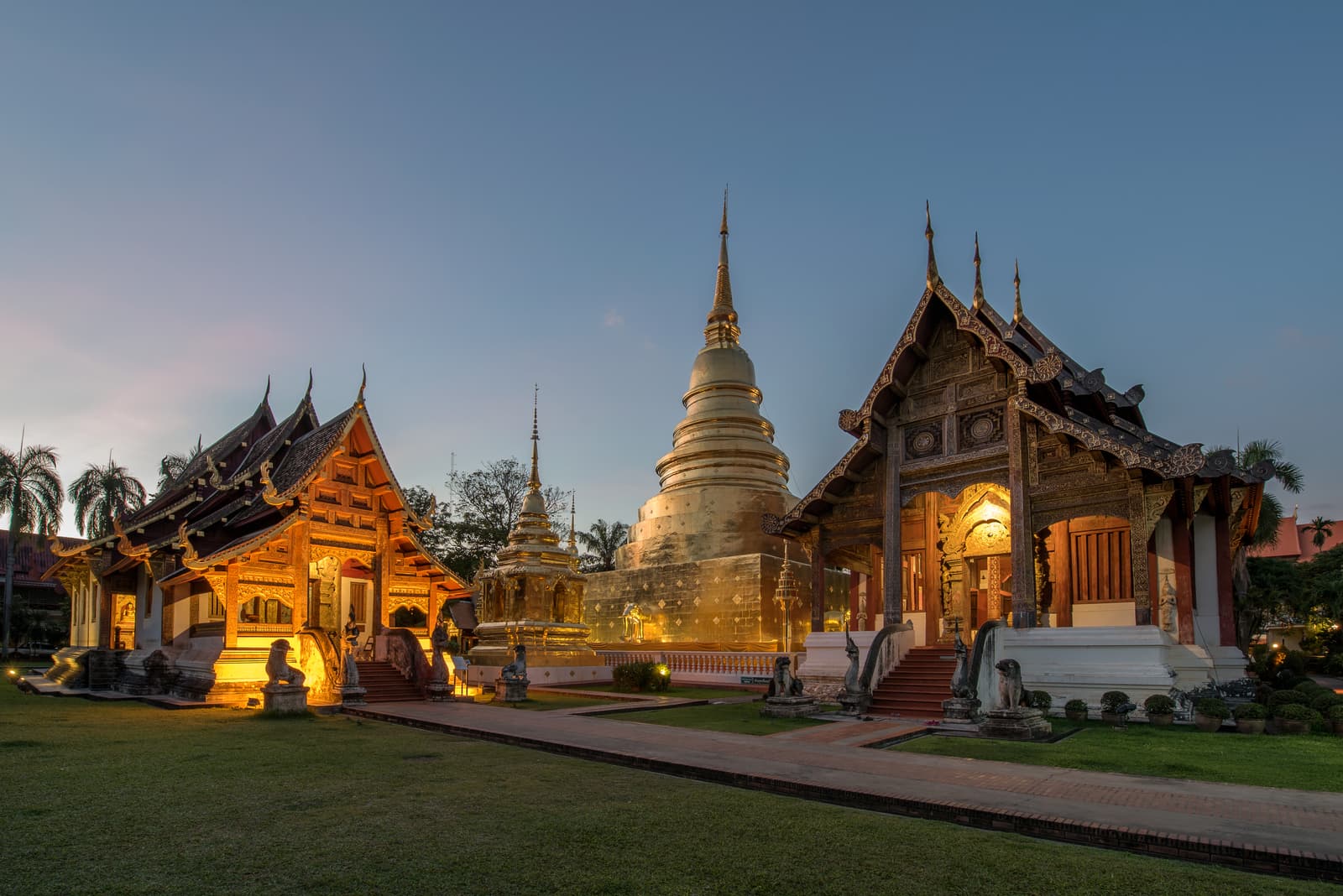
Chiang Mai
Thailand
Budapest
Chiang Mai
How do Budapest and Chiang Mai compare?
The digital-nomad classic split — value Europe versus value Asia — and most long-stay travelers eventually try both. Budapest is the Danube-bridged former imperial capital — Buda Castle and Fisherman's Bastion looking across to Pest's neo-Gothic Parliament, Szechenyi and Gellert thermal baths in the central city, Szimpla Kert and the Jewish Quarter ruin-bar scene, and the country's best food scene currently running through bistros like Babka and Stand25. Chiang Mai is the moated Old City of northern Thailand — over 300 wat temples (Doi Suthep on the mountain, Wat Chedi Luang in the moat), Sunday Walking Street market, cooking schools at Thai Farm and Asia Scenic, elephant sanctuaries in the surrounding hills, and a coworking density that made it the first global digital-nomad capital.
Both are cheap by European or US standards — Budapest $30 hostel / $75 mid / $200 luxe, Chiang Mai $20 / $55 / $140. Safety lands at 75 for Budapest and 78 for Chiang Mai — both very manageable, with Budapest's main risks being taxi scams and pickpocket-heavy tourist tram routes, and Chiang Mai's being motorbike accidents and seasonal smog. Budapest wins on architecture, nightlife, museum density, and easy weekend trips to Vienna and Bratislava. Chiang Mai wins on month-long stays, food cost, coworking infrastructure, and the kind of slow living that's hard to manufacture in Europe.
Budapest peaks April-June and September-October (avoid August humidity); Chiang Mai shines November-February (avoid March-April's burning-season smog, when the AQI regularly tops 200). Pro tip: in Budapest, get the 72-hour transit pass and use trams 4 and 6 to circle the entire city for under $20. In Chiang Mai, rent a Honda Click scooter from Mr. Mechanic ($5/day) only if you've ridden before — and never without a helmet. Pick Budapest for European architecture, thermal baths, and an easier base for travel onward. Pick Chiang Mai for the long stay, the food cost, and the Asia-nomad lifestyle the city helped invent.
If you're picking one as a winter base or month-long stay, Chiang Mai wins on cost, weather (Nov-Feb is perfect), and coworking infrastructure that helped invent the digital-nomad model. Budapest rewards shorter trips when you want European architecture, thermal baths, and easy weekend connections to Vienna and Prague. Standard split for travelers visiting both (no direct flights — connect via Doha or Dubai, 12-14 hours, $700-1100): 4 nights Budapest, 14+ nights Chiang Mai. They serve genuinely different trip types — Budapest as a stopover, Chiang Mai as a base.
💰 Budget
🛡️ Safety
Budapest
Budapest is generally safe for tourists but has some well-known scams targeting visitors. Petty theft occurs in tourist areas and on public transit. The Jewish Quarter party district can get rowdy late at night. Use common sense and be aware of common scams.
Chiang Mai
Chiang Mai is one of the safest cities in Southeast Asia for travelers. Violent crime against tourists is extremely rare, though petty theft and scams exist. The biggest health concern is air quality during burning season (February-April).
🌤️ Weather
Budapest
Budapest has a continental climate with cold winters and warm summers. The Danube basin location means fog and damp conditions in autumn and winter. Summers can be hot with occasional thunderstorms. Spring and autumn are the most pleasant seasons.
Chiang Mai
Chiang Mai has a tropical savanna climate with three distinct seasons: hot, rainy, and cool. The city sits in a valley which traps heat and, unfortunately, smoke during the burning season (February-April).
🚇 Getting Around
Budapest
Budapest has an excellent and affordable public transit system run by BKK (Budapest Public Transport Company) including metro, trams, buses, and trolleybuses. A single ticket system covers all modes. The city is also very walkable, especially along the Danube.
Walkability: Pest is flat and very walkable, with most attractions within a 30-minute radius of the Danube. The Andrassy Avenue walk from the Opera to Heroes' Square is a highlight. Buda's Castle Hill is steep but compact. The Danube promenade is one of Europe's finest urban walks.
Chiang Mai
Chiang Mai lacks a metro or rail system, so getting around relies on songthaews (red shared trucks), tuk-tuks, Grab ride-hailing, and rented scooters. The Old City is compact enough to walk or cycle. The city is currently building a light rail system planned for future years.
Walkability: The Old City is very walkable — roughly 1.5 km on each side — and most major temples are within easy walking distance of each other. The Nimmanhaemin area is also pedestrian-friendly. Beyond these areas, distances grow and motorized transport is needed.
📅 Best Time to Visit
Budapest
Apr–Jun, Sep–Oct
Peak travel window
Chiang Mai
Jan–Feb, Nov–Dec
Peak travel window
The Verdict
Choose Budapest if...
you want thermal bath culture, ruin bars, stunning Danube views, and one of Europe's best-value capitals
Choose Chiang Mai if...
you want northern Thailand's temple city — Doi Suthep sunsets, Sunday Walking Street, ethical elephant sanctuaries, and Songkran soaked to the bone
Budapest
Chiang Mai
Frequently asked
Is Budapest or Chiang Mai cheaper?
Chiang Mai is cheaper on average. A mid-range day in Budapest costs about $125 vs $80 in Chiang Mai, so Chiang Mai saves you roughly $45 per day compared to Budapest.
Is Budapest or Chiang Mai safer?
Budapest and Chiang Mai score equally on our safety index (75/100). Specific risks differ by neighborhood — check the Safety section on each guide.
Which has better weather, Budapest or Chiang Mai?
Chiang Mai has the more temperate climate year-round. Chiang Mai has a tropical savanna climate with three distinct seasons: hot, rainy, and cool. The city sits in a valley which traps heat and, unfortunately, smoke during the burning season (February-April).
When is the best time to visit Budapest vs Chiang Mai?
Budapest peaks in Apr–Jun, Sep–Oct. Chiang Mai peaks in Jan–Feb, Nov–Dec. Their peak windows do not overlap, so most travelers pick one and go deep rather than rushing both in one trip.
How long is the flight from Budapest to Chiang Mai?
Roughly 9h 41m on a direct flight (about 7,735 km / 4,804 mi). One-way fares typically run $500-1200 depending on season and how far in advance you book.
How do daily costs in Budapest and Chiang Mai compare?
In Budapest: budget ~$40-65/day, mid-range ~$90-160/day, luxury ~$250+/day. In Chiang Mai: budget ~$25-40/day, mid-range ~$60-100/day, luxury ~$200+/day.
How long should I stay in each?
Budapest fits 4 — Castle, Parliament, Széchenyi baths, ruin bars, with a Vienna or Bratislava day-trip. Chiang Mai is built for longer stays — 7 days minimum to get past the surface temples and into cooking schools, elephant sanctuaries, and Pai or Doi Inthanon day-trips. Many nomads stay 3 months.
Which has better digital-nomad infrastructure?
Chiang Mai by a wide margin — coworking density is unmatched (Punspace, CAMP at Maya, Hub53), monthly apartment rentals at $400-700, fast wifi everywhere, and a community of 1,000+ nomads. Budapest has Impact Hub and Loffice but the scene is European-business not laptop-lifestyle.
How do I avoid burning season in Chiang Mai?
Don't visit March-April — agricultural burning pushes AQI above 200 routinely, sometimes 500+. The November-February window is dry, cool (18-28°C), and clear. May-October is rainy but green; October specifically is clean but wet. Always check aqicn.org before booking.
What's the food cost difference?
Big — Chiang Mai street food $1-2 per dish (khao soi at Khao Soi Khun Yai is the icon), full meal at Huen Phen $5, monthly grocery $150. Budapest dinner at a 7th-district bistro $20-35, langos street food $4, monthly grocery $250-400. Chiang Mai daily food spend at $10 vs Budapest at $40.
Is Chiang Mai good for first-time Asia travelers?
Yes — easier than Bangkok, walkable Old City, English everywhere, low scam risk, plus the coworking community makes solo travel social. Skip the elephant 'rides' (book ethical sanctuaries like Elephant Nature Park instead) and avoid renting scooters without prior experience.
How easy is Budapest as a European base?
Excellent — Vienna 2h40 by train for €19, Prague 7 hours, Bratislava 2.5 hours, Belgrade 8 hours. Low cost for Europe ($30-200 daily), 90-day Schengen visa-free for most nationalities. Less coworking density than Lisbon or Berlin but Loffice and Mosaik have monthly memberships at €150.
You might also compare
BudapestvsChiang Mai
Try another