Quick Verdict
Pick Big Island if Mauna Kea stargazing, manta-ray night snorkels, and black-sand beaches trump red-rock scrambling. Pick Zion National Park National Park if Angels Landing chains, Narrows river-wading, and slot-canyon hikes beat tropical beach mornings.
🏆 Big Island wins 72 OVR vs 71 · attribute matchup 5–4

Big Island
United States
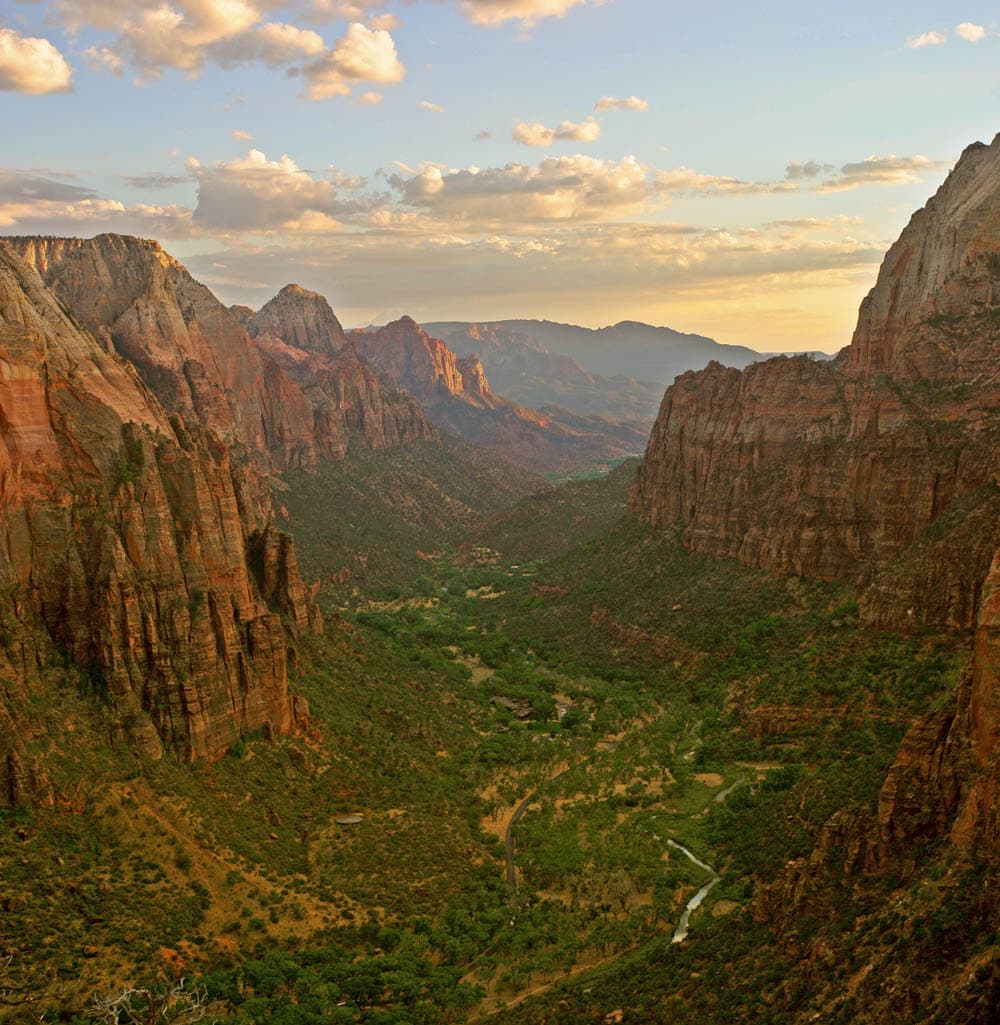
Zion National Park
United States
Big Island
Zion National Park
How do Big Island and Zion National Park compare?
These compete for the same two-week US-nature traveler, and the trip-shape differences are extreme. Big Island is sea-level Hawaiian sprawl: black-sand beaches at Punalu'u, manta-ray night snorkels off Keauhou, the Volcanoes National Park crater drive, and a Kona coffee farm tour where the cherry-and-roast smell defines mid-morning. Zion is red-rock Utah desert at 4,000–8,000 feet — Angels Landing's chained spine, the Narrows wading the Virgin River through 1,000-foot slot walls, and a sandstone-dust scent every afternoon when the canyon wind kicks up.
$320 mid-range Big Island against $310 Zion-gateway lodging in Springdale — nearly identical, but very different where it goes. Big Island money flows into rental cars, snorkel/Mauna Kea tours, and resort dining; Zion money is mostly lodging since the park's free shuttle replaces driving and the food scene is thin (Oscar's Café and the Spotted Dog do reliable dinners). Big Island wins on food (4 vs 2), nightlife (3 vs 1), cleanliness, and tropical-water swimming; Zion wins on transit (4 vs 1 — that shuttle is genuinely excellent), scrambling intensity (Angels Landing, Subway, Observation Point), and pure photogenic geology.
Best months overlap in April–May and September–October — book Angels Landing permits ($6 lottery, 2 weeks ahead) and inside-park Zion Lodge 13 months ahead. Combining requires a complicated flight via Las Vegas or Salt Lake City to Kona, so most travelers commit to one. Pick Big Island if Mauna Kea stargazing and manta snorkels trump red-rock scrambling. Pick Zion National Park if Angels Landing chains and Narrows wading beat black-sand beach mornings.
💰 Budget
🛡️ Safety
Big Island
The Big Island is generally safe with low violent crime — the genuine dangers are environmental: volcanic hazards near active eruptions (volcanic gas, unstable lava benches), high-altitude sickness on Mauna Kea, strong rip currents on the southern beaches, and rental-car break-ins at trailheads. Property crime is the dominant petty-crime concern. Hawaiian green sea turtles and monk seals are federally protected; stay 50 m back.
Zion National Park
Crime at Zion is a non-issue — the real hazards are natural and they kill people every year. Flash floods, falls from Angels Landing, heat illness, hypothermia in the Narrows, and dehydration are the big five. The single most important pre-hike habit: check the NPS flash flood forecast at the visitor center or nps.gov/zion before ANY slot canyon or Narrows trip. "Probable" or "Expected" risk means do not enter — a storm 10 miles upstream can kill you even in bright sunshine at the trailhead.
🌤️ Weather
Big Island
The Big Island has 8 of the world's 13 climate zones — the dramatic feature is the contrast between the wet Hilo (east) side that gets 3,400 mm of rain a year and the dry Kona (west) side that gets 500 mm. The summit of Mauna Kea has alpine conditions year-round (sub-zero overnight temperatures, occasional snow); the Kohala coast resorts are tropical desert. Plan stops on both sides; bring a fleece for Mauna Kea regardless of season.
Zion National Park
Zion's desert climate is defined by vertical relief — the canyon floor sits at 4,000 feet while the rims reach 6,500+ feet, meaning conditions can differ by 5-10°C between stops on the same hike. Summer is brutally hot on exposed trails (35-40°C) with dangerous afternoon monsoon thunderstorms and flash flood potential in slot canyons. Winter brings ice on Angels Landing and snow on the rims, with the canyon floor hovering between 0-15°C. Spring and fall are the ideal windows. The Virgin River stays a bracing 10-15°C year-round — plan Narrows gear accordingly.
🚇 Getting Around
Big Island
The Big Island is genuinely big — 10,400 km², two airports (Hilo and Kona), and 4–5 hours of driving to circumnavigate. A rental car is mandatory; public transport (the Hele-On Bus) is functional but limited. The two natural bases are Kailua-Kona (west, dry, sunny, resort-heavy) and Hilo (east, wet, working town, closer to Volcanoes NP). Many visitors fly into one and out of the other to avoid backtracking.
Walkability: The Big Island is not a walking destination at island scale — it's 10,400 km² and the attractions are spread across all of it. Within specific zones (Aliʻi Drive in Kona, downtown Hilo, Hawi, Volcano village) walking works for an afternoon. Sidewalks outside town centres are minimal.
Zion National Park
Zion's transportation story is simple: the free park shuttle is MANDATORY on the Zion Canyon Scenic Drive April through late November — no private vehicles past Canyon Junction. The shuttle runs a 9-stop loop roughly every 10-15 minutes, takes about 45 minutes end-to-end, and stops at every major trailhead and viewpoint. Springdale (the gateway town) has its own free town shuttle connecting lodges, restaurants, and the park entrance. A private car is only useful on the main drive December through early March, for reaching Kolob Canyons (30 miles northwest, separate entrance), or for the Zion-Mt. Carmel Highway. There is no rideshare service inside the park.
Walkability: Springdale itself is extremely walkable — a linear town strung along Highway 9 with restaurants, outfitters, and lodges all within a mile of each other. Inside the park the shuttle handles the vertical distances; hiking trails are a mix of paved strolls (Riverside Walk, Pa'rus) and serious climbs (Angels Landing, Observation Point). Kolob Canyons has its own scenic drive and short trailheads but is not pedestrian-connected to the main canyon.
📅 Best Time to Visit
Big Island
Apr–May, Sep–Oct
Peak travel window
Zion National Park
Mar–May, Sep–Nov
Peak travel window
The Verdict
Choose Big Island if...
you want the most geologically active Hawaiian island with active volcanoes, world-class stargazing, black-sand beaches, manta-ray night snorkels, and 8 of 13 climate zones in one place
Choose Zion National Park if...
you want red-rock slot canyons, Angels Landing's permit-lottery ridge, and the Narrows waded up the Virgin River
Big Island
Zion National Park
You might also compare
Big IslandvsZion National Park
Try another