Compare 576 Travel Destinations
12 of 576 guides match
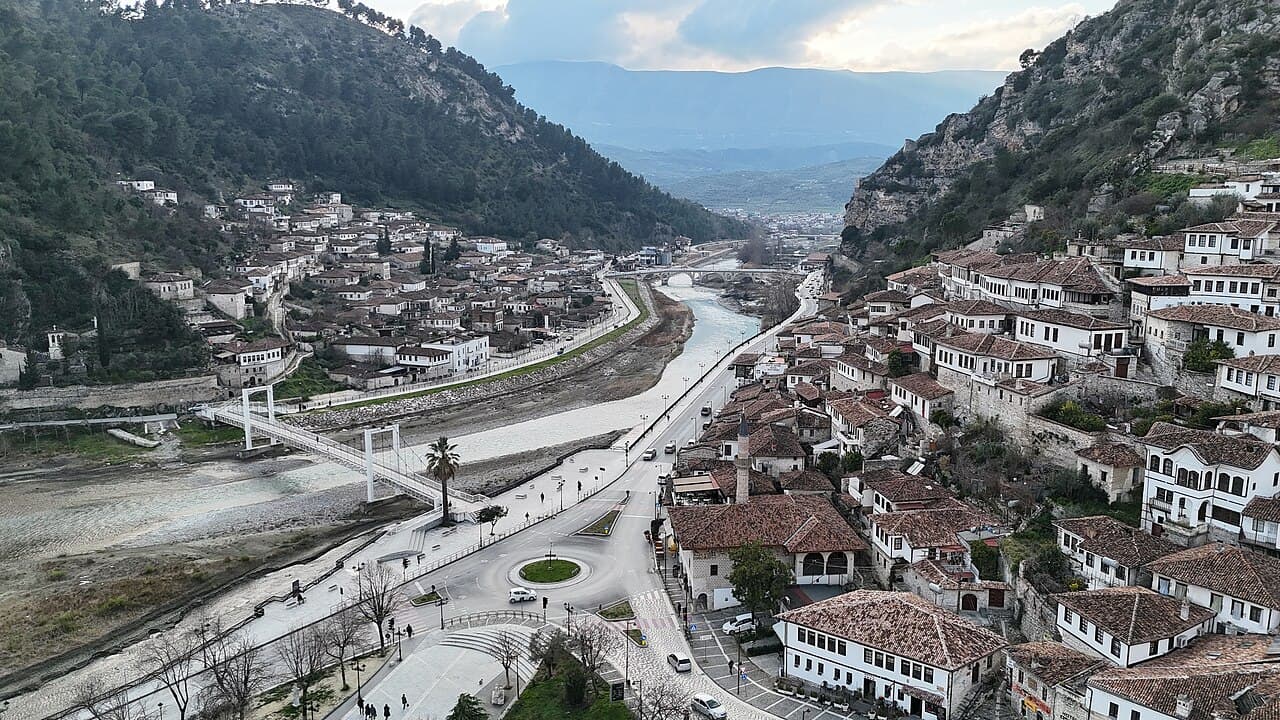
Berat
Albania
The "City of a Thousand Windows" — tiered white Ottoman houses stacked up the slopes above the Osum River. UNESCO 2008 and one of Europe's oldest continuously-inhabited cities (2,400+ years). Berat Castle (Kalaja) is a still-inhabited medieval citadel — people live inside the walls. Facing Mangalem (Muslim) and Gorica (Christian) quarters across the 18th-century stone bridge. Onufri icon museum inside the castle; Çobo and Kokomani wineries in Albania's wine capital; Tomor Mountain NP 20 km east. Access: 2.5 hr bus from Tirana. ALL currency (EUR widely accepted); 90-day visa-free for most Western.

Bruges
Belgium
Bruges is a medieval fairy tale preserved in amber — winding canals, cobblestone squares, Gothic towers, and some of the best chocolate and beer in the world. The Markt square and Belfry are postcard-perfect, the art museums house Flemish masterpieces, and the whole city is compact enough to explore on foot in a day or two.

Český Krumlov
Czech Republic
Český Krumlov is what tourists imagine when they think 'medieval Bohemian fairytale' — a 13,000-person town of red-tile roofs and pastel-coloured facades wrapped tightly inside an oxbow loop of the Vltava River, with a 7-hectare castle complex (the second-largest in the Czech Republic after Prague Castle) climbing the opposite bank. The historic centre joined UNESCO in 1992; the castle moat famously holds bears instead of water, a quirk inherited from the Renaissance-era lords of Rožmberk. Two-and-a-half hours from Prague by direct bus, Český Krumlov is the country's most-visited town outside the capital — and it earns the visit.

Interlaken
Switzerland
Switzerland's alpine adventure capital sits between Lake Thun and Lake Brienz, with the Jungfrau region rising behind town. Base for Jungfraujoch's Top of Europe railway (3,454m), paragliders launching over Höhematte meadow, Lauterbrunnen's 72 waterfalls (inspiration for Rivendell), and Mürren's car-free clifftop perch. Expect Swiss prices.

Karlovy Vary
Czech Republic
Karlovy Vary is the great-grandfather of European spa towns — founded around 1349 by Charles IV (who allegedly discovered the healing thermal springs while hunting deer), peaked in the 19th century when it hosted Beethoven, Goethe, Tsar Peter the Great, and 26,000 annual guests, and still draws spa-goers to its 80+ hot springs and 16 designated drinking fountains. The Mlýnská kolonáda (Mill Colonnade) and the cast-iron Sadová kolonáda anchor the river-valley promenades, and locals carry porcelain sipping cups (lázeňský pohárek) shaped like little teapots between the fountains. The Becherovka herbal liqueur was invented here in 1807 — the unofficial '13th spring' of Karlovy Vary.

Kotor
Montenegro
A medieval walled town at the head of Europe's southernmost fjord — Adriatic drama with Venetian architecture, fortress hikes with jaw-dropping bay views, and a fraction of Dubrovnik's crowds and prices.

Mont Saint-Michel
France
A tidal island and abbey rising 92 metres from the bay between Normandy and Brittany — UNESCO World Heritage since 1979 and one of France's three most-visited monuments alongside the Eiffel Tower and the Louvre, with roughly 3 million annual visitors. The permanent population of the island commune is about 30 people, including the seven monks of the Fraternités Monastiques de Jérusalem who maintain liturgical life in the abbey first founded in 708 CE. The bay has the highest tidal range in continental Europe — up to 14 metres — and the famous tide that rises 'like a galloping horse' across the flats genuinely advances at 15 km/h. A €209 million de-causewaying project completed in 2014 replaced the 1879 stone causeway with a sleek pedestrian footbridge; cars now park 2.5 km away on the mainland. The single Grand Rue climbs from the village gates to the abbey past La Mère Poulard's famous copper-pot soufflé omelettes (beaten by hand over the open fireplace since 1888).

Mostar
Bosnia and Herzegovina
A small Herzegovinan town built around the single most photographed bridge in the Balkans — the 16th-century Ottoman Stari Most arching 24m above the emerald Neretva River. The original bridge stood 427 years before being deliberately destroyed in November 1993; the 2004 reconstruction (using stones from the same Tenelija quarry) is now UNESCO-listed. The Old Town's slippery Ottoman cobbles, Kujundžiluk bazaar with its hand-hammered copper workshops, and the Koski Mehmed-Pasha minaret view make for a 24-hour visit that punches well above its weight. Stay overnight: day-trippers from Dubrovnik clear out by 17:00 and the city becomes itself again.

Positano
Italy
A vertical village of pastel houses tumbling 300 metres down an Amalfi Coast cliff face above the Tyrrhenian Sea — pedestrian-only, no flat ground anywhere in the historic centre, and stairs serving as the primary streets. Spiaggia Grande's dark grey volcanic pebbles framed by stacked pastel facades is the iconic photograph; the 10th-century church of Santa Maria Assunta with its gold-and-green majolica dome anchors the village; and the Sentiero degli Dei (Path of the Gods) cliff-top trail unfolds 500 metres above. UNESCO-listed Amalfi Coast, made-to-measure leather sandals on Via Pasitea, and the most photogenic Italian fishing-village-turned-romance-destination of them all.

Sarandë
Albania
Sarandë is the southern anchor of the Albanian Riviera — a horseshoe bay of pebble beach and pastel apartment blocks staring across 18 km of Ionian Sea at the Greek island of Corfu. From the hilltop Lëkurësi Castle (a 30-minute climb or a €5 taxi) you get the photogenic two-bay sunset; from the harbour ferries cross to Corfu in 30 minutes (€19, multiple daily); and from the bus station the Ksamil islets (turquoise coves, swim-out distance) and the UNESCO Butrint ruins (Greek-Roman-Byzantine-Venetian, 2,500 years of city stacked on an island) are 15 and 25 minutes south. The town itself is honest about being a beach resort first — most architecture is post-1991 — but the location is hard to beat in Europe at €60/day all-in.

Sighișoara
Romania
The only inhabited fortified medieval town in southeastern Europe still in continuous use — a UNESCO World Heritage citadel of cobbled lanes, pastel Saxon townhouses, and nine surviving guild towers wrapped around the hilltop above the Tarnava Mare valley. The Clock Tower's hour-marking automatons have rotated since 1648, the covered wooden Scholars' Stairs from 1642 climb 175 steps to the Church on the Hill, and the ochre house at Strada Cositorarilor 5 is the registered birthplace of Vlad the Impaler in 1431. Two and a half hours by train from Brasov puts you inside the walls by lunch.

Sintra
Portugal
A UNESCO Cultural Landscape of romantic palaces perched above Atlantic mist — the yellow-and-terracotta Pena Palace (1854) crowns a forested hill; the Quinta da Regaleira hides an Initiation Well that spirals 27 meters through 9 floors into the earth; Cabo da Roca is the westernmost point of continental Europe. Sintra is 40 minutes by train from Lisbon and frequently its most memorable day trip.