Postcards · Visited June–July 2025
My favorite opera is about time. I saw it twice in a month.
Der Rosenkavalier in Paris, then Vienna, a few weeks apart, and a week inside the city the opera dreams about.
Published July 3, 2026
Der Rosenkavalier is my favorite opera. In early June I saw it in Paris. A few weeks later I saw it again in Vienna. I hadn’t planned it that way, but when I saw it on the Staatsoper calendar, there was no version of me that would walk past that.
I play the violin. Classical music is less a hobby for me than a first language. It’s the thing I reach for when other words run out. Vienna was never going to be just another city on the list. Vienna is where the language comes from. But I didn’t fly there for the city, exactly.
I flew there for the opera.
If you don’t know Der Rosenkavalier: Strauss and Hofmannsthal wrote it in 1911, a comedy set in the Vienna of Maria Theresa, a hundred and seventy years before its own premiere. A princess, the Marschallin, is in love with a much younger man, and over three acts she does the hardest thing in opera: she sees the ending coming, and she lets him go anyway. In the first act she admits that some nights she gets up and stops all the clocks in the house. It’s a comedy with one of the saddest ideas in music folded inside it: the things we love most, we are always in the middle of losing.
“Die Zeit, die ist ein sonderbar Ding.” Time is a strange thing, the Marschallin sings. When you just live, it’s nothing at all. And then one day, it’s all you can feel.
The same opera, twice
Paris first, at the Théâtre des Champs-Élysées. Everything about that night was new. The production was only two weeks old and aggressively contemporary. The eighteenth century traded for the present, cell phones on stage, Octavian pausing at one point to take a selfie. Véronique Gens and Niamh O’Sullivan were both singing their roles for the very first time; even my favorite opera was brand new to the people performing it. I had the best orchestra seats in the house, close enough to see everything, and I loved it.
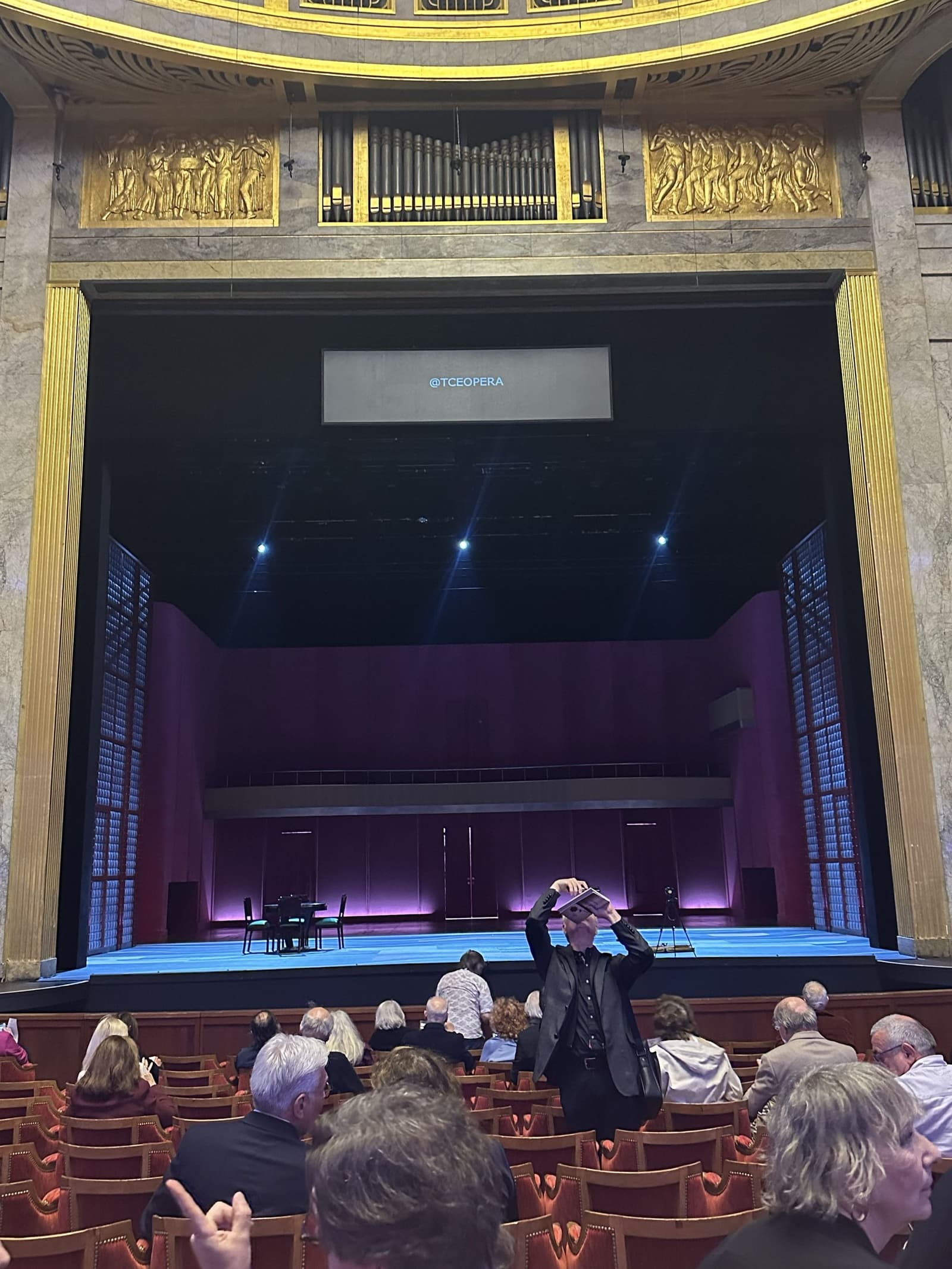
The moment that lifted that night was “Ist ein Traum,” the young lovers’ duet in the final minutes, two people so happy the only explanation they can reach for is that they must be dreaming. In a staging full of cell phones, that music doesn’t care what century it’s in. It just glows.
Vienna was the opposite in almost every way. Nothing was new, and nothing was trying to be. I’ve seen operas all over the world, and the Staatsoper’s Rosenkavalier was as traditional as any of them: Krassimira Stoyanova as the Marschallin, Emily D’Angelo as Octavian, Adam Fischer conducting. This time I didn’t buy the closest seat. I sat higher up on purpose, where the sound gathers. In Paris I sat close enough to watch. In Vienna I sat high enough to listen.
The moment I keep returning to from that night was “Di rigori armato,” a small aria Strauss tucks into Act 1, an opera-within-the-opera, where a tenor sings deliberately old-fashioned music while the Marschallin has her hair done. It’s a throwaway in most performances.
This one stopped me.
Walking the set
Here’s what nobody tells you about Der Rosenkavalier until you’re standing in Vienna: the opera is already nostalgia. Strauss and Hofmannsthal in 1911 were dreaming backward toward a Vienna that had already vanished. And now we dream backward toward theirs.
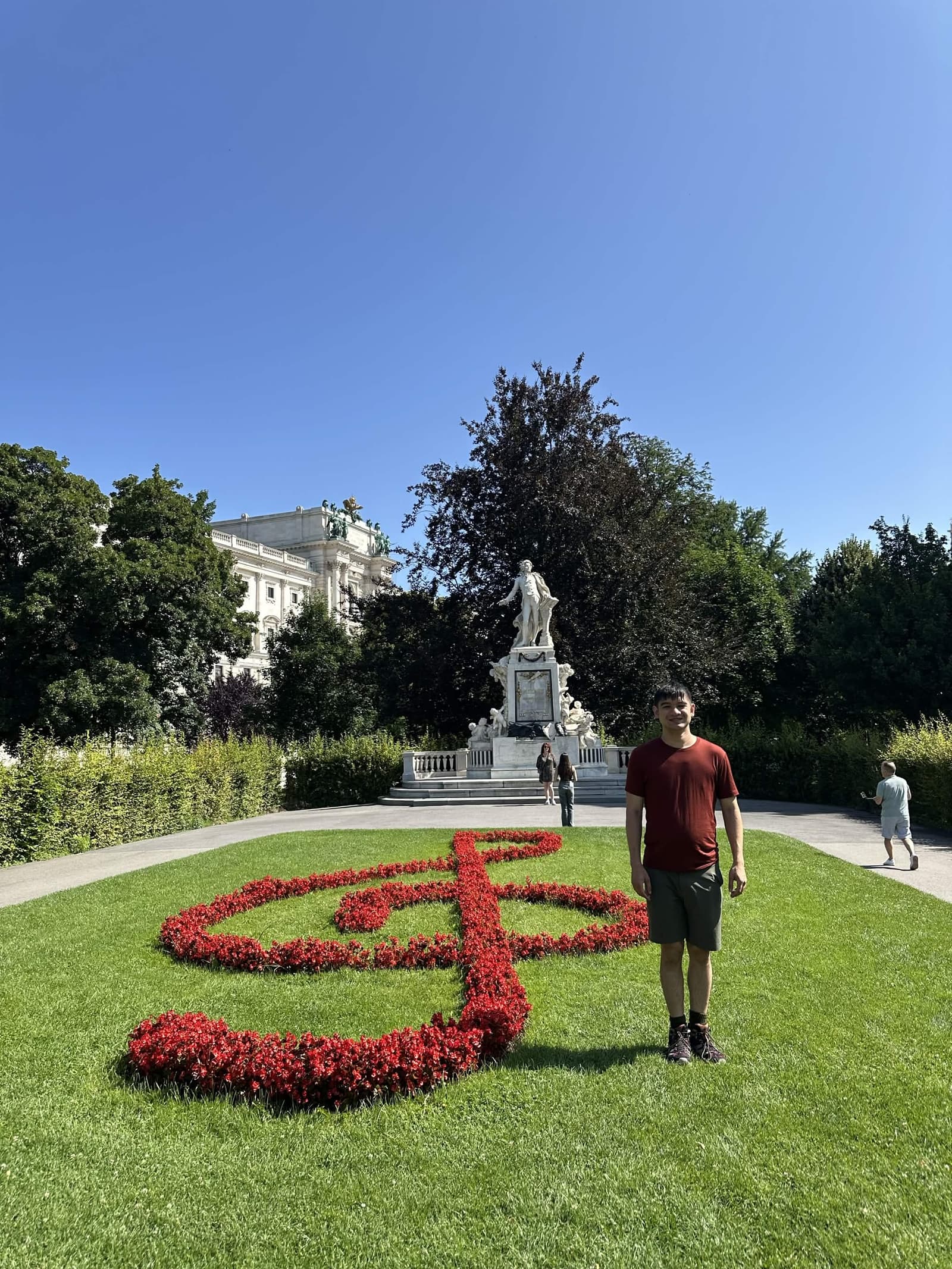
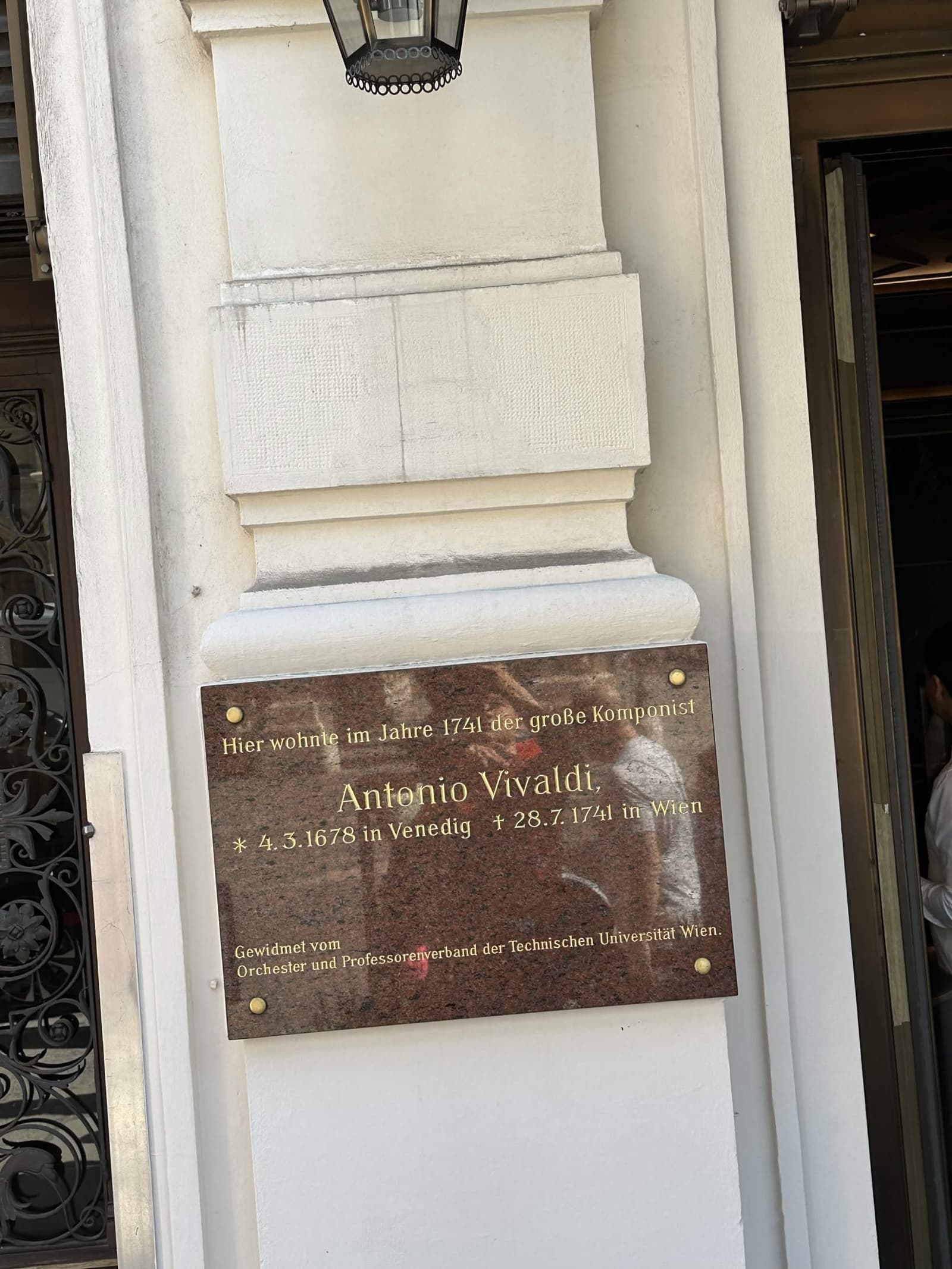
I spent my days walking through it. The Hofburg, where the Habsburgs wintered for six centuries. Schönbrunn, Maria Theresa’s palace, the world the opera pretends to come from. In the Burggarten I found the Mozart monument with a giant treble clef planted in red flowers at its feet, the corniest thing in the city and I loved it anyway. And on a quiet side street, a plaque I almost walked past: Antonio Vivaldi lived and died here, in 1741, broke and mostly forgotten, a long way from Venice. Vienna is where composers come home, even the ones who didn’t mean to.
And I ate. A food tour carried me well past the point of memory, but a few things survived it: a goulash so dark and deep it tasted like it had been on the stove since Maria Theresa’s day, Käsespätzle that could talk you out of ever eating anything else, and the Sachertorte, which lived up to every bit of its fame.
A week of music I already knew
Almost nothing I heard in Vienna was new to me. In a single week I sat through a Mozart program, two evenings of Beethoven, a violin concerto, all of it music I’ve known most of my life. I flew across an ocean to hear things I could already hear in my head. There’s something a little irrational about that, and I’ve stopped apologizing for it. The Marschallin would understand: you can know exactly how something ends and still need to be in the room when it happens.
The Mozart concert made the point almost too literally: a string orchestra in full eighteenth-century costume, wigs and frock coats, my American eyes reading them as colonial reenactors, playing Eine kleine Nachtmusik, about the most familiar music Mozart ever wrote.
Watching Kavakos play the Korngold
The concert I keep coming back to was at the Musikverein, the gilded hall you’ve seen if you’ve ever caught the New Year’s Day concert. The Vienna Symphony opened with a contemporary piece, Lera Auerbach’s Frozen Dreams, the one genuinely new thing I heard all week, then brought out Leonidas Kavakos for the Korngold Violin Concerto, with Beethoven’s Seventh after the interval.
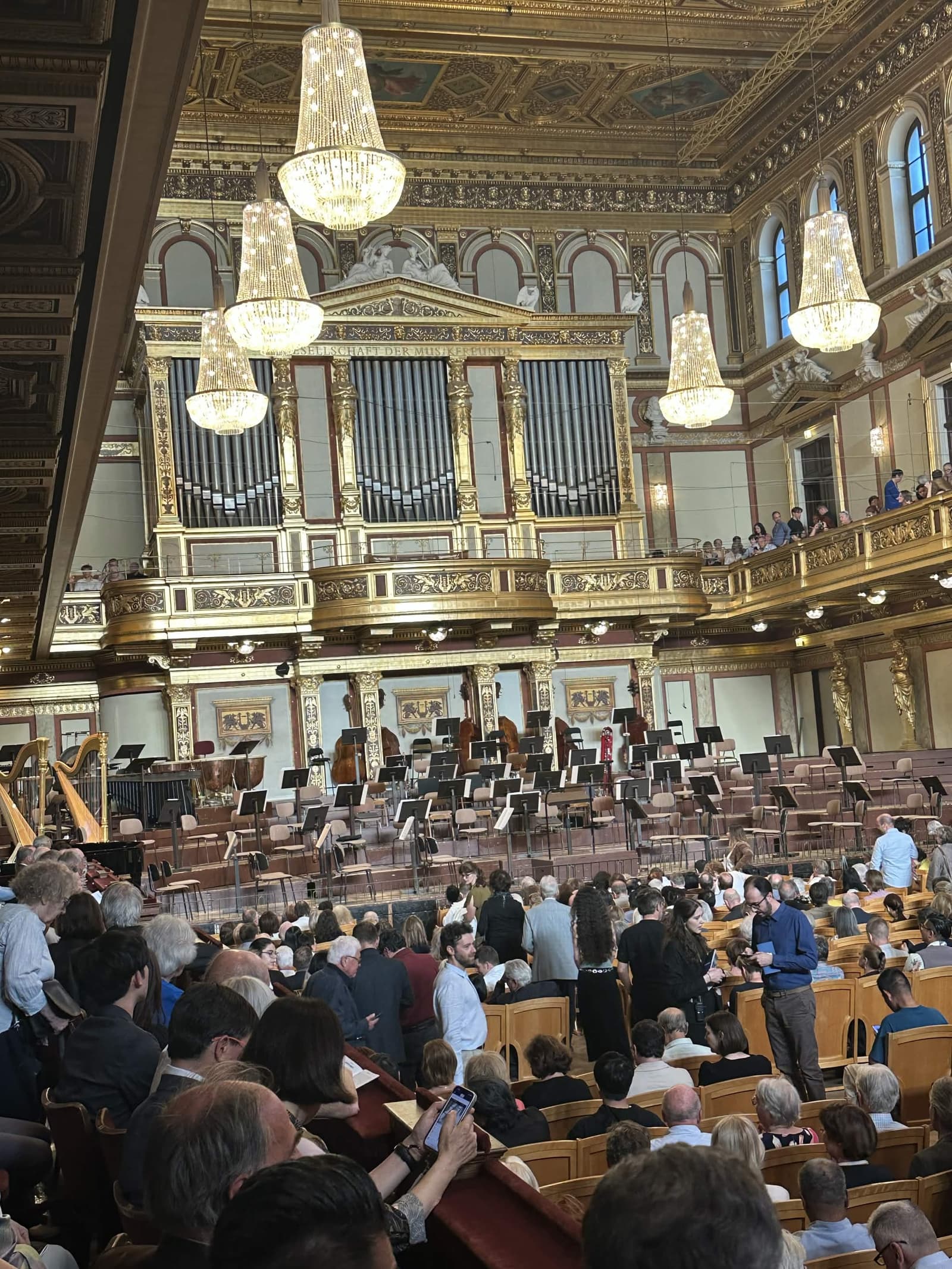
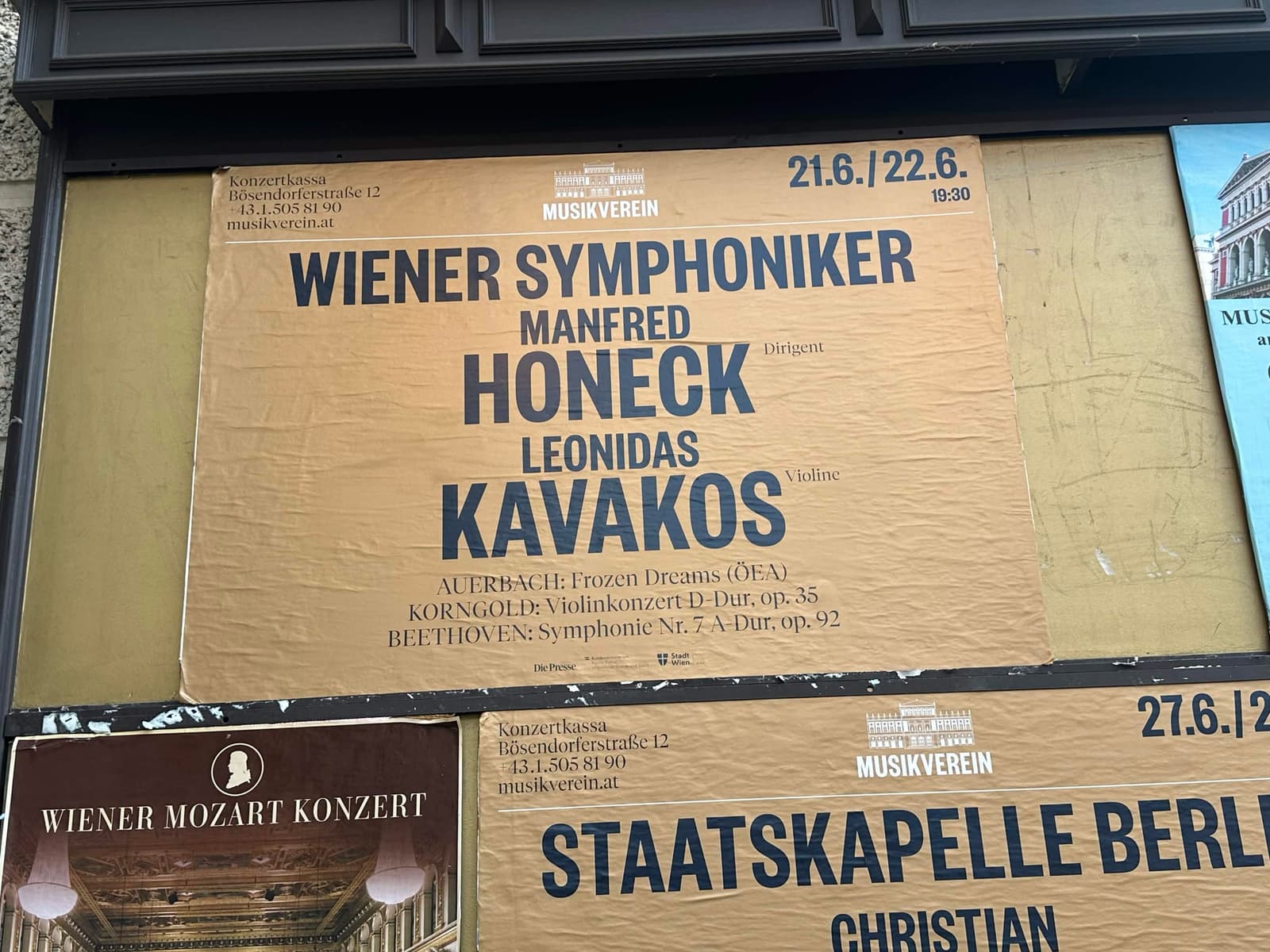
There’s a particular way a violinist watches another violinist. You’re not just listening, you’re studying. And Kavakos gives you plenty to study: the hair, the flamboyant way he throws the bow up into the air, and, in the fastest passages of the last movement, a speed I’d only ever associated with one name: Heifetz. Watching him tear through those runs, the comparison made itself.
Daniel
The seat next to mine that night belonged to Daniel. He’s Irish: a math teacher, a professional backgammon player who’s followed the game around the world, and a classical-music devotee who could hardly believe his luck. Beethoven’s Seventh, his favorite piece of music, was on a program in Vienna the same week he happened to be in town.
I know the Seventh. I’ve known it for years. But when you’re sitting next to someone about to hear their favorite piece live, you stop hearing it entirely as yourself. You hear it a little through them. Afterward we went out for dessert.
Lubna, Jon Batiste, and the Waldstein
On a walking tour I met Lubna, a diplomat. It was mostly just that: a tour, a city walked through with a stranger. Then, out of nowhere, she had tickets to Jon Batiste and asked if I wanted to come.
I’ll be honest: I wasn’t that familiar with his music. Then he played the “Waldstein Wobble,” his blues take on the Waldstein, my favorite Beethoven sonata. I’ve heard that sonata played dozens of ways. I’d never heard it bent toward the blues. I loved it.
A sonata I knew by heart, played by a musician I barely knew, on a ticket from a stranger I’d met days earlier on a walking tour. Vienna kept doing this.
The Marschallin’s clocks
At the end of Der Rosenkavalier, the Marschallin walks into the room where the ending she predicted is happening in front of her, and she blesses it. She knew all along. She showed up anyway.
That’s the closest I can come to explaining why I saw the same opera twice in a month, why I’d cross an ocean for symphonies I could hum in my sleep. We don’t really go back to the music. The music holds still. Rosenkavalier hasn’t changed a note since 1911, the Seventh is the same symphony it was when Daniel fell in love with it, the Waldstein was the Waldstein long before Jon Batiste sat down at the piano. We’re the ones who show up different: in a closer seat or a higher one, in Paris or in Vienna, next to a different stranger each time.
The Marschallin stops her clocks. The rest of us buy another ticket.
On the same place, structured
For the data side of Vienna — costs, climate, FIFA-style scoring, and the full structured guide — see MapSorted’s Vienna guide.
Read more first-hand trip reports in the full collection, or browse the 575 destination guides on MapSorted.