Postcards · Visited December 2025
I’m an introvert. Seoul didn’t give me a choice.
Ten days in a city that refused to let me watch from a distance.
Published May 25, 2026
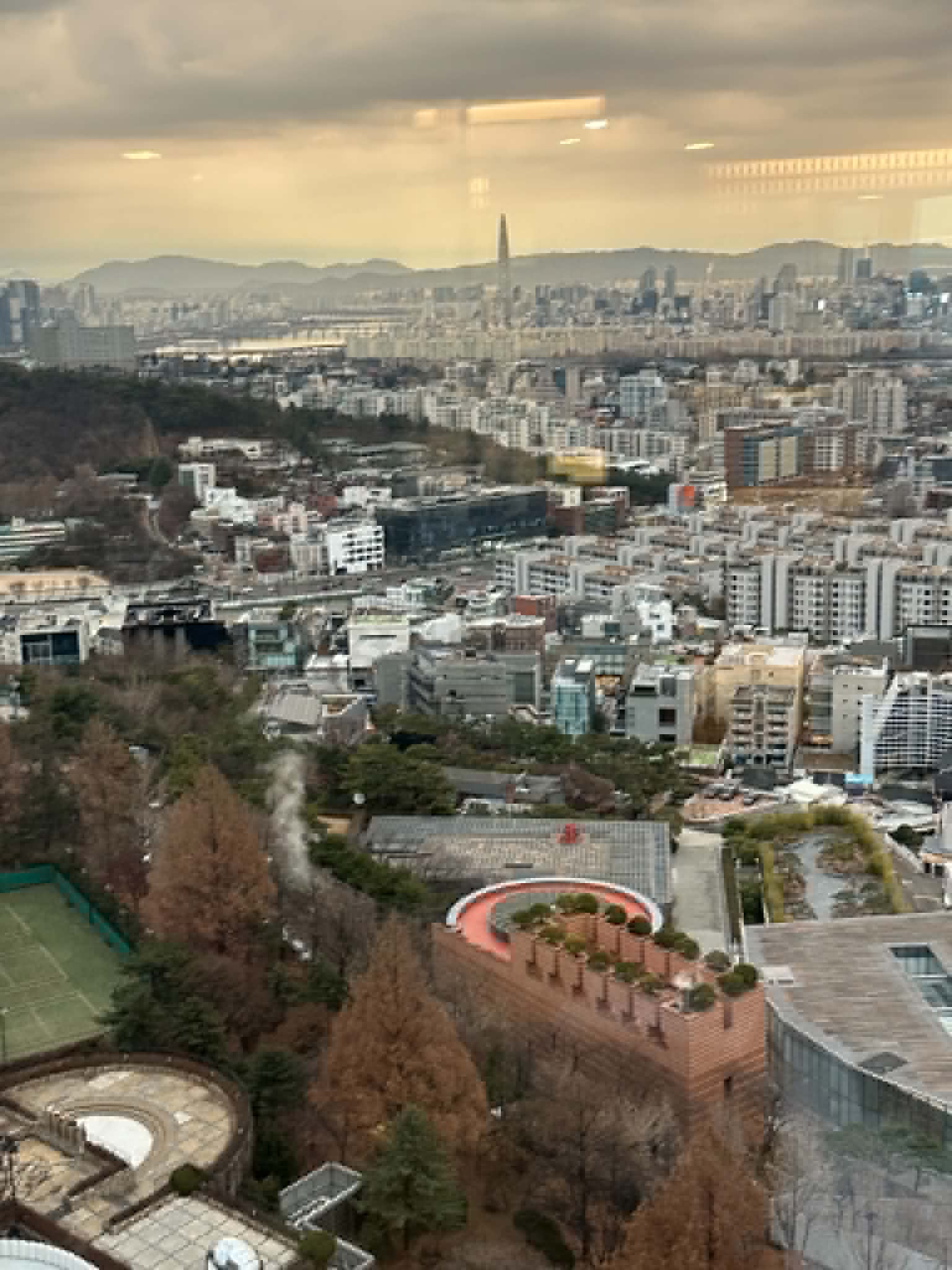
I’m an introvert. I went to Seoul in December 2025 expecting to spend ten days mostly watching. The kind of trip where you eat at a small restaurant alone, walk a lot, see a few palaces, take a couple of photographs. I’m spontaneous on the road. I make friends easily enough. But nightlife is the one part of travel I almost never do. Bars, clubs, late hours. That part of cities usually happens without me.
Seoul did not let me do that.
The city pulled me in. Cold air, neon-lit alleys, music spilling out of basement bars at 2 a.m. The kind of late-night life I usually avoid. Ten days in, I was the one staying up. I was the one playing beer pong for the first time in my life. I was the one on a bus with a thousand strangers at three in the morning, unable to turn, going somewhere I didn’t fully understand.
Why Seoul made the list: Korean esports
Seoul has been on my list of places to visit for years. The reason was esports. As a teenager I’d watched Korean StarCraft pros: BoxeR, Flash, the generation that turned a real-time strategy game into a televised national sport in Korea while the rest of the world barely noticed it existed. The image of Korea I’d carried into adulthood was a country that filled stadiums to watch digital chess.
I flew to a few of these events around the country in those years. MLG Dallas was the only one Flash showed up to. He was my favorite, and the one I was most intimidated by.
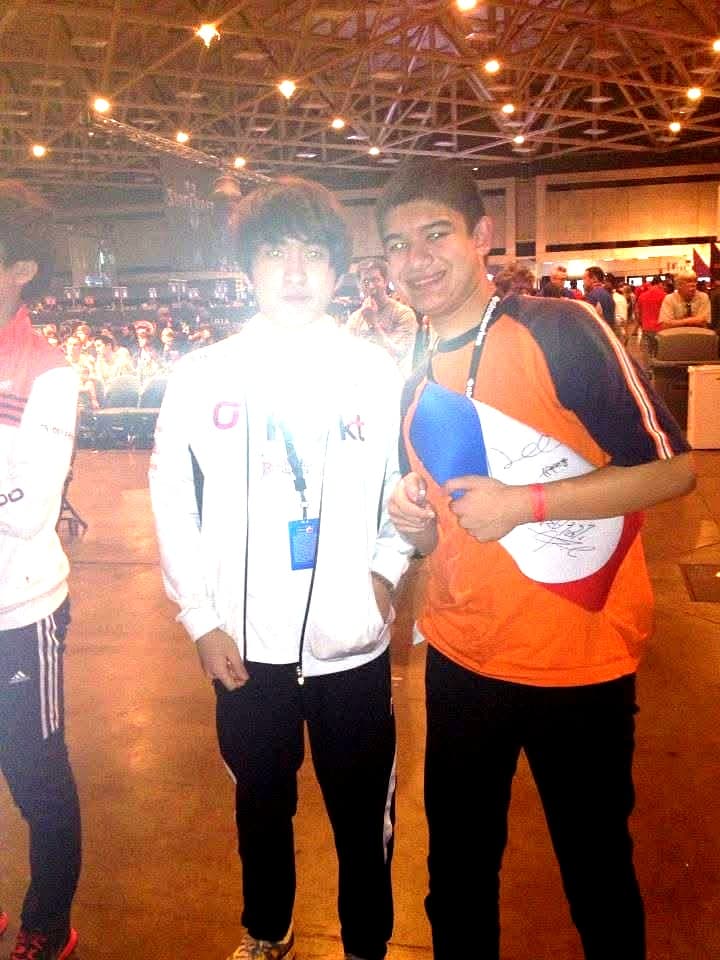
Esports wasn’t actually why I went to Seoul this time. If it had been, I’d have planned around a tournament, checked the schedules, sought out the venues. I didn’t. I’m not really a gamer anymore. I haven’t played StarCraft in years, and the era I’d grown up around has mostly given way to League of Legends, which I never followed. There are still major StarCraft tournaments in Korea, but they’re few and far between now. I wasn’t there to chase one down. The circuit I’d grown up watching had thinned out, and I’d thinned out with it.
But the version of Korea I’d built in my head at fifteen was what put Seoul on my list in the first place.
I’m a sports fanatic. The stadiums were empty.
One of the things I like to do when I travel is take in a local sporting event, to see what a country actually shows up for. I’d known about the K-League for years from playing FIFA. Korean clubs were always part of the rotation I’d cycle through.
I’d booked a sports-tour experience: the kind where a Korean superfan walks a small group of visitors through a live game. My guide was a guy named Alex, a Korean sports fanatic who genuinely lived for it. He took us to a December Asian League match against an Australian side.
Before the match, the group of us went out for Korean fried chicken. Alex, me, and a few of the others on the tour. Somewhere between the first round of beer and the second plate of chicken, Alex mentioned, casually, that Jesse Lingard, the former Manchester United midfielder, was on FC Seoul now. I’d heard of Lingard. I hadn’t connected him to Korean soccer. The match suddenly felt like something I’d want to pay close attention to.
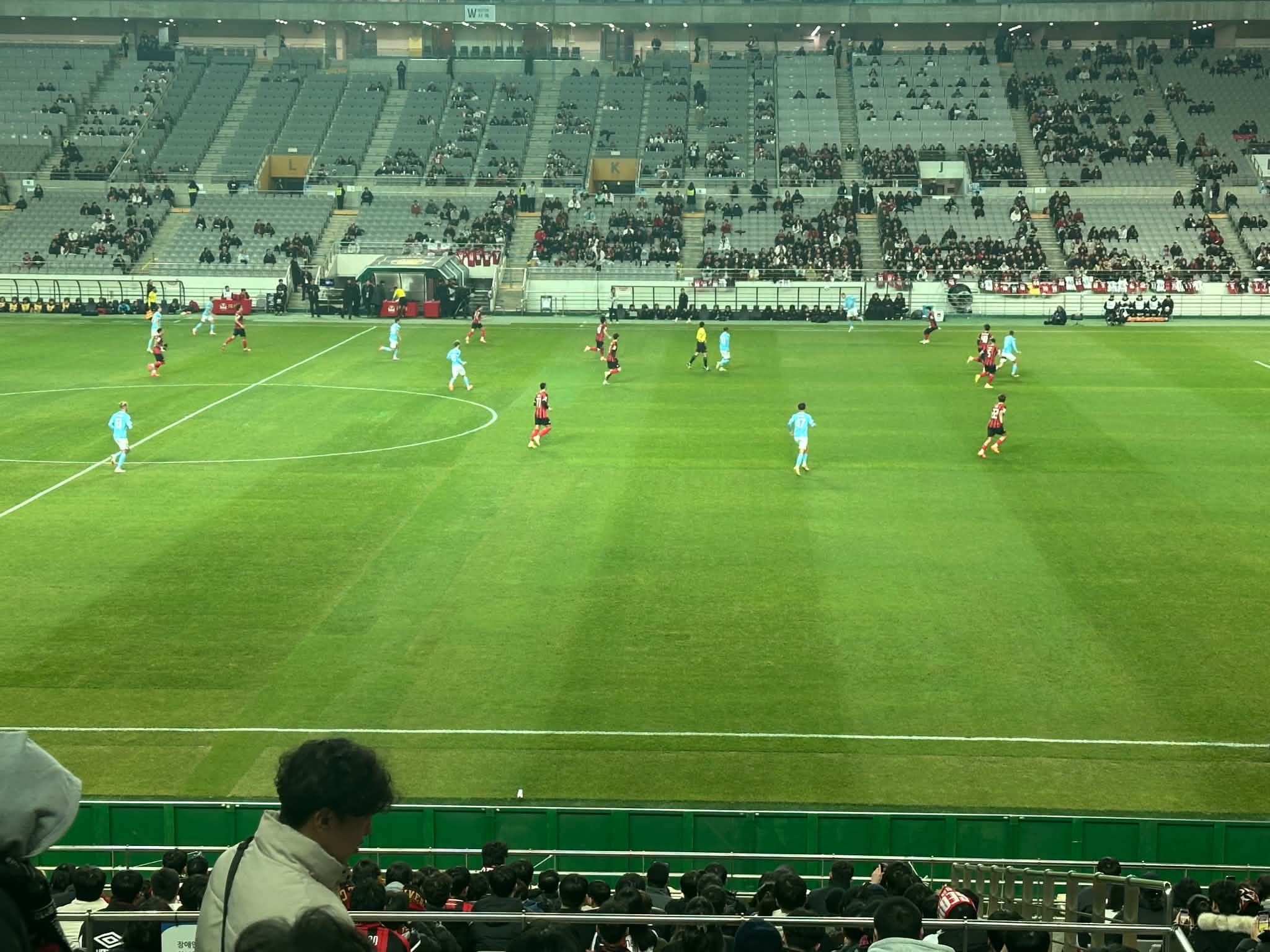
I thought: this is going to be packed. Seoul World Cup Stadium, sixty-six thousand seats, built for the 2002 World Cup. Korean stadiums, K-League energy, a former Premier League name in the lineup. There was no way it wouldn’t be full.
It was almost empty.
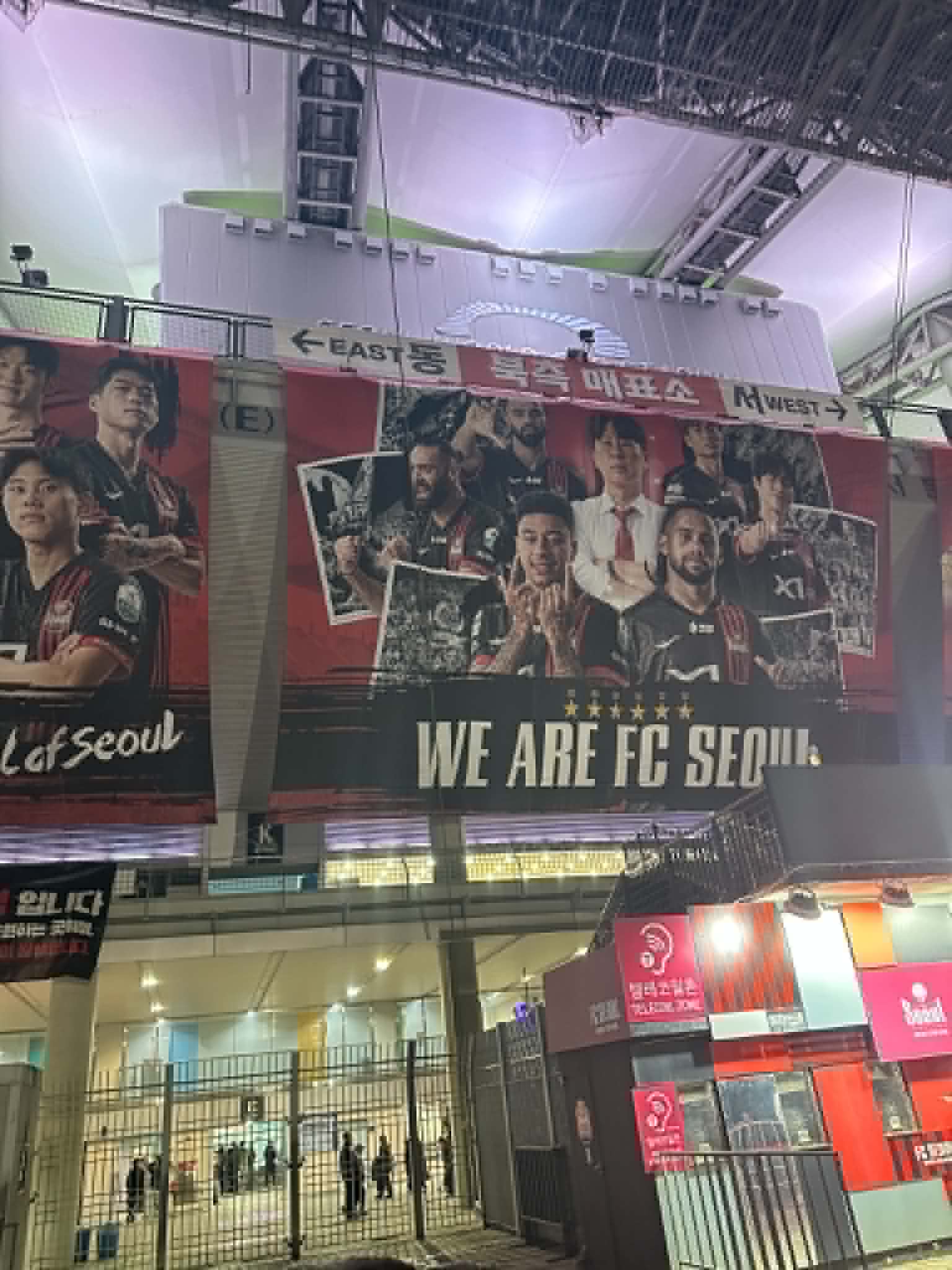
The temperature was somewhere below freezing. The few people there were bundled in layers and quiet. Lingard scored. The home crowd, what there was of it, cheered politely. It ended 1–1. Without Alex, I’d have said the atmosphere was like a minor-league baseball game in the U.S. That quiet. Korea’s reputation for sports fervor is real, but it lives in K-pop concerts and esports arenas, not always in a freezing soccer stadium on a Wednesday night.
One or two seats from me sat a Korean girl who looked maybe high-school-aged, clearly alone, not with our tour or anyone I could see. She wore an FC Seoul jersey and a scarf, the kind of fan kit that says season ticket, not gift shop. She was completely in the match: leaning forward, reacting to every play, making the small involuntary noises a person makes when they actually care. In a stadium that was largely indifferent, she was on fire. I watched her between possessions almost as much as I watched the field.
Alex was a one-man stadium. He stood for every goal. He chanted FC Seoul anthems when nobody around us joined in. He reacted to every near-miss with his whole body. In a freezing half-empty arena, his energy carried us all, and the match became, against all odds, the most fun I’d had at a sporting event in years.
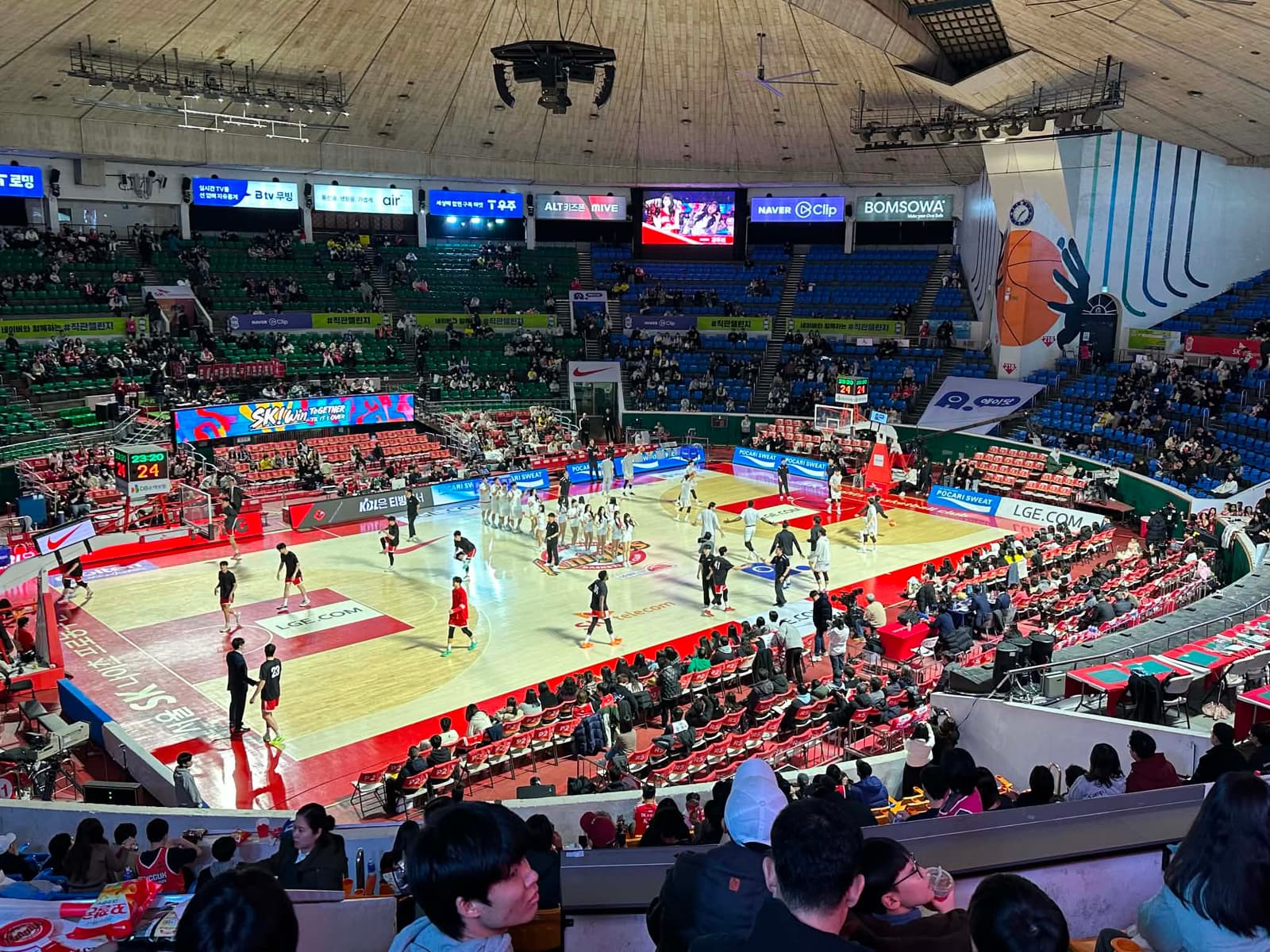
Later in the trip, I went to a Seoul SK Knights basketball game through the same tour company. The guides this time were different, and not nearly as memorable. The crowd was substantial, far more than the soccer match. But what kept hitting me was the music. They played K-pop the entire game. Not just during timeouts and warmups: K-pop blasting through the arena during plays, between possessions, in the seconds between whistles.
A couple of rows back from me, a middle-aged Korean man was dancing. Not in bursts between possessions, but continuously, through the actual plays. I don’t think he sat down. He wasn’t loud. His dance just got more intense on the big moments, and he made faces at every shot.
Korean basketball, in person, sounds almost nothing like American basketball. It sounds like a concert with a game happening in front of it.
The man on the phone had a British accent
The day I arrived in Seoul, I’d booked the afternoon bike tour for that same day. Last minute. I figured I’d shake off the flight by moving. The tour company runs a morning ride and an afternoon ride; I’d taken the second slot.
When I got to the shop a few minutes before the tour was supposed to start, it was locked. Empty. Nobody outside, nobody inside, no sign that anyone was about to open up. I called the number on the booking confirmation, and the voice that answered had a British accent.
Hold on, I thought. The company is called WeRide Korea. I’d assumed I’d be calling a Korean guide.
On the phone, the British voice told me my afternoon tour had been cancelled. I was a little confused. I was standing in front of the right shop, the right sign, all of it. A moment later, the morning tour group rolled back up, just finishing their ride, returning the bikes. The place was clearly running. I asked them how it had gone, then handed my phone to one of his employees, the one who’d just led the morning tour, so the two of them could sort it out. They launched into fluent, fast Korean through the phone. When the employee handed the phone back, the British voice was British again, explaining that nobody else had booked the afternoon slot. He rattled off a few possible times over the next week. Any of them, he said, would work. Just show up.
I came back later in the week, and that’s when I met him in person. His name was Vincent. Black, dreadlocks, English. He’d emigrated to Seoul after the 2002 World Cup, fallen for the country, never left. He ran the bike shop and the tour business.
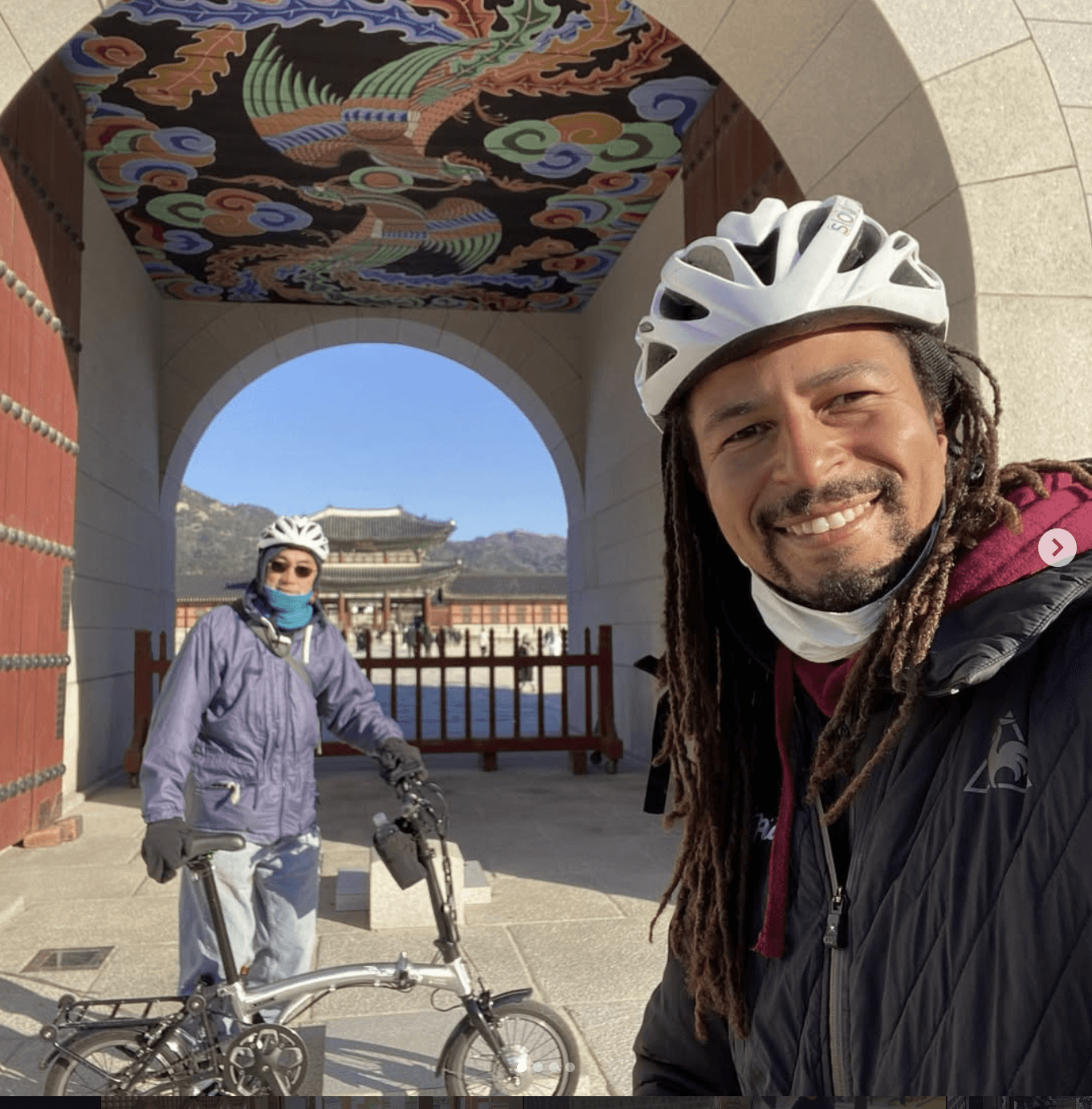
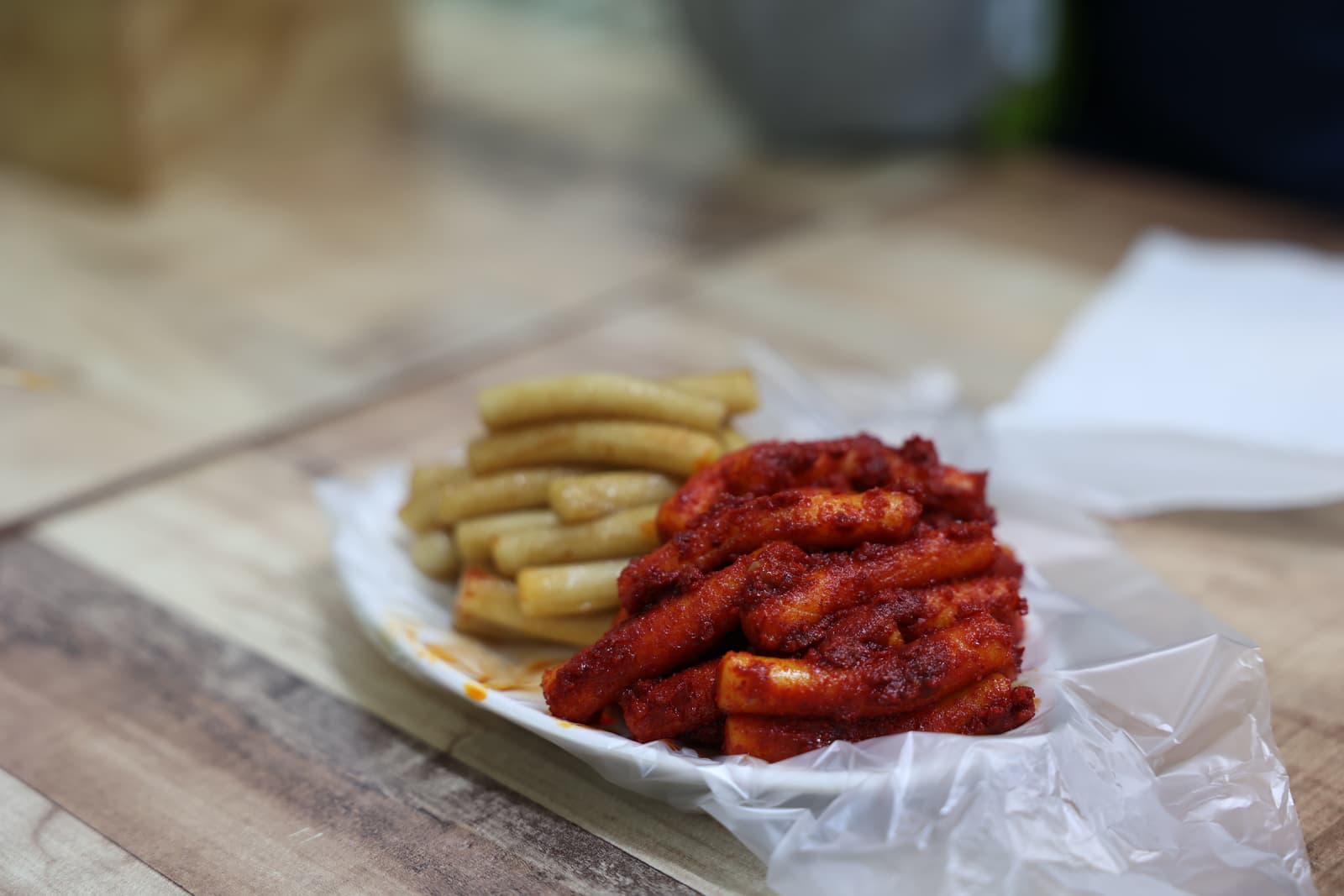
It was just the two of us on the tour that day: me and Emma. A teacher from the UK, living in Dubai. He took us through Seoul on bikes, through Bukchon Hanok Village, past Gyeongbokgung, through neighborhoods I would never have found on foot. Along the way we stopped at street food stalls for tteokbokki (chewy rice cakes in a fierce red gochujang sauce) and at a small Korean bakery dressed up for Christmas. We ate quickly with cold hands before getting back on the bikes. WeRide Korea also runs a multi-day Seoul-to-Busan ride that I keep thinking about going back to do.
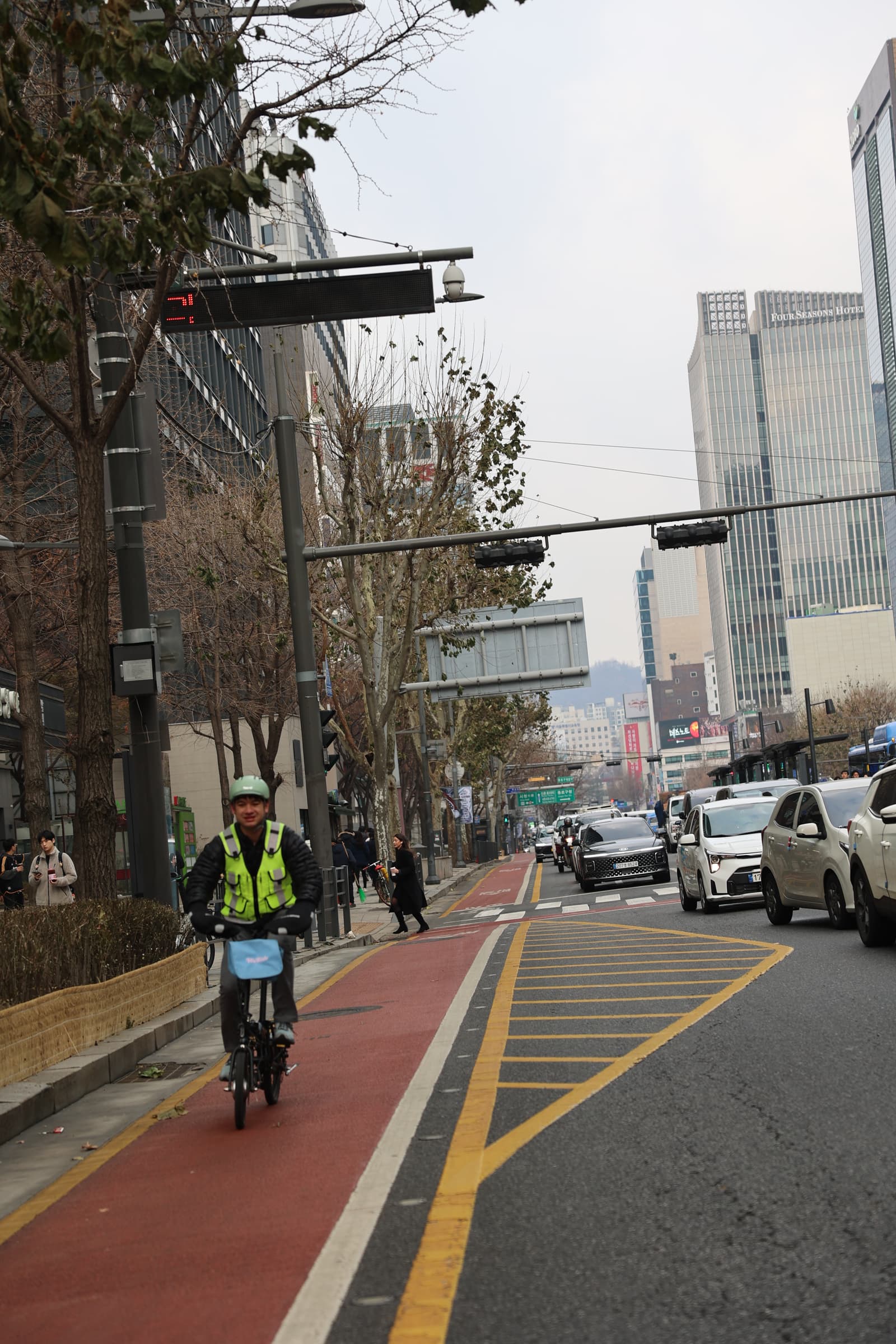
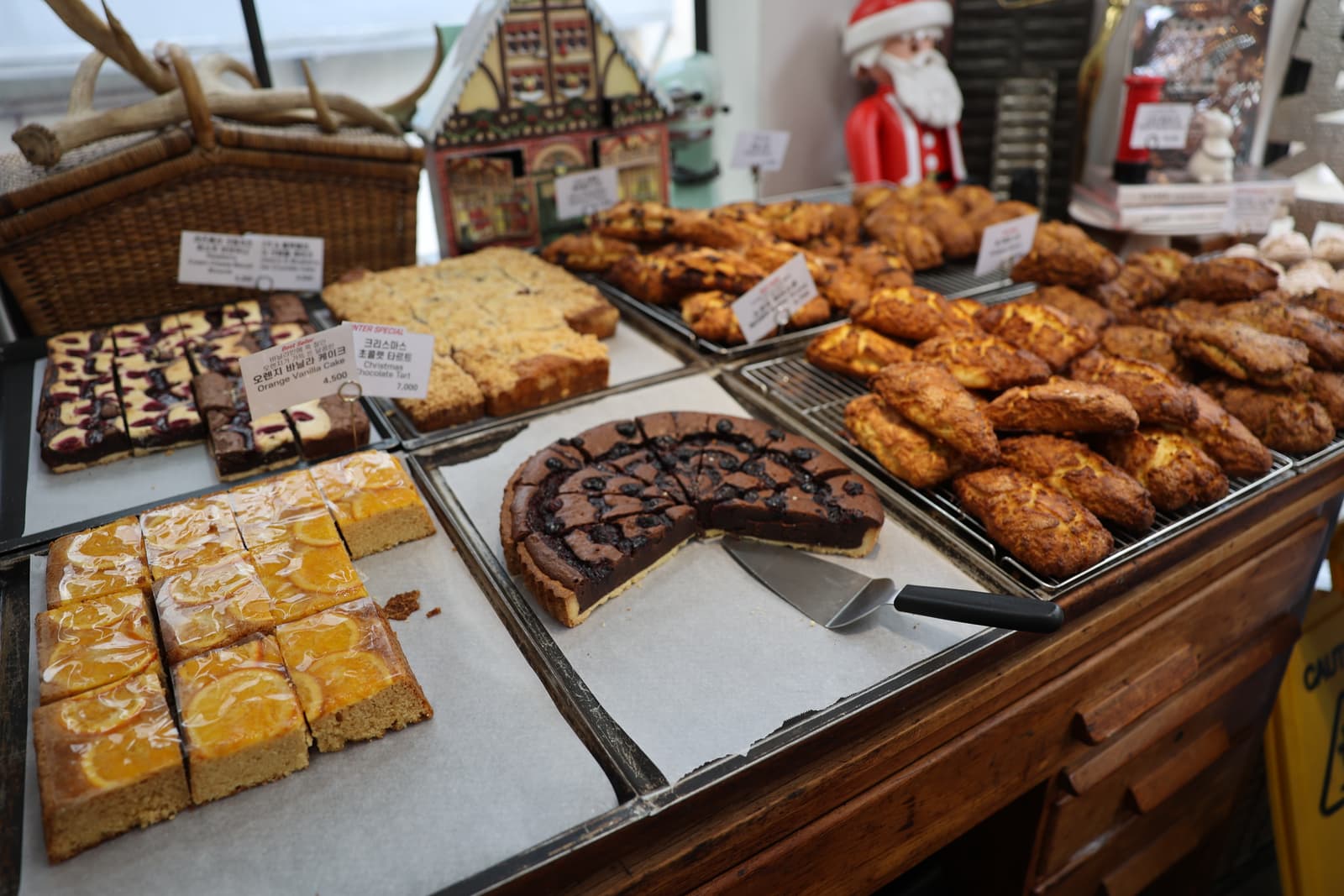
It was clearly a route he’d done many times, and the people along it knew him for it. A few elderly Koreans we passed traded quick words with him in Korean, the kind of exchanges that only come from years of running into the same person.
There’s something specific about meeting someone who chose a place. Fully chose it, learned the language, built a life. That recalibrates what you think of foreignness. Korea isn’t a foreign place to Vincent. It’s home. He’s the foreign-coded one to me, the English-speaking one, but to anyone walking past us on the street, he was the one who belonged there, speaking the right language, knowing the right shortcuts. I was the visitor.
The language exchange and the 3 a.m. bus home
On my second-to-last night in Seoul, I did something completely uncharacteristic. There’s a weekly language exchange in Hongdae: Koreans trying to practice English, foreigners trying to practice Korean. No games, no alcohol; just conversations with random strangers in one room with soft drinks. The actual drinking happens afterward, when the group spills out into Hongdae itself. I’d found it on Airbnb as one of those cheap experiences, listed for less than five bucks. I felt like being social. This was more social than I normally got.
Inside, I met Inkyu, a Korean software engineer who dreamed about working in big tech in Silicon Valley and was at the exchange working on his English. I’d see him again later at a nightlife meetup. I met Ana, a Brazilian student who had been in Korea for years. Portuguese was her native language but I never heard her speak it. She handled the room in Korean and English, both of which she was incredible in. I met Sierra, an American who’d moved from the States to teach at a Korean hagwon. She’s still there. I met a half-dozen people whose names I no longer remember but whose faces I do.
After the official exchange ended, the group of us spilled out into Hongdae itself: drinks at one bar, then somewhere else, then somewhere I can’t remember. Ana and Sierra knew where they wanted to go. I followed. At one of those bars there was a proper beer pong table with a rail running along one side, and someone explained the rules to me, an American who somehow had not previously played the most American game possible. Ana and I against Inkyu and Sierra.
Half the bad shots ended with someone chasing the ball down the rail, which slowed the game way down and somehow made it more fun. Ana and I got out to a huge lead. We didn’t miss for most of the game. Then we needed one cup to close it out, and suddenly couldn’t hit anything. Inkyu and Sierra clawed back shot by shot, and it came right down to the wire. I’m still not sure how we won both games. I keep in touch with a few of the people I met that night, on Instagram.
I stayed later than I usually stay anywhere. By the time I left, it was past 3 a.m., the air was well below freezing, the subway had stopped hours earlier, and no taxi would accept a ride. I was staying across the river in Itaewon. Every app showed cars on the map; none of them were willing to pick anyone up. I suspect drivers actively avoid Hongdae at that hour.
I tried to walk toward a different neighborhood, hoping to flag one down. Failed. By the time I was numb, I gave up and got on a random city bus. The plan was just to escape Hongdae. I didn’t know where the bus was going. I didn’t really care.
There must have been a thousand people on that bus. I couldn’t turn my shoulders. The bus didn’t smell bad, didn’t feel chaotic; just dense. Everyone was patient, quiet, packed in. We pulled away from Hongdae into the wider Seoul night, and through the windows I could see what was supposed to be impossible at 3 a.m.: restaurants still full, lit storefronts, people on the streets, the lights of a city that genuinely did not seem to require sleep.
By some piece of accidental luck, the bus’s route turned through a neighborhood close enough to my hotel that I could walk back from there. I got off, walked twenty minutes through frozen streets, and let myself into my hotel near 4 a.m.
The waiter who wanted a selfie
In the middle of a meal at the high-end restaurant in my hotel, my waiter, Tommy Lee, turned out to be the friendliest waiter I have ever had, anywhere, across every restaurant I’ve eaten at on every continent. Not in a service-script way. He genuinely wanted to know who I was, where I had come from, what I thought of Korea. By the end of the meal he asked if we could take a selfie together. I said yes. I still have the photo.
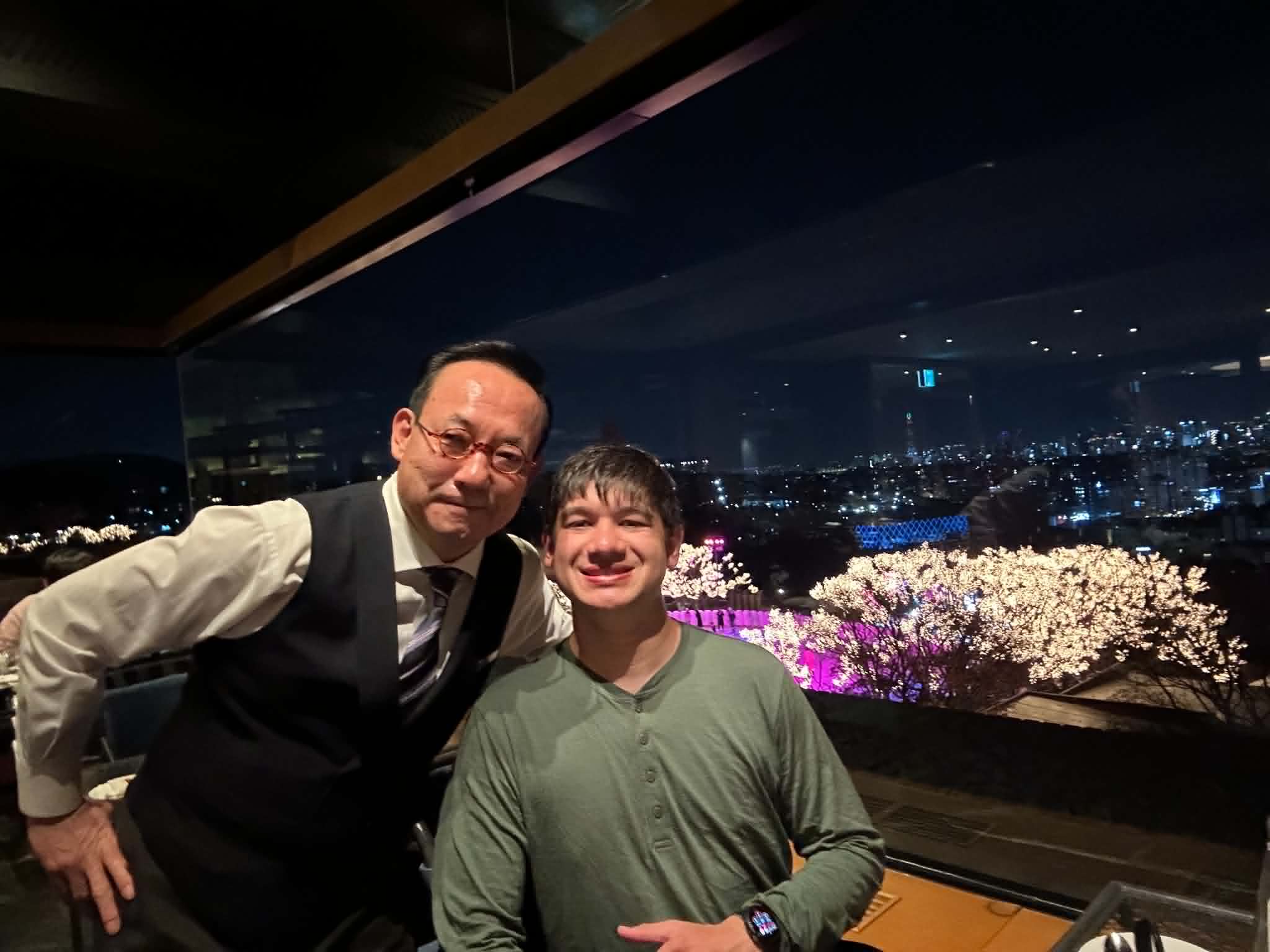
I have never had a waiter, before or since, ask me for a selfie because he was happy to have met me.
A microscope on my head
Somewhere in the middle of the trip, I went to a place called Juno in Gangnam. I had been told, vaguely, to get a haircut in Korea, that it would be different. I had no specific plan. I walked in, asked for a haircut, and ended up in something called a head spa.
The first step was a microscope. They put a small scope on my scalp and showed me, on a screen, what it actually looked like. The stylist did not say my scalp looked terrible. She said it had a lot of problems. She said it carefully, in soft language, the way a doctor might tell you that your kidneys are technically functioning. She recommended a shampoo. I bought the shampoo.
Then they did fifteen steps of various things I could not have named. Cleaning, exfoliating, steaming, massaging, more steaming. Sixty to ninety minutes of careful, patient attention to a part of my body that, statistically, has never received any. I walked out with the best haircut of my life, a bag of expensive shampoo, and a quiet new awareness of my own scalp.
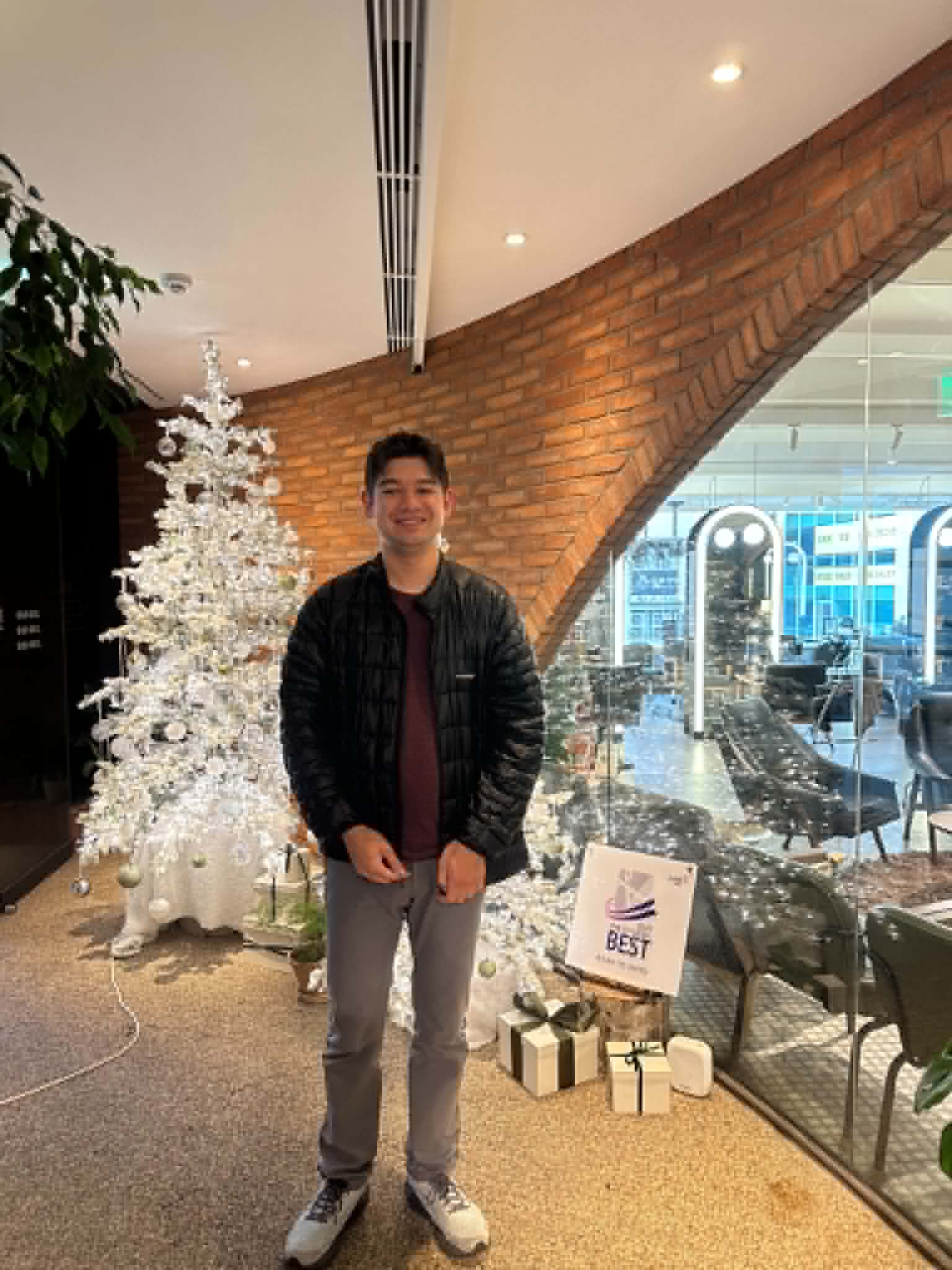
Gangnam is best known to most of the world as a song and as an exporter of luxury. But the specific texture of Korean luxury, in person, is care. Painstaking, multi-step care.
Starfield Library, after the haircut
Walking out of Juno with a freshly cut head, I had an afternoon to spare and looked up what else was nearby in Gangnam. The internet pointed me toward something called Starfield Library, in a mall called COEX a few subway stops away. I figured: I’m in the mood for whatever Korea calls a library.
I expected a small bookstore-as-amenity. What I walked into was a two-story atrium with bookshelves running floor to ceiling, thirteen meters tall, lined with thousands of books anyone could pull down and read. People were sitting on the floor with magazines. People were sitting on the stairs reading. The whole space was technically a mall, the same Gangnam mall complex that hosts a luxury aquarium and an SM Entertainment K-pop studio. But the centerpiece was a library, open and free, that anyone could walk into and stay in.
It was mid-December. A massive lit tree filled the center of the atrium, and the lights threaded through the upper shelves like something out of a storybook.
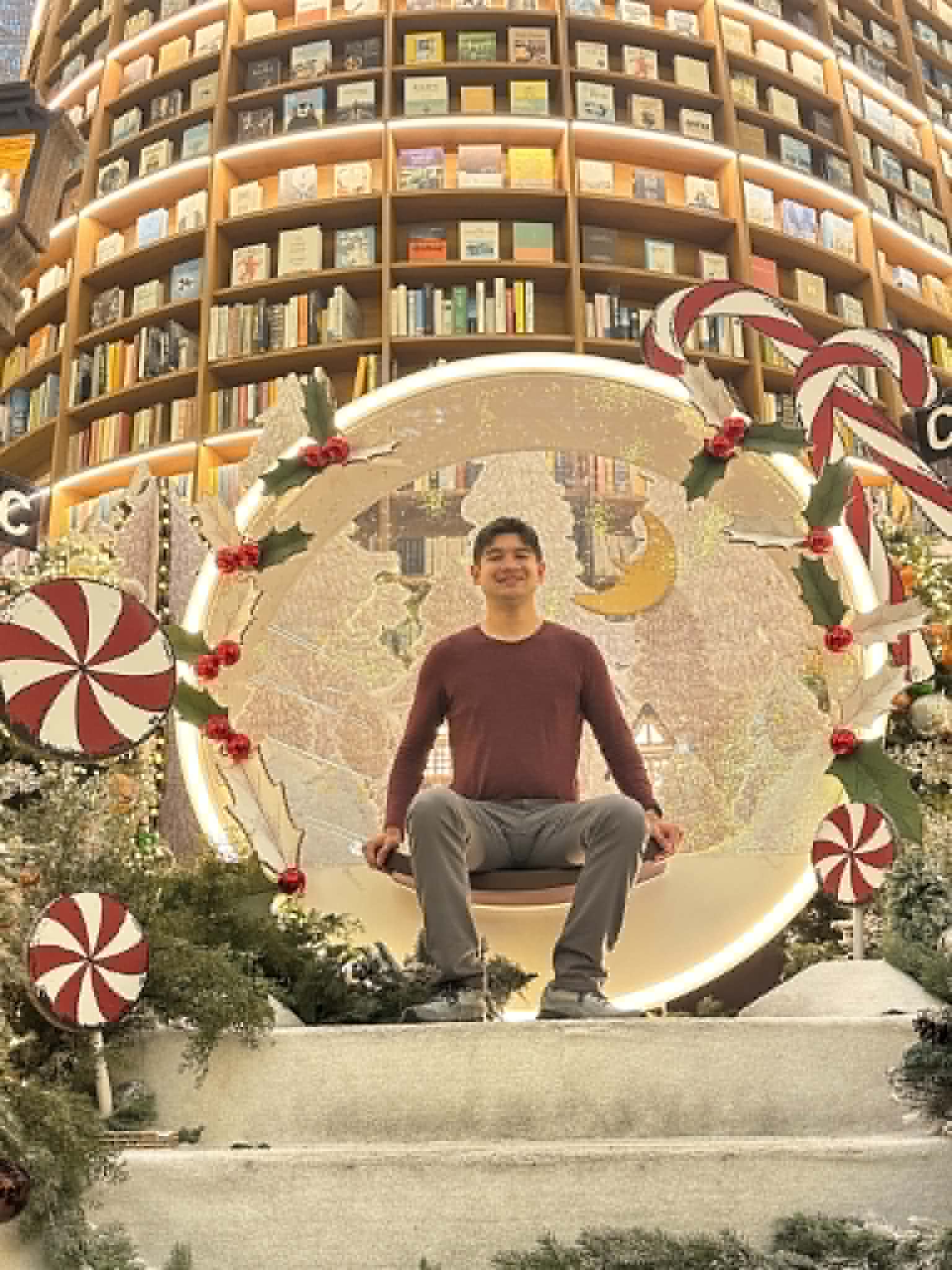
I sat on a bench facing the shelves and read a Korean magazine I couldn’t read.
At the DMZ
I did the DMZ tour because everybody does the DMZ tour. I was prepared for it to feel like a checklist box. In some ways it did. I stood at a fence in a designated photo zone, looking out across a strip of buffer zone that was emptier and quieter than I had pictured. I climbed down into the 3rd Infiltration Tunnel, one of four passages the North Koreans had supposedly dug toward Seoul over decades. The descent was steep and the air dropped several degrees colder. Hard hat on, which I actually needed: I’m tall enough that the ceiling would have knocked me out without it. For five or ten minutes I walked hunched over, ducking, feeling like a miner.
What I keep thinking about wasn’t the fence or the tunnel. Somewhere along the route, the van pulled up to a small building near the DMZ. We watched a short documentary, and then a North Korean refugee came in to talk to us. She had escaped on foot, through China and Thailand. She still has family in the North. She has not seen them.
She told it in the quiet, practiced way of someone who has told the story often enough that the shape is smooth, but the content is not. I couldn’t remember the documentary by the time she finished.
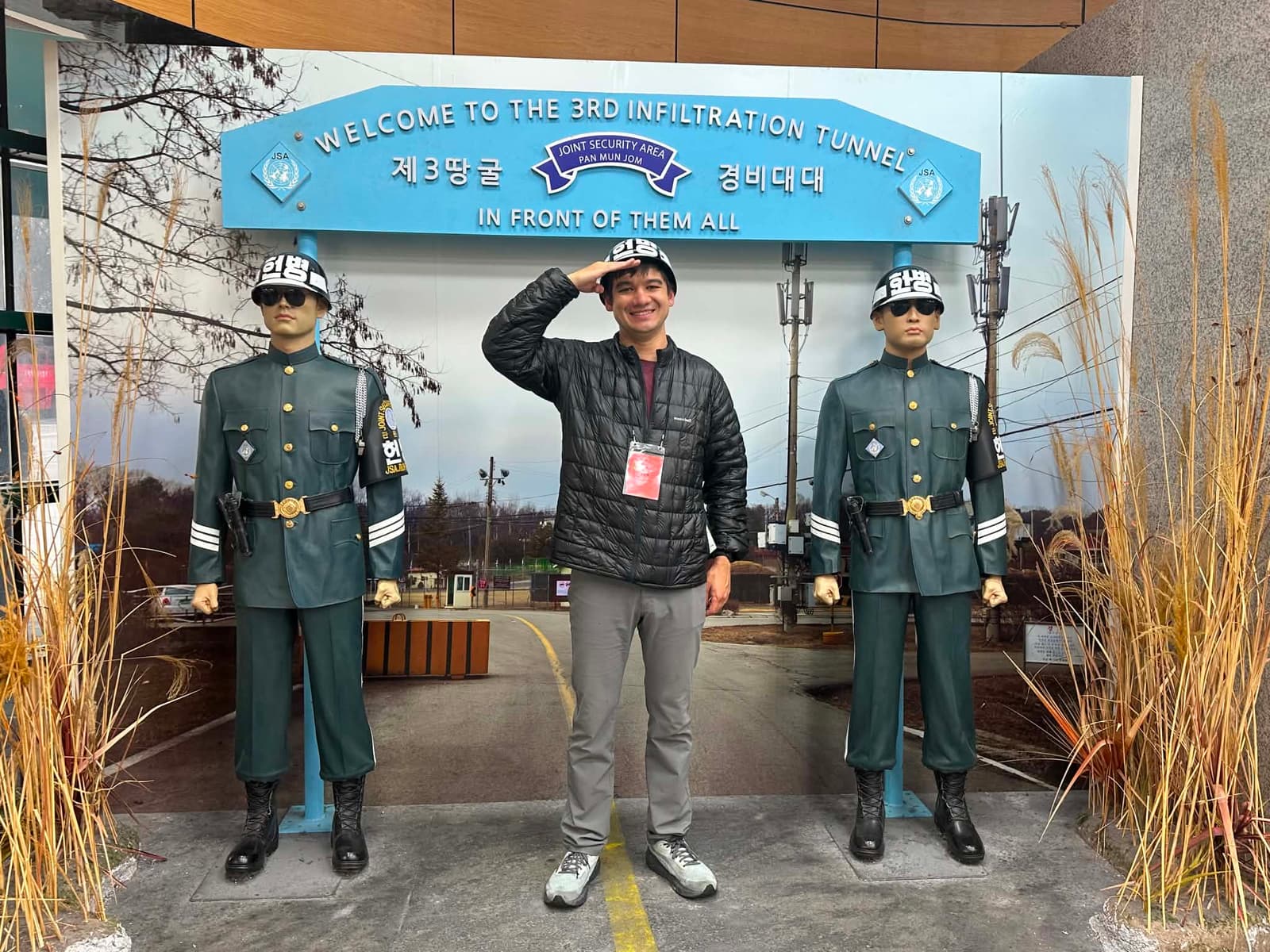
Back above ground, looking across the line, something shifted. I’d just spent a week being pulled into Seoul against my own personality. Late hours, strangers, the 3 a.m. bus through a city that wouldn’t stop. None of it had been a life problem. It had been the great fortune of being on the right side of an arbitrary border.
We don’t usually think about borders this way. We think of them as paperwork, customs, the line at the airport. But standing at one, having just listened to someone describe walking across two countries to get out of a third, you understand what they actually are: filters that decide who gets a life with airports at all. The person on the other side has a passport that won’t open most doors. A version of December 2025 with no Inkyu, no Ana, no Sierra.
What stayed with me
I’d watched Korean esports from a distance for twenty years. StarCraft on a screen, an ocean away. I never made it to a tournament this trip. But the PC bangs were everywhere. Glowing storefronts on what felt like every other corner. Rows of monitors through the glass, mostly full. The country that had taught teenage me what it looked like to fill a stadium for a video game was still doing the smaller, quieter version of itself at street level. I never went into one. I noticed every one I passed.
I am back at my regular distance from the world. But every once in a while I think about the smell of that bus, the heat of all those bodies, and the long quiet drive across a city that did not, even slightly, intend to slow down.
On the same place, structured
For the data side of Seoul — costs, climate, FIFA-style scoring, and the full structured guide — see MapSorted’s Seoul guide.
Read more first-hand trip reports in the full collection, or browse the 575 destination guides on MapSorted.