Quick Verdict
Pick Salt Lake City if you want a walkable Wasatch base camp with craft cocktails and a TRAX line to the airport. Pick Zion National Park National Park if Angels Landing chains, Narrows wading, and Pa'rus Trail dawns beat city dinners.
🏆 Salt Lake City wins 74 OVR vs 71 · attribute matchup 8–1

Salt Lake City
United States
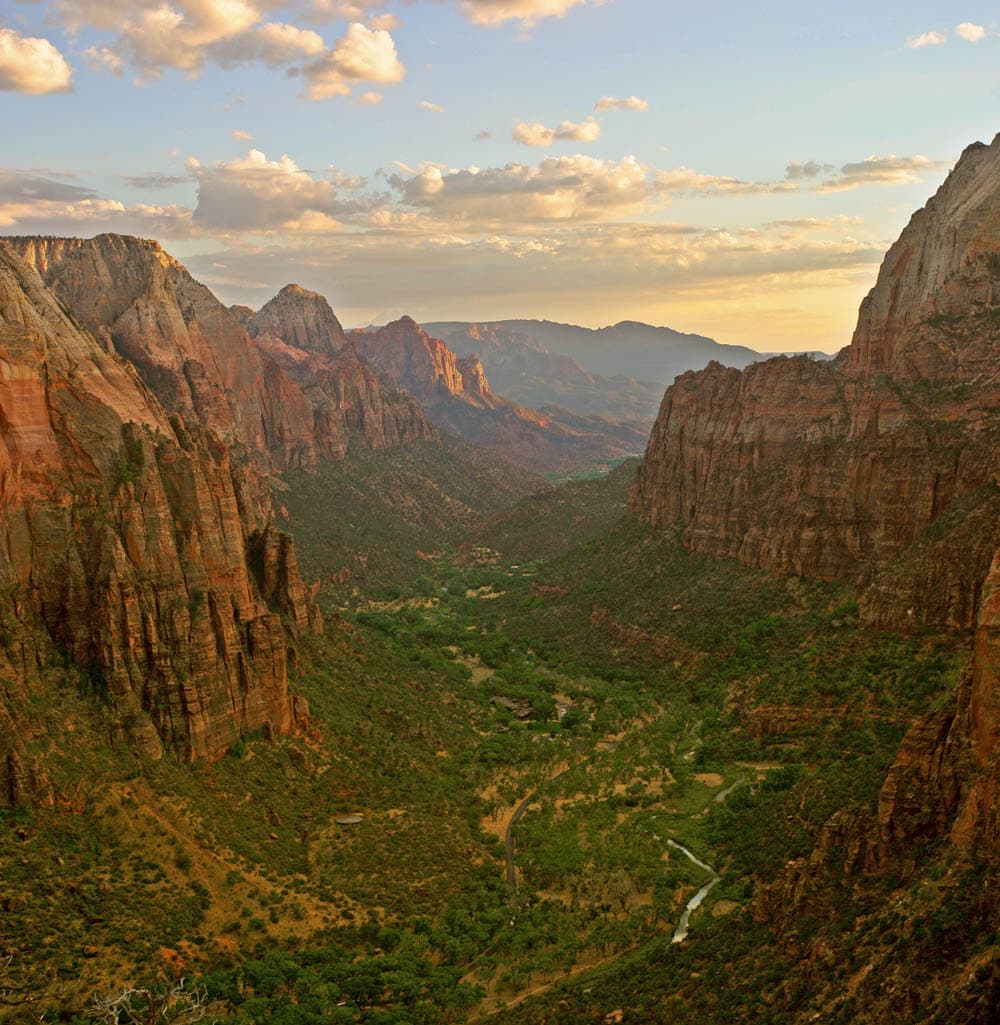
Zion National Park
United States
Salt Lake City
Zion National Park
How do Salt Lake City and Zion National Park compare?
The choice here usually comes down to what your trip already includes — Salt Lake City works as the urban anchor for a Utah road trip, while Zion is the destination you fly into a smaller airport for. SLC at $280 mid-range gives you a walkable downtown, a Wasatch ridgeline visible from your hotel window, and craft cocktail bars that quietly outperform the city's reputation. Zion at $310 mid-range gives you the smell of juniper at first light along the Pa'rus Trail and the slot-canyon echo when the Virgin River bends through Narrows.
The walkability gap matters less than it looks. Salt Lake's grid is genuinely flat and bikeable, and TRAX light rail handles airport-to-downtown in 25 minutes. Zion runs a mandatory shuttle into the canyon from April through November, so you don't drive once you arrive — you wait at Springdale stops with hikers carrying neoprene Narrows pants. Food and nightlife collapse to almost nothing inside the park; Springdale has six decent restaurants and that's the menu. SLC's dining scene around 9th & 9th and Sugar House holds its own against Denver.
The smartest move is to do both — fly into SLC, spend two nights for Antelope Island bison drives and a Wasatch hike, then drive 4.5 hours south to Springdale for three nights of canyon hiking. Book Angels Landing permits 2 months ahead via recreation.gov; lottery odds drop hard in October.
💰 Budget
🛡️ Safety
Salt Lake City
Salt Lake City is one of the safer large US cities — overall violent crime rates are below the national average for cities of similar size, and tourist neighborhoods (Downtown, Temple Square, the Avenues, Sugar House, 9th & 9th, University District) are comfortable day and night. The city's primary issues are property crime (car break-ins) and concentrated homelessness in pockets of downtown (Rio Grande district, around the central library). Solo female travellers report Salt Lake as comfortable.
Zion National Park
Crime at Zion is a non-issue — the real hazards are natural and they kill people every year. Flash floods, falls from Angels Landing, heat illness, hypothermia in the Narrows, and dehydration are the big five. The single most important pre-hike habit: check the NPS flash flood forecast at the visitor center or nps.gov/zion before ANY slot canyon or Narrows trip. "Probable" or "Expected" risk means do not enter — a storm 10 miles upstream can kill you even in bright sunshine at the trailhead.
🌤️ Weather
Salt Lake City
Salt Lake City has a semi-arid continental climate with four distinct seasons — hot dry summers (highs 32–35°C with low humidity), cold snowy winters (lows -7°C, the famous "lake-effect" snow that's among the lightest and driest in the world), and pleasant transitional spring and autumn. The city sits at 4,265 feet (1,300m) elevation; the Wasatch Mountains rise to 11,000+ feet immediately east. The famous "Greatest Snow on Earth" tagline is genuinely true — Wasatch snow is unusually dry due to the lake-effect mechanism.
Zion National Park
Zion's desert climate is defined by vertical relief — the canyon floor sits at 4,000 feet while the rims reach 6,500+ feet, meaning conditions can differ by 5-10°C between stops on the same hike. Summer is brutally hot on exposed trails (35-40°C) with dangerous afternoon monsoon thunderstorms and flash flood potential in slot canyons. Winter brings ice on Angels Landing and snow on the rims, with the canyon floor hovering between 0-15°C. Spring and fall are the ideal windows. The Virgin River stays a bracing 10-15°C year-round — plan Narrows gear accordingly.
🚇 Getting Around
Salt Lake City
Salt Lake City is unusually walkable and transit-friendly for a Western US city — the TRAX light rail and FrontRunner commuter rail are extensive, downtown is flat with a perfect grid, and the airport is connected by light rail. Mountain trips (Park City, Snowbird, Alta) require a car or paid shuttle. The city grid is so logical (numbered streets radiating from Temple Square) that navigation is trivial after one day.
Walkability: Salt Lake is unusually walkable for the western US — flat downtown, perfect numbered street grid (which makes navigation trivial), and walkable density between Temple Square, the City-County Building, the Capitol, and the central business district. The city is far more walkable than Phoenix, Las Vegas, Denver, or Albuquerque. Mountain access requires a car or shuttle; everything inside the I-15/I-215 ring is fine on foot/transit.
Zion National Park
Zion's transportation story is simple: the free park shuttle is MANDATORY on the Zion Canyon Scenic Drive April through late November — no private vehicles past Canyon Junction. The shuttle runs a 9-stop loop roughly every 10-15 minutes, takes about 45 minutes end-to-end, and stops at every major trailhead and viewpoint. Springdale (the gateway town) has its own free town shuttle connecting lodges, restaurants, and the park entrance. A private car is only useful on the main drive December through early March, for reaching Kolob Canyons (30 miles northwest, separate entrance), or for the Zion-Mt. Carmel Highway. There is no rideshare service inside the park.
Walkability: Springdale itself is extremely walkable — a linear town strung along Highway 9 with restaurants, outfitters, and lodges all within a mile of each other. Inside the park the shuttle handles the vertical distances; hiking trails are a mix of paved strolls (Riverside Walk, Pa'rus) and serious climbs (Angels Landing, Observation Point). Kolob Canyons has its own scenic drive and short trailheads but is not pedestrian-connected to the main canyon.
📅 Best Time to Visit
Salt Lake City
Mar–May, Sep–Oct
Peak travel window
Zion National Park
Mar–May, Sep–Nov
Peak travel window
The Verdict
Choose Salt Lake City if...
you want unusually walkable Western US base camp for world-class Wasatch skiing, Mighty Five national parks (Arches, Zion, Bryce), Antelope Island bison, and a culturally distinctive LDS-heritage city with surprisingly strong craft beer and cocktail scenes
Choose Zion National Park if...
you want red-rock slot canyons, Angels Landing's permit-lottery ridge, and the Narrows waded up the Virgin River
Salt Lake City
Zion National Park
You might also compare
Salt Lake CityvsZion National Park
Try another