Quick Verdict
Pick Chiang Mai for $2 khao soi bowls, Doi Suthep mountain temples, and Sunday Walking Street craft markets. Pick Kyoto if Fushimi Inari sunrise torii, Arashiyama bamboo, and 9-course kaiseki on lacquerware win.
🏆 Kyoto wins 83 OVR vs 77 · attribute matchup 7–2

Kyoto
Japan
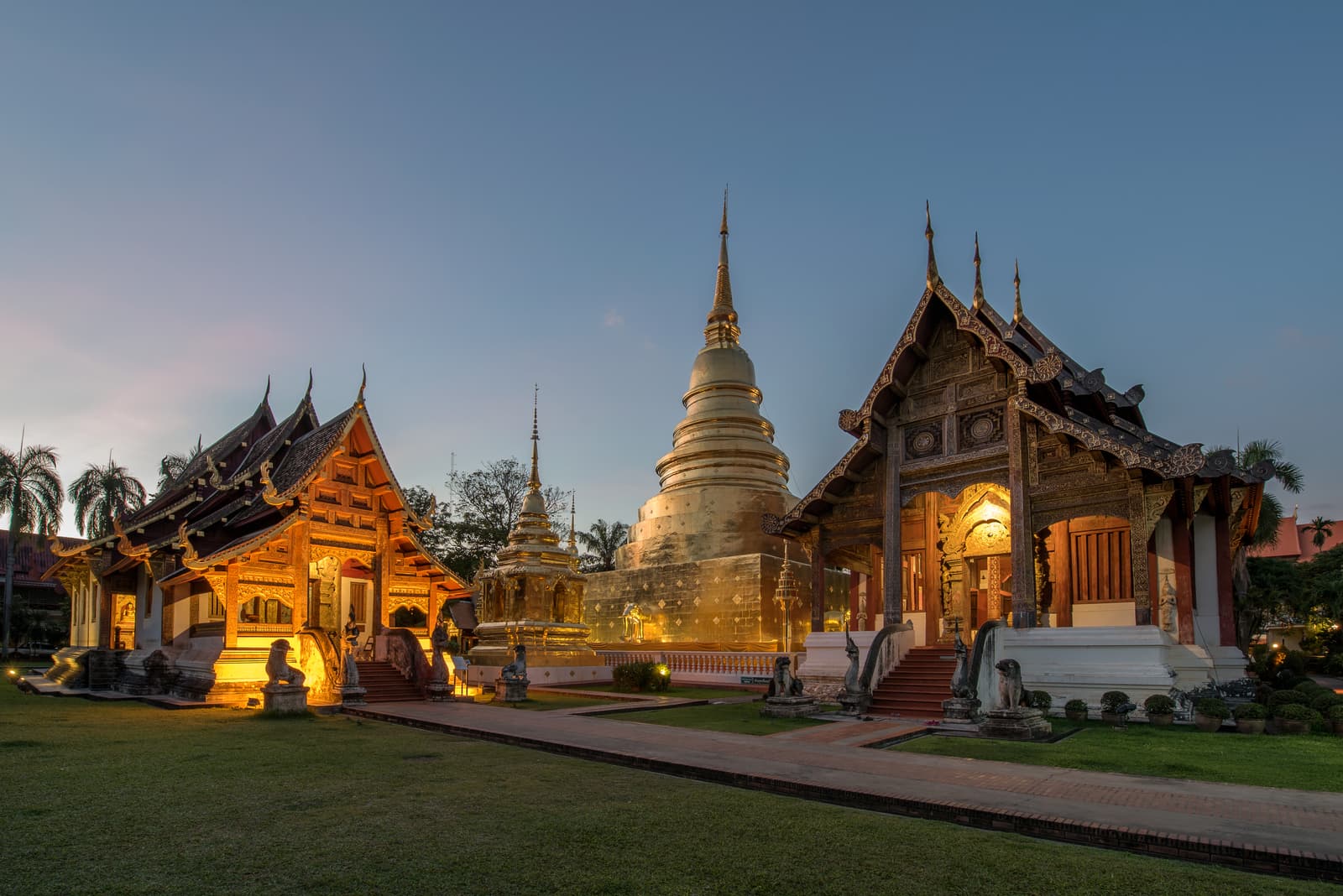
Chiang Mai
Thailand
Kyoto
Chiang Mai
How do Kyoto and Chiang Mai compare?
Two temple-city heavyweights at very different price tiers, and they teach different things about Asian Buddhism. Chiang Mai is the working version — Wat Phra Singh and Wat Chedi Luang inside the Old City moat, Doi Suthep up the mountain, monks on alms rounds at sunrise, and a Sunday Walking Street that turns the entire main road into a craft market. Kyoto is the curated, polished, UNESCO-protected version — Fushimi Inari's vermillion torii gates climbed at sunrise before the crowd, the Arashiyama bamboo grove, Gion's geiko district at dusk, and ryokan stays where dinner is a 9-course kaiseki served on lacquerware.
Chiang Mai runs about $55/day and Kyoto $130/day, and the gap shows up immediately in food and lodging. Chiang Mai is the long-stay city — you can spend a month, take a Thai cooking class at Thai Farm, ride a scooter to a waterfall, and eat khao soi for $2 a bowl. Kyoto is the focused 4 to 6 day trip where you absorb a different aesthetic register entirely — the matcha culture, the sento bath rituals, the cherry blossoms in early April or maples in late November.
Chiang Mai peaks November through February. Kyoto peaks late March through April for sakura and late October through November for koyo. Practical tip: book Kyoto ryokan with kaiseki six months out for the foliage windows — the good ones (Hiiragiya, Tawaraya) sell out, and the chain hotels make a Kyoto trip feel like a missed opportunity. Pick Chiang Mai for breadth and bargain depth; pick Kyoto for the most refined cultural week available in Asia at any price.
💰 Budget
🛡️ Safety
Kyoto
Kyoto is exceptionally safe, even by Japan's high standards. Violent crime against tourists is virtually unheard of. Lost wallets are routinely turned in to police boxes (koban) with cash intact. The main concerns are heat exhaustion in summer and cultural etiquette missteps.
Chiang Mai
Chiang Mai is one of the safest cities in Southeast Asia for travelers. Violent crime against tourists is extremely rare, though petty theft and scams exist. The biggest health concern is air quality during burning season (February-April).
🌤️ Weather
Kyoto
Kyoto has a humid subtropical climate with four distinct seasons. Summers are notoriously hot and humid, while winters are cold but rarely snowy. The city is inland and surrounded by mountains on three sides, trapping heat in summer and cold in winter.
Chiang Mai
Chiang Mai has a tropical savanna climate with three distinct seasons: hot, rainy, and cool. The city sits in a valley which traps heat and, unfortunately, smoke during the burning season (February-April).
🚇 Getting Around
Kyoto
Kyoto's main tourist areas are well-connected by a comprehensive city bus network and two subway lines. Buses are the workhorse for temple-hopping, especially in eastern Kyoto. A one-day bus pass (¥700) pays for itself after three rides. IC cards (ICOCA/Suica) work on all transit.
Walkability: The eastern Higashiyama district (Kiyomizu-dera to Ginkaku-ji) is best explored on foot along atmospheric stone-paved lanes. Central Kyoto's flat grid between Shijo and Oike is very walkable. The Philosopher's Path is a 2 km pedestrian route connecting two temple areas. Carry an umbrella — rain appears quickly.
Chiang Mai
Chiang Mai lacks a metro or rail system, so getting around relies on songthaews (red shared trucks), tuk-tuks, Grab ride-hailing, and rented scooters. The Old City is compact enough to walk or cycle. The city is currently building a light rail system planned for future years.
Walkability: The Old City is very walkable — roughly 1.5 km on each side — and most major temples are within easy walking distance of each other. The Nimmanhaemin area is also pedestrian-friendly. Beyond these areas, distances grow and motorized transport is needed.
📅 Best Time to Visit
Kyoto
Mar–Apr, Oct–Nov
Peak travel window
Chiang Mai
Jan–Feb, Nov–Dec
Peak travel window
The Verdict
Choose Kyoto if...
you want Japan's cultural heart — 2,000 temples, Fushimi Inari torii, Arashiyama bamboo, geisha districts, and cherry blossoms along the Philosopher's Path
Choose Chiang Mai if...
you want northern Thailand's temple city — Doi Suthep sunsets, Sunday Walking Street, ethical elephant sanctuaries, and Songkran soaked to the bone
Chiang Mai
You might also compare
KyotovsChiang Mai
Try another