Quick Verdict
Pick Chiang Mai for $2 Khao Soi Nimman bowls, Wat Phra Singh courtyards, and a Lanna remote-work pace. Pick Kuala Lumpur for Jalan Alor satay grills, Batu Caves' rainbow steps, and English-everywhere AirAsia hub ease.
🏆 Chiang Mai wins 77 OVR vs 75 · attribute matchup 3–5

Kuala Lumpur
Malaysia
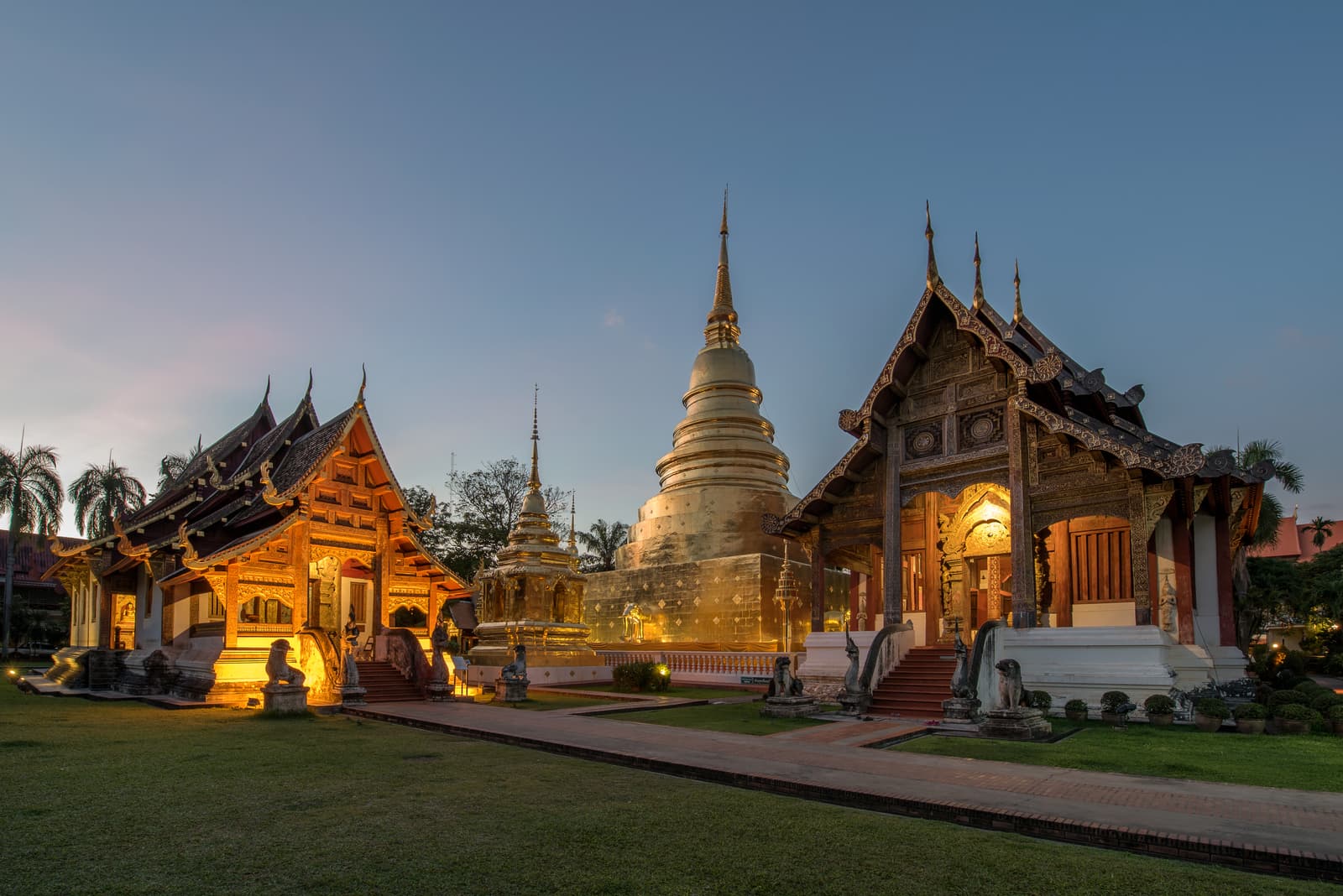
Chiang Mai
Thailand
Kuala Lumpur
Chiang Mai
How do Kuala Lumpur and Chiang Mai compare?
The Southeast-Asia base-city decision — both cheap by Western standards, both well-connected by AirAsia, completely different DNA. Chiang Mai is the northern-Thailand mountain town — the square moat of the old city, Wat Phra Singh's lacquered Lanna gables, $2 khao soi at Khao Soi Nimman, Doi Suthep glittering above the valley, and a coworking scene clustered around Nimmanhaemin Road. Kuala Lumpur is the Malay-Chinese-Indian capital — the Petronas Towers' double spire over KLCC park, Jalan Alor's 9pm satay grills and clay-pot rice, the Batu Caves' 272 rainbow steps under a 42-meter golden Murugan, Bukit Bintang's malls colliding with Chinatown's Petaling Street, and an LRT-Monorail-MRT mesh that actually works.
Chiang Mai runs $22 hostel / $55 mid / $150 luxe, safety around 78. KL is markedly pricier mid-tier at $36 / $90 / $245 with safety also around 78 — both feel safe for women solo with normal city caution. The cost split shows up most in accommodation and beer — a Chang in Chiang Mai is $3, a Tiger in KL hits $7-9 thanks to Malaysia's alcohol tax, while hawker meals stay $4-5 in both. Climate diverges modestly — KL is equatorial steady at 31°C and humid year-round, Chiang Mai gets a genuine cool season Nov-Feb (mornings at 18°C) and a smoky burning season March-April. English coverage is much higher in KL where it's a working language; in Chiang Mai outside hotels and Nimman, you'll need translation apps. Cultural depth tilts to Chiang Mai for living Lanna craft and temples; KL wins on the easiest cross-cultural food map in Asia.
Chiang Mai's window is November-February for cool clear weather. KL is workable year-round but heaviest rain is March-April and October-November (afternoon thunderstorms most days). Pro tip: in KL, the GoKL free city bus loops the tourist core — Bukit Bintang, KLCC, Chinatown, Pasar Seni — for zero ringgit, and a Touch 'n Go card handles the rail network. In Chiang Mai, rent a scooter only if you've ridden before — accidents are the top cause of trip-ending injuries here, and tourist police will check your international license. Pick Chiang-mai for slow mountain mornings, temple-hopping, and a remote-work pace. Pick Kuala-lumpur for hawker-food range, English-everywhere ease, and a regional flight hub that gets you anywhere in Asia by tomorrow.
💰 Budget
🛡️ Safety
Kuala Lumpur
KL is generally safe for tourists but petty crime is a concern, particularly bag snatching on motorbikes and pickpocketing in crowded areas. Violent crime against tourists is uncommon. Use common sense and stay aware of your surroundings, especially at night.
Chiang Mai
Chiang Mai is one of the safest cities in Southeast Asia for travelers. Violent crime against tourists is extremely rare, though petty theft and scams exist. The biggest health concern is air quality during burning season (February-April).
🌤️ Weather
Kuala Lumpur
Kuala Lumpur has a tropical rainforest climate with uniformly hot and humid conditions year-round. Temperatures rarely vary much, hovering between 24-34 degrees Celsius. Afternoon thunderstorms are common throughout the year, usually lasting one to two hours.
Chiang Mai
Chiang Mai has a tropical savanna climate with three distinct seasons: hot, rainy, and cool. The city sits in a valley which traps heat and, unfortunately, smoke during the burning season (February-April).
🚇 Getting Around
Kuala Lumpur
KL has an extensive but sometimes confusing public transit network of rail lines operated by different companies. Grab is the go-to ride-hailing app and is essential for getting to places the rail network does not reach. Traffic congestion is severe during rush hours.
Walkability: KL is not very walkable due to heat, humidity, disconnected sidewalks, and expressway overpasses. The KLCC to Bukit Bintang elevated walkway is a notable exception. Air-conditioned malls are often the most comfortable pedestrian routes between areas. Stay on covered walkways (five-foot ways) where available.
Chiang Mai
Chiang Mai lacks a metro or rail system, so getting around relies on songthaews (red shared trucks), tuk-tuks, Grab ride-hailing, and rented scooters. The Old City is compact enough to walk or cycle. The city is currently building a light rail system planned for future years.
Walkability: The Old City is very walkable — roughly 1.5 km on each side — and most major temples are within easy walking distance of each other. The Nimmanhaemin area is also pedestrian-friendly. Beyond these areas, distances grow and motorized transport is needed.
📅 Best Time to Visit
Kuala Lumpur
Jan–Mar, Dec
Peak travel window
Chiang Mai
Jan–Feb, Nov–Dec
Peak travel window
The Verdict
Choose Kuala Lumpur if...
you want Petronas Towers at night, Batu Caves, hawker-centre satay, Bukit Bintang nightlife, and Southeast Asia's best-value cosmopolitan base
Choose Chiang Mai if...
you want northern Thailand's temple city — Doi Suthep sunsets, Sunday Walking Street, ethical elephant sanctuaries, and Songkran soaked to the bone
Kuala Lumpur
Chiang Mai
You might also compare
Kuala LumpurvsChiang Mai
Try another