Quick Verdict
Pick Galle if Dutch rampart walks, cinnamon-shop fronts, and Mirissa beach tuk-tuks trump jungle climbs. Pick Sigiriya if Lion Rock dawn, Pidurangala sunrise, and Minneriya elephant safaris beat colonial coast.
Can't pick? Visit both.
Build a trip that includes Galle and Sigiriya, with complementary stops we'll suggest.
🏆 Galle wins 74 OVR vs 69 · attribute matchup 7–2
Keep exploring
Galle
Sri Lanka

Sigiriya
Sri Lanka
Galle
Sigiriya
How do Galle and Sigiriya compare?
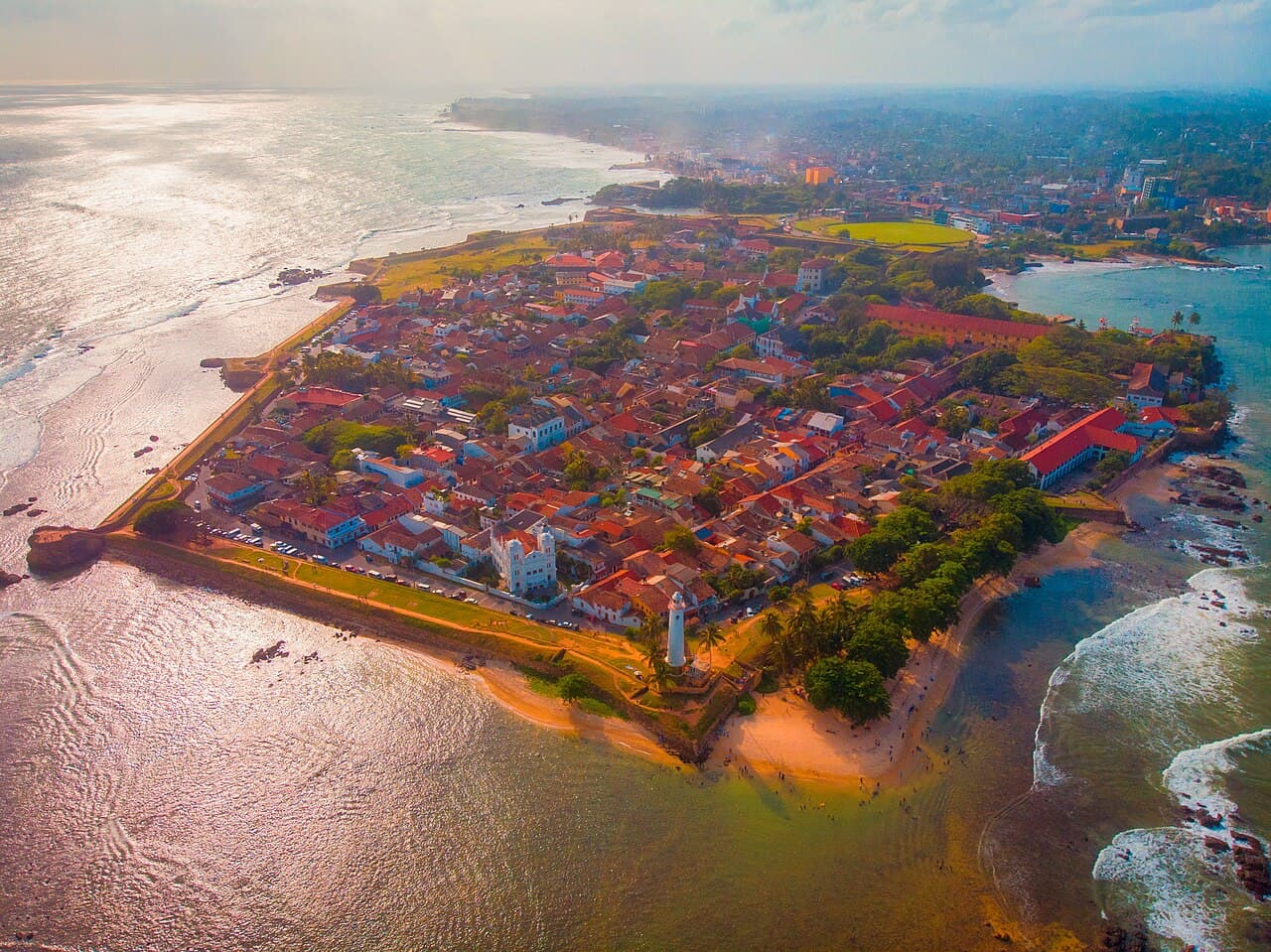
Two of Sri Lanka's three big icons, and the choice is genuinely coast-versus-jungle. Galle is the Dutch fort city on the southwest coast: 17th-century ramparts you can walk in 90 minutes at sunset, Pedlar Street for cinnamon-and-cardamom shop fronts, and Unawatuna or Mirissa beaches a 20-minute tuk-tuk ride away. Sigiriya is interior-jungle drama: the 5th-century Lion Rock fortress rising 200 meters out of the plain, fresco caves halfway up, and a Pidurangala Rock alternate climb at 5 AM for the sunrise view of the main rock.
Mid-range hits $145 in Galle against $120 in Sigiriya — both are extraordinarily cheap by Western standards, with $55 budget tiers in Galle covering a guesthouse inside the fort walls and Sigiriya's $45 tier getting you a homestay near the rock with breakfast. Galle smells like cinnamon dust and ocean salt off the rampart wall; Sigiriya smells like jasmine, jackfruit, and elephant dung on the safari roads at Minneriya National Park 30 minutes north. Galle's nightlife runs to a single rooftop cocktail at the Fort Bazaar; Sigiriya doesn't really have nightlife — sunset is the event.
Practical tip: combine them. Sri Lanka's classic Cultural Triangle loop hits Sigiriya, Polonnaruwa, and Anuradhapura in 3 days, then drops to Kandy and down to Galle on the southwest coast — the loop drive is 5 hours from Sigiriya to Galle. Time both for January-March when the southwest is dry and Sigiriya hasn't hit pre-monsoon heat. Pick Galle if you want a walkable Dutch colonial fort with beaches a tuk-tuk away. Pick Sigiriya if you want the country's most dramatic monument and elephant safaris in a national park 30 minutes north.
💰 Budget
🛡️ Safety
Galle
Galle is one of the safer destinations in Sri Lanka — violent crime is very rare, the fort is heavily walked and well-policed, and the Sri Lankan tourist police are visible and helpful. Solo female travellers report Galle Fort as comfortable; the surrounding city of Galle and the south-coast beach towns also rank well. Main risks: ocean currents (rip currents on certain south-coast beaches), tuk-tuk overcharging, occasional pickpocketing in the crowded Pettah-style markets outside the fort, and the fixed Sri Lankan health risks (dengue, rabies via stray dogs).
Sigiriya
Sri Lanka is one of the safer countries in South Asia — violent crime is rare and tourist police presence is high in cultural-triangle hotspots. Sigiriya specifically is well-policed and the rock is regularly inspected for safety. The main risks are physical (heat exhaustion, slippery rock surfaces, falls on the metal staircases) and wildlife-related (the rock has hornet swarms, particularly during certain months, and the site is occasionally closed without notice when hornets are active). Pickpocketing and scams in tourist areas are minor.
🌤️ Weather
Galle
Galle is on Sri Lanka's south-west coast — the country's wet zone — and gets significantly more rainfall than Sigiriya or the east coast. The Yala monsoon (May–September) brings the wettest months; the inter-monsoon periods (October–November) bring heavy showers but interspersed with bright days. The dry season is December–April — coinciding with peak international tourism. Daytime temperatures are reliably 28–32°C year-round; sea temperature 27–29°C is excellent for swimming throughout.
Sigiriya
Sigiriya is in the Cultural Triangle — Sri Lanka's dry zone — and is hot year-round (daytime 28–34°C). The country has two monsoons: the Yala monsoon (May–September) brings heavy rain to the south-west; the Maha monsoon (October–January) brings rain to the north-east. Sigiriya sits in the middle and gets some rain from both. The driest, most pleasant months are January–April and July–September; October–December is wettest. Climbing Sigiriya in midday tropical sun is gruelling — start at 06:30 (gates open) or after 15:00.
🚇 Getting Around
Galle
Galle Fort itself is small (36 hectares) and entirely walkable — most visitors park outside and never use vehicle transport within the walls. For the south-coast hop (Unawatuna, Weligama, Mirissa), tuk-tuks are universal and cheap. For longer trips (to Colombo, Yala, Ella, the Cultural Triangle), most travellers use a private car with driver. The Southern Expressway makes Galle 2 hours from Colombo, transformed in the past decade.
Walkability: Galle Fort is one of the most walkable historic centres in Sri Lanka — small, compact, with limited motorised traffic and a uniform grid layout. The 3-km rampart walk forms the core experience. Outside the fort, the surrounding city is busy and not pleasant for walking; tuk-tuks for short hops.
Sigiriya
Sigiriya is a small village; almost all transport revolves around the rock itself, the neighbouring sites of Dambulla, Pidurangala, and Minneriya National Park, and the road connections back to Colombo or Kandy. The default transport mode for visitors is a hired tuk-tuk (auto-rickshaw) or a private car-and-driver hired by the day. Public buses connect Dambulla to Sigiriya village (cheap but slow). Most upmarket hotels include airport transfers in their package.
Walkability: Sigiriya village itself is small and walkable — the rock entrance is 1 km from most guesthouses and the Pidurangala trailhead another 1 km. Walking these distances in tropical heat is unpleasant; tuk-tuks for 200–500 LKR are universally used. The climbs themselves are demanding — Sigiriya is 1,200 steps up; Pidurangala is shorter but steeper with a final scramble.
📅 Best Time to Visit
Galle
Jan–Apr, Nov–Dec
Peak travel window
Sigiriya
Jan–Apr, Jul–Sep
Peak travel window
The Verdict
Choose Galle if...
You want a walkable colonial fort town with great cafés and beaches a short tuk-tuk ride away.
Choose Sigiriya if...
You want one of Asia's most dramatic UNESCO climbs — ancient palace ruins on top of a vertical jungle rock.
Sigiriya
Frequently asked
Is Galle or Sigiriya cheaper?
Sigiriya is cheaper on average. A mid-range day in Galle costs about $145 vs $120 in Sigiriya, so Sigiriya saves you roughly $25 per day compared to Galle.
Is Galle or Sigiriya safer?
Galle scores higher on our safety index (84/100 vs 82/100). Galle is one of the safer destinations in Sri Lanka — violent crime is very rare, the fort is heavily walked and well-policed, and the Sri Lankan tourist police are visible and helpful.
Which has better weather, Galle or Sigiriya?
Galle has the more temperate climate year-round. Galle is on Sri Lanka's south-west coast — the country's wet zone — and gets significantly more rainfall than Sigiriya or the east coast. The Yala monsoon (May–September) brings the wettest months; the inter-monsoon periods (October–November) bring heavy showers but interspersed with bright days. The dry season is December–April — coinciding with peak international tourism. Daytime temperatures are reliably 28–32°C year-round; sea temperature 27–29°C is excellent for swimming throughout.
When is the best time to visit Galle vs Sigiriya?
Galle peaks in Jan–Apr, Nov–Dec. Sigiriya peaks in Jan–Apr, Jul–Sep. Both peak in Jan–Apr, so a single trip pairs them naturally.
How long is the flight from Galle to Sigiriya?
Roughly 51m on a direct flight (about 220 km / 137 mi). One-way fares typically run $60-180 depending on season and how far in advance you book.
How do daily costs in Galle and Sigiriya compare?
In Galle: budget ~$40-80/day, mid-range ~$120-220/day, luxury ~$400-1000/day. In Sigiriya: budget ~$30-60/day, mid-range ~$80-160/day, luxury ~$300-700/day.
You might also compare
GallevsSigiriya
Try another