Quick Verdict
Pick Colombo if Pettah spice markets, Lotus Tower views, and Independence Square evenings trump fort walks. Pick Galle if Dutch ramparts, Pedlar Street cafés, and Indian Ocean lighthouse promontories beat city pace.
🏆 Galle wins 74 OVR vs 68 · attribute matchup 6–3
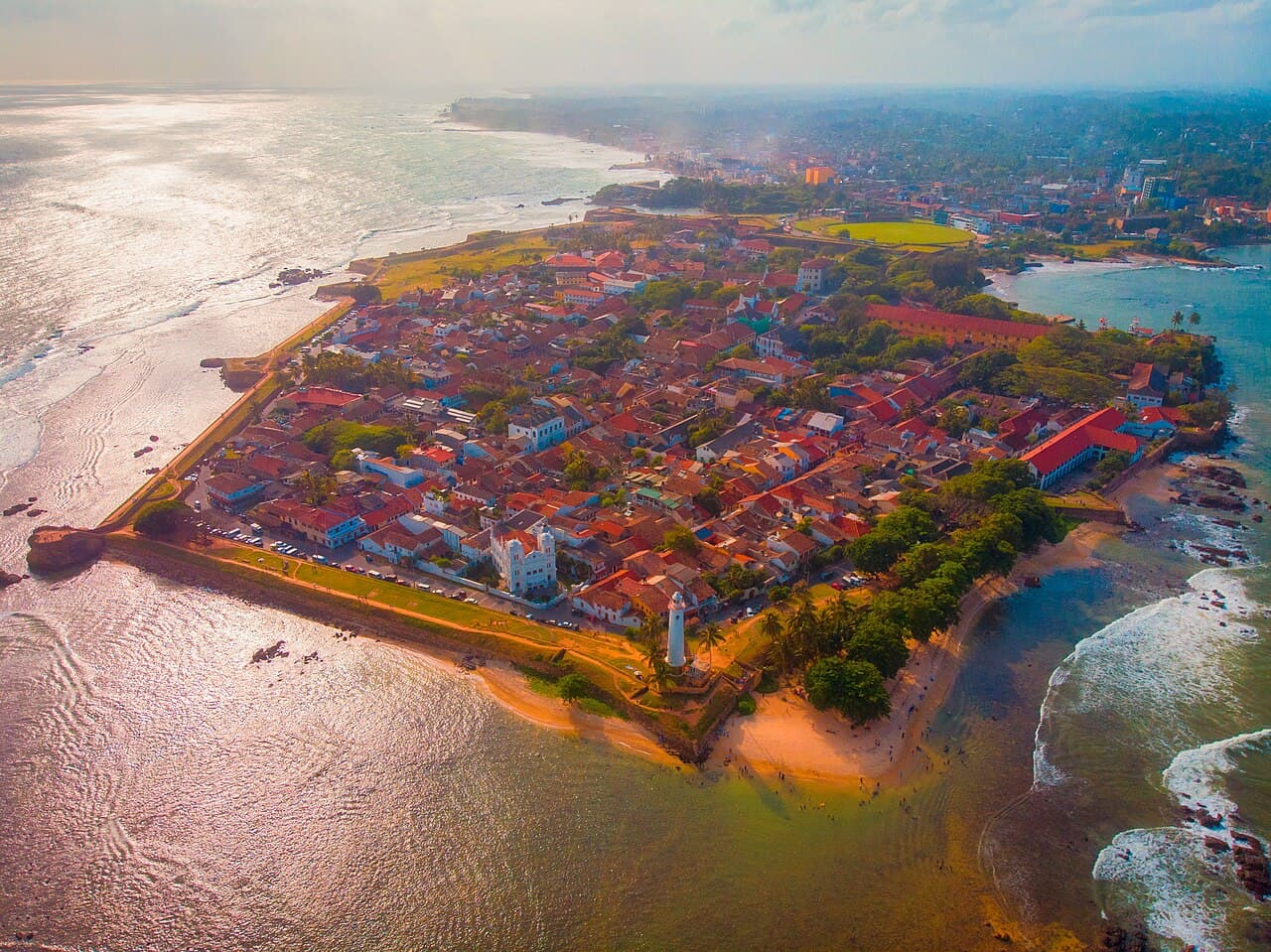
Galle
Sri Lanka

Colombo
Sri Lanka
Galle
Colombo
How do Galle and Colombo compare?
Sri Lanka's island geography forces this question early — fly into Colombo, then keep south to Galle or stay in the capital? Colombo is a 750,000-person port city under genuine renaissance: the Pettah Market's spice corridors smelling of cardamom and cloves, Lotus Tower at 350m dominating the skyline, and Independence Square's colonial-era pavilion lit at dusk. Galle is the opposite scale — a Dutch fortified town from 1663 with cobblestone ramparts, Pedlar Street's boutique cafés in 18th-century colonial houses, and the Indian Ocean breaking against the lighthouse promontory at 6 PM.
Mid-range $145 in Galle against $90 in Colombo — Galle's colonial-fort boutique hotels (Amangalla, Fort Bazaar, the Galle Fort Hotel) push prices well above Colombo's standard 4-star rates. A Pettah Market street-food crawl in Colombo runs $8 a head with kottu roti, hoppers, and string-hopper kothu; a Fortaleza or Poonie's Kitchen dinner in Galle hits $35. Colombo wins on food breadth, museums (National Museum, Geoffrey Bawa house), and as a Bandaranaike airport hub; Galle wins on walkability (5/5 vs 3/5), safety (84 vs 68), atmosphere, and Mirissa whale-watching 30 minutes south.
Practical tip: skip the Colombo–Galle road option (3-hour traffic battle) for the Southern Expressway bus or train along the coast — the Coastal Line train runs along the Indian Ocean for $1.50 in 2h15m and is genuinely scenic. Time both January-March or November-December to dodge the southwest monsoon; April is shoulder season but pre-monsoon humidity hits hard.
💰 Budget
🛡️ Safety
Galle
Galle is one of the safer destinations in Sri Lanka — violent crime is very rare, the fort is heavily walked and well-policed, and the Sri Lankan tourist police are visible and helpful. Solo female travellers report Galle Fort as comfortable; the surrounding city of Galle and the south-coast beach towns also rank well. Main risks: ocean currents (rip currents on certain south-coast beaches), tuk-tuk overcharging, occasional pickpocketing in the crowded Pettah-style markets outside the fort, and the fixed Sri Lankan health risks (dengue, rabies via stray dogs).
Colombo
Colombo is generally safe for travelers, with violent crime against tourists being uncommon. Petty theft, tuk-tuk scams, and overly persistent touts are the main annoyances. The city has made major safety improvements since the end of the civil war in 2009.
🌤️ Weather
Galle
Galle is on Sri Lanka's south-west coast — the country's wet zone — and gets significantly more rainfall than Sigiriya or the east coast. The Yala monsoon (May–September) brings the wettest months; the inter-monsoon periods (October–November) bring heavy showers but interspersed with bright days. The dry season is December–April — coinciding with peak international tourism. Daytime temperatures are reliably 28–32°C year-round; sea temperature 27–29°C is excellent for swimming throughout.
Colombo
Colombo has a tropical monsoon climate with high humidity year-round. Two monsoon seasons bring rain at different times, but the city rarely experiences an entirely dry month. Temperatures stay consistently warm throughout the year.
🚇 Getting Around
Galle
Galle Fort itself is small (36 hectares) and entirely walkable — most visitors park outside and never use vehicle transport within the walls. For the south-coast hop (Unawatuna, Weligama, Mirissa), tuk-tuks are universal and cheap. For longer trips (to Colombo, Yala, Ella, the Cultural Triangle), most travellers use a private car with driver. The Southern Expressway makes Galle 2 hours from Colombo, transformed in the past decade.
Walkability: Galle Fort is one of the most walkable historic centres in Sri Lanka — small, compact, with limited motorised traffic and a uniform grid layout. The 3-km rampart walk forms the core experience. Outside the fort, the surrounding city is busy and not pleasant for walking; tuk-tuks for short hops.
Colombo
Colombo's traffic is notoriously congested. Tuk-tuks are the quintessential way to get around, but ride-hailing apps provide more predictable pricing. The city bus network is extensive but chaotic. A new light rail system is under development.
Walkability: Walking in Colombo is possible but challenging due to broken sidewalks, heavy traffic, and intense heat. The Fort and Galle Face areas are the most walkable. Carry an umbrella for sudden rain and use sunscreen year-round.
📅 Best Time to Visit
Galle
Jan–Apr, Nov–Dec
Peak travel window
Colombo
Jan–Mar, Dec
Peak travel window
The Verdict
Choose Galle if...
You want a walkable colonial fort town with great cafés and beaches a short tuk-tuk ride away.
Choose Colombo if...
you want Sri Lanka's gateway — Galle Face sunsets, Pettah bazaars, curry-and-hoppers, and trains south to Galle + Ella tea country
You might also compare
GallevsColombo
Try another