Arches National Park vs Zion National Park
Which destination is right for your next trip?
Last updated
Quick Verdict
Pick Arches for Delicate Arch at sunset, the Windows Section, and a Moab adventure base. Pick Zion if wading the Narrows, Angels Landing's chains, and full-canyon immersion drive the Utah trip.
The real difference is price
These two play in different price tiers: Arches National Park runs roughly 72% cheaper day to day ($180 vs $310 per day mid-range). Start with your budget — everything else on this page is secondary to that gap.
Can't pick? Visit both.
Build a trip that includes Arches National Park and Zion National Park, with complementary stops we'll suggest.
🏆 Arches National Park wins 79 OVR vs 71 · attribute matchup 5–3
Keep exploring

Arches National Park
United States
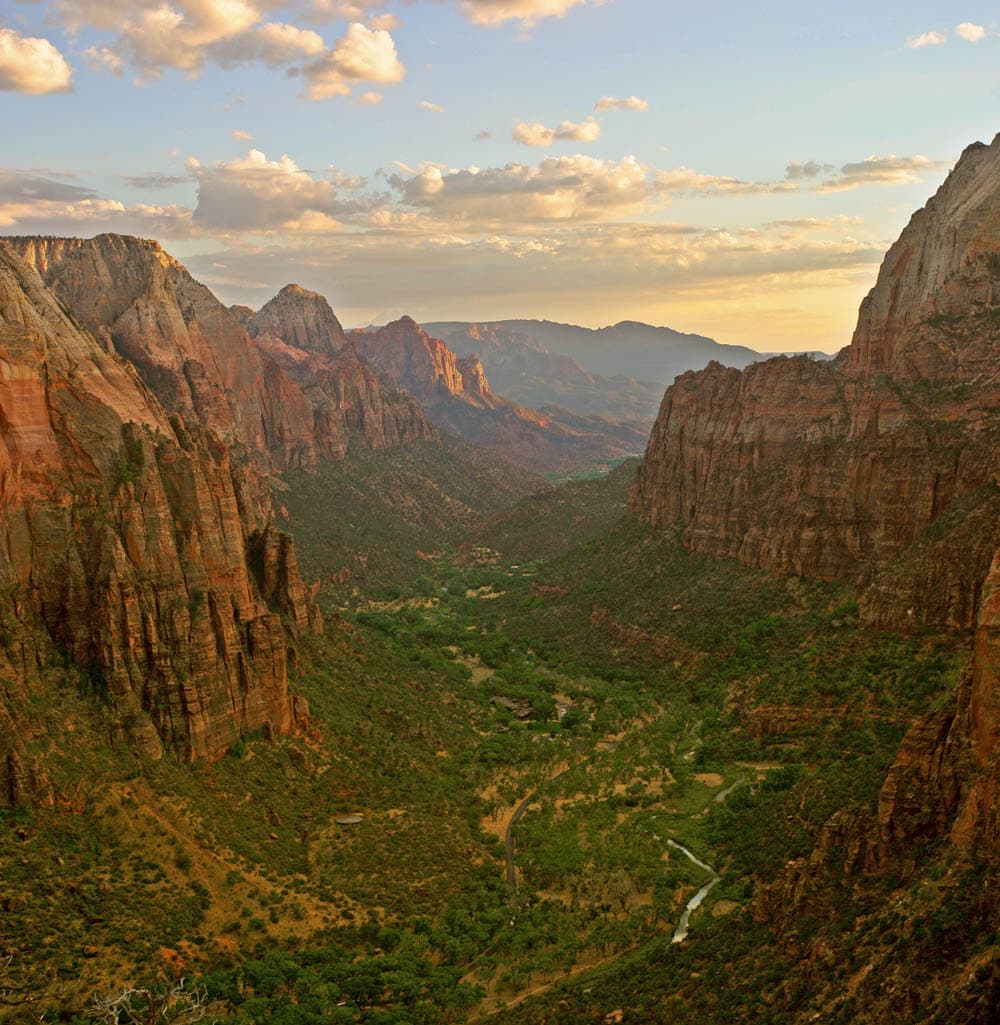
Zion National Park
United States
Arches National Park
Zion National Park
How do Arches National Park and Zion National Park compare?
Two of Utah's Mighty Five, both red-rock spectacles, but they ask different things of you. Arches, just outside Moab, is the drive-and-gawp park — more than 2,000 natural stone arches concentrated in a compact, road-accessible landscape that you can mostly see from short trails. Zion, in the state's southwest corner, is the immersive one — a deep sandstone canyon with the Virgin River running through it, built around big, committing hikes and a car-free shuttle system.
Arches, around $180 a day mid-range with Moab as your base, delivers icons fast: Delicate Arch (the one on the license plate) on a 3-mile slickrock climb, the Windows Section in minutes from the car, and Landscape Arch's impossible span. Moab doubles as a mountain-biking and Colorado-River-rafting hub. Zion runs pricier at roughly $310 a day around Springdale, and earns it with the Narrows wade up a slot canyon in the river itself and Angels Landing's chain-assisted spine (now permit-only). Arches is the efficient, beginner-friendly park; Zion is the strenuous, more dramatic one.
Both are best March–May and September–November; summer brings 35°C-plus heat that makes exposed slickrock dangerous, and Arches now uses timed-entry reservations in peak months. They're about a five-hour drive apart, often combined into a single southern-Utah loop with Bryce in between. Pro tip: hike Delicate Arch for sunset, when the bowl glows orange and the crowds thin after the day-trippers leave. Pick Arches for quick icons and a Moab adventure base; pick Zion for the Narrows, Angels Landing, and full-canyon immersion.
💰 Budget
🛡️ Safety
Arches National Park
Crime is a non-issue at Arches. The real hazards are environmental — heat illness in summer (the leading cause of visitor deaths), falls from slickrock and arch tops, dehydration on exposed trails, and flash floods in canyon washes during summer monsoon. Cell service is spotty in the park interior. Tell someone your route, carry far more water than you think you need (3 liters per person per day minimum on summer hikes), and never climb on any of the named arches — they are protected and several have been damaged or destroyed by visitor activity.
Zion National Park
Crime at Zion is a non-issue — the real hazards are natural and they kill people every year. Flash floods, falls from Angels Landing, heat illness, hypothermia in the Narrows, and dehydration are the big five. The single most important pre-hike habit: check the NPS flash flood forecast at the visitor center or nps.gov/zion before ANY slot canyon or Narrows trip. "Probable" or "Expected" risk means do not enter — a storm 10 miles upstream can kill you even in bright sunshine at the trailhead.
🌤️ Weather
Arches National Park
Arches sits at 4,000-5,500 feet of elevation in the eastern Utah desert with brutal extremes. Summer (June through August) regularly hits 38-40°C with little shade on most trails — heat illness is the leading visitor risk. Winter brings cold sharp days, occasional snow dustings, and overnight lows below freezing. Spring (April-May) and fall (September-October) are the prime windows. The monsoon kicks in mid-July through September with violent afternoon thunderstorms — flash floods in canyon washes can be deadly. Carry far more water than you think you need on any hike.
Zion National Park
Zion's desert climate is defined by vertical relief — the canyon floor sits at 4,000 feet while the rims reach 6,500+ feet, meaning conditions can differ by 5-10°C between stops on the same hike. Summer is brutally hot on exposed trails (35-40°C) with dangerous afternoon monsoon thunderstorms and flash flood potential in slot canyons. Winter brings ice on Angels Landing and snow on the rims, with the canyon floor hovering between 0-15°C. Spring and fall are the ideal windows. The Virgin River stays a bracing 10-15°C year-round — plan Narrows gear accordingly.
🚇 Getting Around
Arches National Park
Arches has no shuttle and no public transit — you need a car. The park is laid out along a single main road that runs 18 miles from the entrance station to the Devil's Garden trailhead at the far north end, with several spur roads to Wolfe Ranch (Delicate Arch trailhead), Windows, and Salt Valley. Timed-entry vehicle reservations are required from 7am to 4pm April through October — book on recreation.gov 3 months in advance ($2 reservation fee on top of the $30 entrance fee). Most visitors stay in Moab (5 miles south of the entrance) and drive up daily.
Walkability: The park itself is not walkable in any conventional sense — it is a driving park with hiking trailheads. Within Moab, the downtown core along Main Street is walkable for restaurants, breweries, and outfitters, but most lodging is spread along Highway 191 and requires a vehicle.
Zion National Park
Zion's transportation story is simple: the free park shuttle is MANDATORY on the Zion Canyon Scenic Drive April through late November — no private vehicles past Canyon Junction. The shuttle runs a 9-stop loop roughly every 10-15 minutes, takes about 45 minutes end-to-end, and stops at every major trailhead and viewpoint. Springdale (the gateway town) has its own free town shuttle connecting lodges, restaurants, and the park entrance. A private car is only useful on the main drive December through early March, for reaching Kolob Canyons (30 miles northwest, separate entrance), or for the Zion-Mt. Carmel Highway. There is no rideshare service inside the park.
Walkability: Springdale itself is extremely walkable — a linear town strung along Highway 9 with restaurants, outfitters, and lodges all within a mile of each other. Inside the park the shuttle handles the vertical distances; hiking trails are a mix of paved strolls (Riverside Walk, Pa'rus) and serious climbs (Angels Landing, Observation Point). Kolob Canyons has its own scenic drive and short trailheads but is not pedestrian-connected to the main canyon.
📅 Best Time to Visit
Arches National Park
Apr–May, Sep–Oct
Peak travel window
Zion National Park
Mar–May, Sep–Nov
Peak travel window
The Verdict
Choose Arches National Park if...
You want the highest-density natural arches on Earth, the iconic Delicate Arch sunset, and Moab as a base with Canyonlands and the Colorado River 20 minutes away.
Choose Zion National Park if...
you want red-rock slot canyons, Angels Landing's permit-lottery ridge, and the Narrows waded up the Virgin River
Arches National Park
Zion National Park
Frequently asked
Is Arches National Park or Zion National Park cheaper?
Arches National Park is cheaper on average. A mid-range day in Arches National Park costs about $180 vs $310 in Zion National Park, so Arches National Park saves you roughly $130 per day compared to Zion National Park.
Is Arches National Park or Zion National Park safer?
Arches National Park scores higher on our safety index (92/100 vs 78/100). Crime is a non-issue at Arches.
Which has better weather, Arches National Park or Zion National Park?
Zion National Park has the more temperate climate year-round. Zion's desert climate is defined by vertical relief — the canyon floor sits at 4,000 feet while the rims reach 6,500+ feet, meaning conditions can differ by 5-10°C between stops on the same hike. Summer is brutally hot on exposed trails (35-40°C) with dangerous afternoon monsoon thunderstorms and flash flood potential in slot canyons. Winter brings ice on Angels Landing and snow on the rims, with the canyon floor hovering between 0-15°C. Spring and fall are the ideal windows. The Virgin River stays a bracing 10-15°C year-round — plan Narrows gear accordingly.
When is the best time to visit Arches National Park vs Zion National Park?
Arches National Park peaks in Apr–May, Sep–Oct. Zion National Park peaks in Mar–May, Sep–Nov. Both peak in Apr–May, Sep–Oct, so a single trip pairs them naturally.
How long is the flight from Arches National Park to Zion National Park?
Roughly 59m on a direct flight (about 340 km / 211 mi). One-way fares typically run $60-180 depending on season and how far in advance you book.
How do daily costs in Arches National Park and Zion National Park compare?
In Arches National Park: budget ~$70-110/day, mid-range ~$160-260/day, luxury ~$400-700/day. In Zion National Park: budget ~$75-130/day, mid-range ~$220-400/day, luxury ~$500-1,000+/day.
You might also compare
Arches National ParkvsZion National Park
Try another