Compare 576 Travel Destinations
40 of 576 guides match

Patagonia
Chile
Patagonia is the end of the world — and it's breathtaking. Torres del Paine's granite spires, Perito Moreno's thundering glacier, and vast windswept steppes define one of the planet's last truly wild frontiers. Shared between Chile and Argentina, the region rewards serious hikers and nature lovers willing to brave the elements.
Pucón
Chile
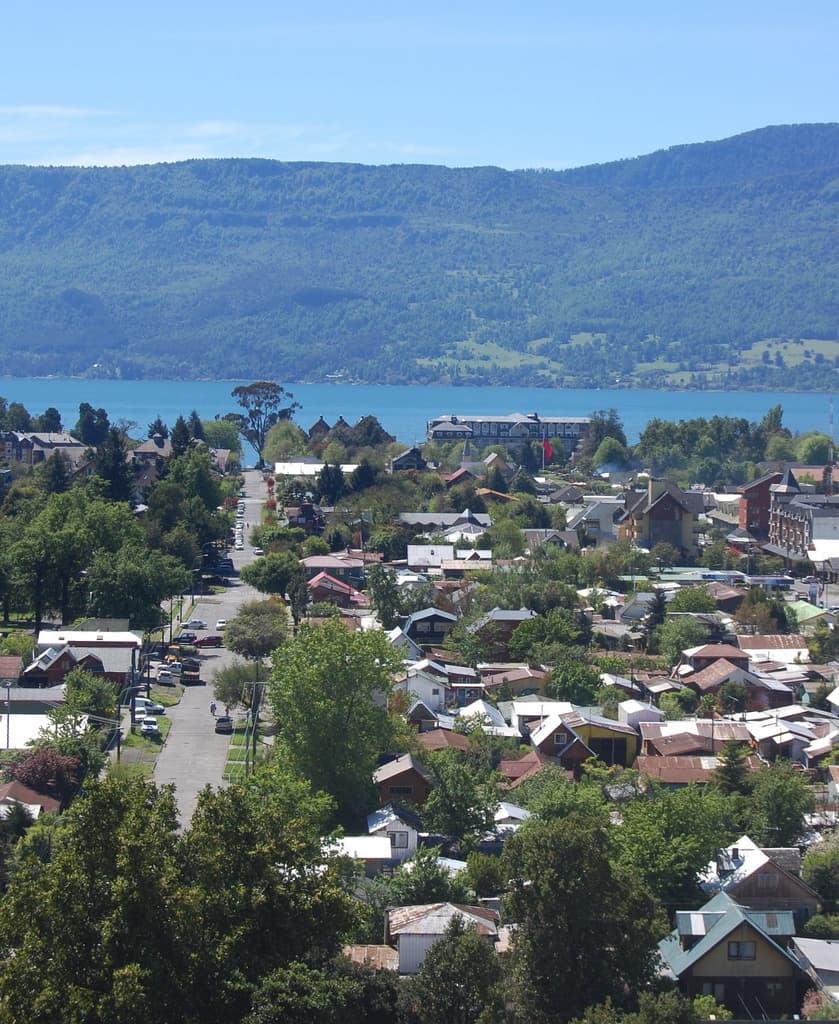
A lakeside resort town in Chile's northern Patagonia — sat at the foot of Volcán Villarrica, one of the world's most active volcanoes (you can climb it in summer and look into a glowing lava lake at the summit). Lago Villarrica's beaches are black volcanic sand, the Termas Geométricas hot springs are a 75-minute drive into Andean rainforest, and Mapuche communities still hold the surrounding land. Adventure capital of Chile: rafting the Trancura, climbing Villarrica, and white-water everything.

Puerto Natales
Chile
The Chilean Patagonia gateway to Torres del Paine, set on the milky-blue Última Esperanza Sound, three hours south of the park entrance by paved road. Once a wool-export port, Puerto Natales now turns over almost entirely on the W trek, the O circuit, and the Navimag four-day fjord ferry that arrives from Puerto Montt twice a week. Eberhard Avenue and Calle Bories make up the compact restaurant and brewpub strip, with Baguales microbrewery, Kau Lodge fireplaces, and outfitters renting tents and stoves on every block. Mylodon Cave 24 kilometres north preserves the giant ground sloth fossil that gave Bruce Chatwin his trip-opening pretext for In Patagonia.

Puno
Peru
Puno sits on the Peruvian shore of Lake Titicaca at 3,827m (12,556 ft) — the highest navigable lake in the world and the second-largest in South America. The city itself is a brick-and-corrugated-iron working port that most travelers use as a base for two boat trips: the Uros floating reed islands (man-made platforms of bundled totora reeds, inhabited by ~2,000 Uros people who built them centuries ago to escape Inca and then Colla incursions) and the Quechua-speaking weaving island of Taquile. Add the pre-Inca chullpa burial towers at Sillustani (40 km north) and the cross-border bus to La Paz, Bolivia, and Puno earns its 1-2 nights for travelers heading south.

Quito
Ecuador
Ecuador's Andean capital sits at 2,850m on the equator — the highest official capital in the world. Its colonial Old Town (UNESCO 1978) is among Latin America's best-preserved, with golden baroque churches like La Compañía de Jesús and the cobblestone La Ronda block. The TelefériQo gondola climbs Pichincha volcano to 4,100m, and the Mitad del Mundo straddles 0°0'0". Gateway to Galápagos and the Amazon.

Rio de Janeiro
Brazil
Rio de Janeiro is one of the world's most dramatic cities — Christ the Redeemer watches over a landscape of granite peaks, tropical forest, and golden beaches. Copacabana and Ipanema are iconic, the Carnival is legendary, and the carioca lifestyle of samba, beach volleyball, and acai bowls is infectious. A city that pulses with energy.

Sacred Valley
Peru
The Sacred Valley of the Incas (Valle Sagrado) is the Urubamba River valley running ~60 km between Pisac and Ollantaytambo at 2,800-3,000m elevation — meaningfully lower than Cusco and a far better acclimatization base before Machu Picchu. The Incas grew their best maize here on stepped agricultural terraces still in use today, and three of their most impressive archaeological sites cluster in the valley: the hilltop fortress of Pisac, the perfectly engineered military complex of Ollantaytambo (still a working Inca-era town), and the surreal circular terraces of Moray. Add the bone-white Maras salt evaporation pans descending a hillside and you have a full 2-3 day side trip from Cusco.

Salar de Uyuni
Bolivia
The world's largest salt flat — 10,582 km² of blinding white at 3,656m in southwest Bolivia. In wet season (Dec-Apr) a thin water film turns it into the planet's biggest mirror; dry season reveals hexagonal salt tiles to the horizon. Multi-day 4WD tours typically run 3D/2N from Uyuni to San Pedro de Atacama via the Eduardo Avaroa lagoons, geysers, and flamingo-pink waters. Lithium reserves below are the world's largest.

Salta
Argentina
Salta — full name Salta la Linda, 'Salta the Beautiful' — is the colonial capital of northwest Argentina, sitting at 1,152 m in a green Andean valley with the country's best-preserved 18th-century centre. The pink-and-yellow Cathedral and the Cabildo frame Plaza 9 de Julio; the MAAM museum holds three Inca child mummies discovered frozen on Llullaillaco volcano in 1999; the Tren a las Nubes climbs to 4,220 m on one of the world's highest railways. Salta is the gateway to Cafayate's high-altitude Torrontés vineyards, the Salinas Grandes salt flats, and the multicoloured Quebrada de Humahuaca two hours north.

Salvador
Brazil
Brazil's first capital (1549-1763) and the heart of Afro-Brazilian culture. The pastel-painted Pelourinho (UNESCO 1985) is a colonial maze of cobblestones, baroque churches, and gold-leafed Igreja São Francisco. Birthplace of capoeira, candomblé, and samba-reggae — Olodum still drums Tuesdays. Acarajé from street vendors, moqueca from neighborhood spots, and a Carnival that rivals Rio's for the world's largest street party. Beaches strung along the Atlantic coast.

Santiago
Chile
Chile's capital sits in a valley framed by the snow-capped Andes. A modern, walkable city with excellent wine bars, the bohemian Barrio Bellavista, world-class seafood, and ski resorts just an hour away. The gateway to Patagonia and the Atacama.

São Paulo
Brazil
South America's largest metropolis is a powerhouse of culture, cuisine, and nightlife. The food scene rivals any city on earth with incredible Japanese, Italian, and regional Brazilian restaurants. Vila Madalena's street art and Paulista Avenue's energy define the city.

Sucre
Bolivia
Bolivia's whitewashed constitutional capital and the country's most beautiful colonial city, sitting at a far gentler 2,810 metres than altitude-blasted La Paz. The 16th-century UNESCO old town is a grid of low white buildings with red-tiled roofs, framed by the Cordillera de los Frailes. Casa de la Libertad on Plaza 25 de Mayo is where Bolivia signed its declaration of independence in 1825, the Sunday Tarabuco textile market draws Yampara weavers in striped ponchos from the surrounding villages, and the cement quarry at Cal Orck'o preserves the world's largest single set of dinosaur footprints — over 5,000 prints across an 80-degree wall.

Torres del Paine
Chile
1,810 km² of Chilean Patagonia named for its three granite spires (Torres) rising 2,500m straight from the steppe. The W Trek (4-5 days, 80km) is the iconic route; the O Circuit (8-10 days, 130km) loops the entire massif. Grey Glacier (30km arm of the Southern Patagonian Ice Field) is accessible by catamaran or kayak. Wildlife includes guanaco herds and rare pumas with specialised tracker tours. Famously violent winds (100+ km/h common in summer) and rapidly shifting weather demand serious gear. Park entry $32-45 USD; refugios on the W Trek require booking 6-12 months in advance via Vertice or Las Torres Patagonia.

Ushuaia
Argentina
Officially the southernmost city in the world — 'Fin del Mundo' (End of the World) — and the standard departure port for ~90% of all Antarctic Peninsula cruises (October-March, $7,000-$25,000+). The Beagle Channel (Darwin's HMS Beagle) frames the city on one side; the Martial Mountains rise on the other. Tierra del Fuego National Park (12km west) holds the southern terminus of Argentina's Ruta 3 marked 'Buenos Aires 3,063 km'. The 1902-1947 prison is now an excellent Maritime Museum. Tax-free Tierra del Fuego makes electronics and Argentine wine cheaper than mainland; Cerro Castor ski resort 26km away is the world's southernmost commercial slope.
