Compare 576 Travel Destinations
134 of 576 guides match

Park City
United States
Utah's flagship ski town and the closest big-airport-to-resort drive in the US — 32 miles east of Salt Lake City via I-80, just 40 minutes from SLC International. Two world-class resorts share the basin: Park City Mountain (the largest ski resort in the US at 7,300 acres after the 2015 Canyons merger) and Deer Valley (skiers-only, perennially ranked the nation's top resort by SKI Magazine readers). Historic Main Street is a preserved 1890s silver-mining town with 64 buildings on the National Register, hosting Sundance Film Festival each January. At 7,000 ft base it's lower than Colorado giants — easier acclimation. Summer brings world-class mountain biking and the Utah Olympic Park.

Philadelphia
United States
America's first UNESCO World Heritage City — where both the Declaration of Independence (1776) and the Constitution (1787) were signed. Reading Terminal Market, Eastern State Penitentiary, the Philadelphia Museum of Art, and the Liberty Bell are all within walking distance. The cheesesteak was invented here, and Philadelphians are passionate about all of it.

Phoenix
United States
America's fifth-largest city and the heart of the Valley of the Sun — 1.6 million in the city proper, nearly 5 million across the metro, sprawling across the northern Sonoran Desert at 1,086 ft elevation. The signature trio is Camelback Mountain (a 1.3-mile rock-scramble up to a city-and-desert panorama), Old Town Scottsdale (boutique-and-margarita strip 20 minutes east), and the Desert Botanical Garden (50,000 plants on 140 acres). Brutal Jun-Sep heat regularly hits 45°C, but Nov-Apr is shirtsleeve perfection — the same window the Cactus League brings 15 MLB teams here for spring training. Phoenix is also the practical gateway: Sedona is 2 hours north, the Grand Canyon 4 hours.

Pittsburgh
United States
The Steel City reborn as a tech and medicine capital — three rivers (Allegheny, Monongahela, Ohio) meeting at the tip of Point State Park, 446 bridges (more than any city in the world), and 712 sets of public city steps climbing the hillsides. Andrew Carnegie's flour-and-steel empire built world-class museums (the Carnegie, the Andy Warhol, the Frick), and the city's unique topography means the Mt. Washington overlook delivers one of America's great urban skylines. Stronger transit than peers expect (free downtown T light rail, two surviving 1870s funicular Inclines), the Strip District for food markets, Primanti Brothers sandwiches since 1933, and dramatically cheaper hotels than peer Eastern US cities.
.jpg%3Fwidth%3D1280&w=1600&q=75)
Playa del Carmen
Mexico
The Riviera Maya's most walkable beach town, an hour south of Cancun airport on Highway 307. The pedestrianised Quinta Avenida runs four kilometres parallel to the sand, packed with restaurants, bars, gelato counters and silver-jewellery boutiques that do not close until 1 am. Mamita's Beach anchors the casual beach-club scene to the north; the all-inclusive resort cluster pushes south toward Tulum. Ferries depart every half hour for Cozumel (35 minutes) and there is a separate boat to Isla Mujeres, which makes Playa a useful base for a Caribbean island day trip without committing to staying offshore.
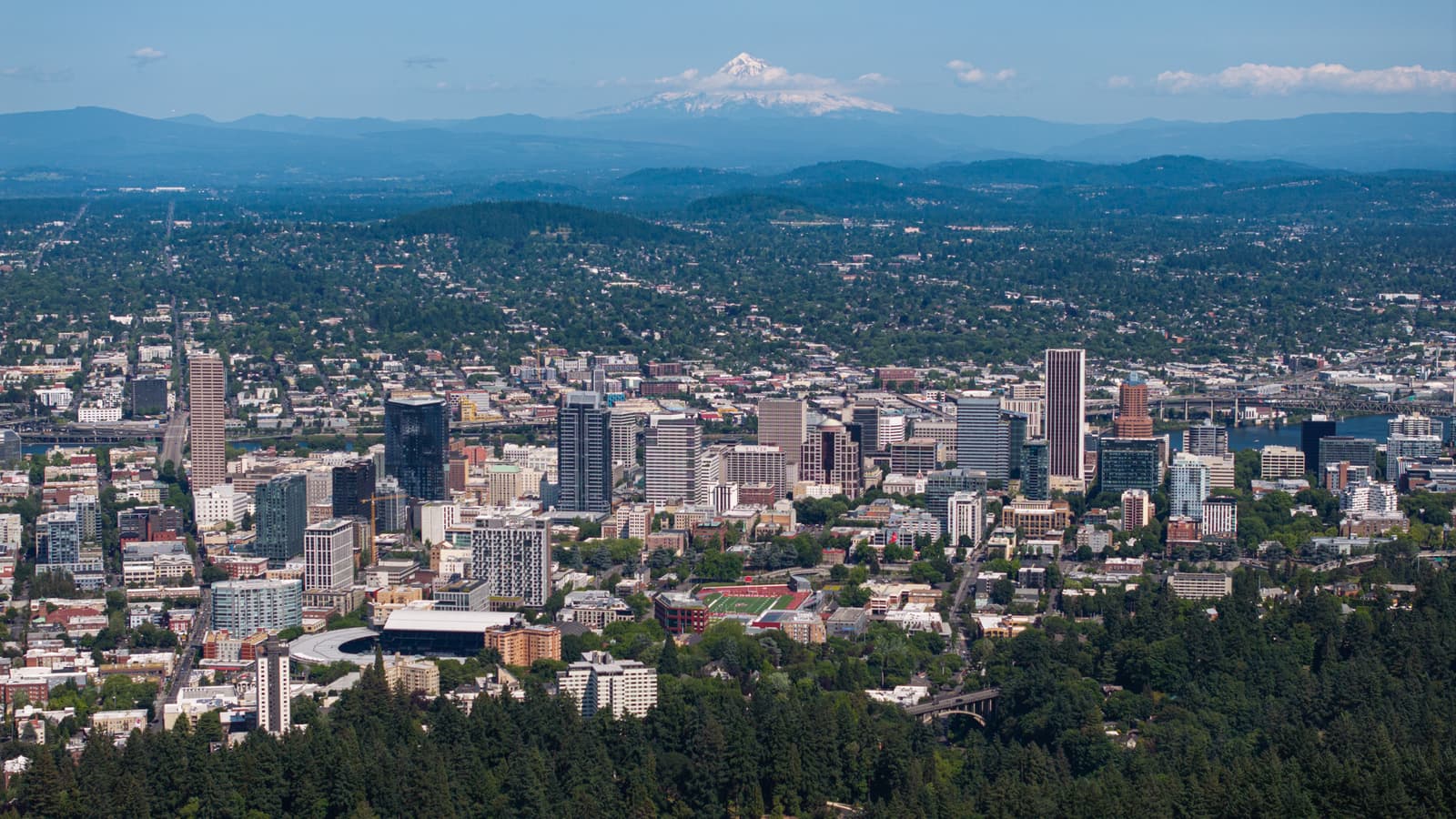
Portland
United States
Portland is still weird, still rainy, and still one of the best small food + beer + coffee cities in America — though its downtown is in real transition since 2020. Powell's City of Books anchors the west side, food cart pods dot every neighborhood, Forest Park is a 5,200-acre wilderness in the city, and Mt. Hood plus the Columbia River Gorge are 45 minutes east.

Puerto Vallarta
Mexico
A Pacific resort town on Banderas Bay where the Sierra Madre tumbles directly into the sea — 1.5 km of sculpture-lined Malecón, the cobblestoned Romantic Zone with its crown-towered Our Lady of Guadalupe Church, and 42 distinct beaches around the bay from family-friendly Los Muertos to roadless Yelapa to the offshore Marietas Islands' Hidden Beach. Hollywood put Puerto Vallarta on the map when John Huston filmed The Night of the Iguana here in 1963 with Burton and Taylor; it has since become Latin America's most LGBTQ+ friendly destination. Tourist infrastructure is excellent and English widely spoken; humpback whales calve in the bay December-March. The all-inclusive Hotel Zone is generic; the Romantic Zone is where Vallarta's charm actually lives.

Quebec City
Canada
The only fortified city north of Mexico — Old Quebec (UNESCO) is a living 17th-century French colonial town perched on the St. Lawrence clifftops. The Château Frontenac is the world's most photographed hotel. Carnaval de Québec is North America's largest winter festival. French is the heartbeat of this city, which feels more like Brittany than Toronto.

Raleigh
United States
Raleigh is North Carolina's state capital and the southern point of the Research Triangle (Raleigh – Durham – Chapel Hill) — three universities (NC State, Duke, UNC) and the Research Triangle Park anchor one of the densest concentrations of PhDs in America. Downtown is built around the 1840 NC State Capitol, the free North Carolina Museum of Natural Sciences (the largest natural-history museum in the Southeast), the NC Museum of Art's outdoor sculpture park, and Fayetteville Street's restaurants and bars. The college-town energy from NC State (37,000 students) means the food scene punches well above a city this size, and the surrounding Triangle area gives you Durham's renovated tobacco district and Chapel Hill's basketball.

Saint Lucia
Saint Lucia
The Caribbean's most dramatic island — the UNESCO twin Pitons (volcanic spires rising from the sea) define Saint Lucia as completely as the Eiffel Tower defines Paris. The world's only drive-in volcano near Soufrière, Anse Chastanet's world-class shore diving, Marigot Bay's perfect natural harbor, and Friday night Jump-Up street parties make this the Caribbean's most varied island experience.

Salt Lake City
United States
The 1847 Mormon pioneer capital at the foot of the Wasatch Mountains — a perfect numbered grid radiating from Temple Square (the LDS Church world headquarters and the most-visited tourist site in Utah), 11 ski resorts within an hour's drive (more than any other US city), and the Great Salt Lake stretching to the horizon west of town. Unusually walkable for the western US (free downtown TRAX light rail, flat grid, generous sidewalks), with the famous "Greatest Snow on Earth" at Park City, Snowbird, Alta, and Deer Valley. The Sundance Film Festival (late January), Antelope Island bison herds, and the surreal Bonneville Salt Flats are all day-trip distance.

San Antonio
United States
San Antonio is the seventh-largest US city (1.5M) and the most Mexican-feeling major city in the United States, anchored by the Alamo and a 3-mile pedestrian River Walk that runs 20 feet below street level through downtown. The five Spanish colonial missions (Mission San Jose plus the Alamo and three others) form a UNESCO World Heritage Site, the King William Historic District holds Victorian mansions, and the Pearl District has turned a 19th-century brewery into the city's best food and shopping zone. Tex-Mex was effectively invented here.

San Diego
United States
Southern California's laid-back beach-and-burrito capital — 70 miles of Pacific coast, 70°F year-round, and an arc from surfy Ocean Beach through La Jolla's sea-lion coves to Coronado's Hotel del Coronado and the Mexican border at Tijuana. Balboa Park packs 17 museums and the world-class San Diego Zoo into 1,200 acres. The Gaslamp Quarter anchors downtown nightlife; North Park and Liberty Station handle the craft-beer + food-hall crowds. The nation's largest naval base shapes the skyline with destroyer silhouettes.

San Francisco
United States
San Francisco is one of America's most beautiful cities — the Golden Gate Bridge, cable cars climbing steep hills, and Victorian painted ladies are just the start. Fisherman's Wharf, Alcatraz, the Mission District's murals, and some of the country's best food (from sourdough to dim sum) make it endlessly explorable. Bring a jacket — the fog is real.

San Juan
Puerto Rico
The oldest city under the US flag (founded 1521) wraps two massive 16th-century Spanish forts — Castillo San Felipe del Morro guarding the bay entrance and Castillo San Cristóbal protecting the landward approach — inside seven blocks of cobalt-cobblestone Old San Juan. UNESCO-listed, walkable in a day, and the only Spanish colonial capital you can reach with a US driver’s license. Add the El Yunque rainforest (the only US national rainforest), the bioluminescent bays of Vieques and Fajardo, and the salsa clubs of Santurce — it’s the most culturally distinctive US destination most US travellers haven’t visited.

San Miguel de Allende
Mexico
A UNESCO World Heritage colonial town in central Mexico's Bajío highlands — the neo-Gothic pink-stone Parroquia de San Miguel Arcángel rises above the Jardín plaza like nothing else in Mexico, lit gold at sunset and pink at dawn. Cobblestone streets wind past 18th-century pastel houses, the Fábrica La Aurora art and design centre, the hot springs of Atotonilco, and a 10,000-strong North American expat community that has shaped the town since 1950. Day of the Dead and the Festival of San Miguel Arcángel (with the famous 4am Alborada fireworks) are the two most spectacular festivals in Mexico's calendar — both happen here.

Santa Fe
United States
America's oldest state capital (1610) at 7,200 feet — a high-desert city built in Pueblo adobe style where the Palace of the Governors is the oldest continuously occupied public building in the US. Canyon Road's 80 galleries make this the densest concentration of art in North America. Meow Wolf's immersive art installation is unlike anything else on Earth. "Red or green?" (chile sauce) is the official state question.

Santo Domingo
Dominican Republic
The oldest European-settled city in the Americas, with a UNESCO colonial zone, merengue-fueled nightlife, and Dominican cuisine. Gateway to the country's beaches and mountains.

Savannah
United States
Savannah is Spanish moss, cobblestone streets, and 22 garden squares laid out in 1733 — one of the most perfectly preserved colonial grids in America. It's also a to-go-cup town where SCAD art students, ghost tours, and century-old dining rooms like Mrs. Wilkes share the same shady blocks. Beach day at Tybee Island is 20 minutes east.

Seattle
United States
Seattle sits on a stretch of Puget Sound backed by the Cascades — with Mt. Rainier dominating the skyline on clear days. Pike Place Market's fish-tossing, the Space Needle's rotating deck, Chihuly glass art, and a coffee culture that invented the global latte. Ferries to Bainbridge and island-hop weekends are part of the deal.

Sedona
United States
A small town of about 10,000 people set among Arizona's most photogenic red sandstone — the iron-oxide-coated Schnebly Hill Formation deposited 270 million years ago when the area was a vast inland sea, the same geological layer that extends north to the Grand Canyon's pink lower walls. Cathedral Rock, Bell Rock, Boynton Canyon, and Airport Mesa are the four 'vortex' sites of the New Age belief system that has driven a wellness/metaphysical tourism economy here since the 1980s — there is no scientific evidence for vortexes; there is also no shortage of believers. Sedona was designated only the 8th International Dark Sky Community in the world in 2014, and the Milky Way is naked-eye visible from anywhere in town on clear nights. The Chapel of the Holy Cross (built 1956 by Marguerite Brunswig Staude) rises directly out of the red rock walls with a 250-foot iron cross as structural support. Slide Rock State Park is named for the natural 80-foot sandstone water slide carved into Oak Creek bedrock. Population is just 10,000 but the town receives over 3 million visitors per year — the result is severe summer/holiday traffic on SR-89A and an enforced parking permit system at popular trailheads. Closest airport: Flagstaff (FLG) 30 mi north, or Phoenix Sky Harbor (PHX) 2 hours south.

South Padre Island
United States
South Padre Island is a 34-mile barrier island at the southern tip of Texas, a one-bridge causeway from Port Isabel and a 30-minute drive from Brownsville. The town occupies the southern five miles; everything north is undeveloped Gulf-of-Mexico beach and dune. It is the sport-fishing capital of Texas, headquarters of the Sea Turtle Inc rescue, and home to the world's largest sandcastle competition (Sandcastle Days, October). The reputation is split: a notorious March spring break, then nine quiet, family-friendly months of dolphin tours, kiteboarding, and 25-dollar beachfront tacos. Closest airports are Brownsville/SPI (BRO) and Harlingen (HRL), both inside an hour. Do not confuse it with Padre Island National Seashore, 90 miles north near Corpus Christi.

St. Louis
United States
St. Louis sits where the Missouri meets the Mississippi — a Midwestern river city defined by Eero Saarinen's 630-foot Gateway Arch, Forest Park (larger than Central Park, with five free major museums), and a stubborn small-city food culture built on toasted ravioli, gooey butter cake, and tomato-sweet pork-steak BBQ. The population peaked at 856,000 in 1950 and has fallen to roughly 280,000, leaving an oversized skyline, brick neighbourhoods, and two-day weekends that still feel like a 1.5-million-person town. Cardinals baseball at Busch Stadium and the free Anheuser-Busch brewery tour anchor the calendar.

Tamarindo
Costa Rica
Tamarindo is the unofficial capital of Costa Rica's Pacific surf coast — a former fishing village transformed by The Endless Summer II in 1994 into a 7,000-person beach town stacked with surf schools, smoothie bars, and sunset-bar circuits. Playa Tamarindo's mile-long beach break works for total beginners; the more powerful Playa Grande across the estuary is the protected nesting beach for endangered leatherback turtles in Las Baulas National Marine Park. The Liberia airport (LIR) is just 75 km north, putting Tamarindo within five hours of Miami and making it the easiest beach landing in the country.