Compare 576 Travel Destinations
13 of 576 guides match

Algarve
Portugal
Portugal's golden coast is Europe's most photogenic Atlantic shoreline — limestone sea stacks and grottos at Ponta da Piedade (Lagos), the sheltered cove of Praia da Marinha, and 300 days of sunshine per year (the highest in continental Europe). Cabo de São Vicente — the most southwesterly point of mainland Europe — is where Henry the Navigator founded his navigation school in 1419 and launched the Age of Discovery. The Ria Formosa lagoon system stretches 90km, home to flamingos, rare chameleons, and barrier island beaches.

Amalfi Coast
Italy
The Amalfi Coast is a UNESCO-listed stretch of dramatic clifftop villages cascading down to turquoise Mediterranean waters. Positano, Amalfi, and Ravello are the headliners, but the quieter towns of Atrani and Praiano offer a more authentic experience. The coastal roads are spectacular (if hair-raising), and the food is incredible.

Black Forest
Germany
A 160 km north-south range of densely-forested hills along Germany's southwest border with France — cuckoo-clock workshops in Triberg, the 163m Triberger Wasserfälle (Germany's highest waterfall), the deep-blue Titisee, the 60 km Schwarzwaldhochstrasse scenic drive, and the half-timbered villages of the Gutach Valley. The original Schwarzwälder Kirschtorte (Black Forest cake) was created here in 1915. Freiburg makes the obvious base — a sunny university town at the southwestern edge with the Münster spire and a tram running into the forest in 20 minutes.

Cinque Terre
Italy
Five Ligurian fishing villages clinging to a 15km stretch of cliffs — Monterosso, Vernazza, Corniglia, Manarola, Riomaggiore. Connected by boat, by train every 15 minutes, and (sometimes) by the Sentiero Azzurro hiking trail. Pesto is from here, sciacchetrà dessert wine is from these cliffs, and no cars enter the villages.

Cotswolds
United Kingdom
England's largest Area of Outstanding Natural Beauty (790 sq miles) — a region of honey-coloured Jurassic limestone villages, ancient wool-trade churches, and rolling green countryside spread across Gloucestershire, Oxfordshire, Worcestershire, Wiltshire, and Warwickshire. The villages built their wealth on Cotswold Lion sheep wool from the 12th-18th centuries and the prosperity built the elaborate stone houses and 'wool churches' you see today. Bibury's Arlington Row appears inside every UK passport; Bourton-on-the-Water is the 'Venice of the Cotswolds' with the River Windrush flowing through the village green; Castle Combe is regularly named Britain's prettiest village; and the 102-mile Cotswold Way long-distance trail threads from Chipping Campden to Bath. Add Daylesford organic farm shops, Highgrove (King Charles III's home), and the antique capitals of Stow and Tetbury — and you have the most concentrated rural England in the country.

Faroe Islands
Faroe Islands
18 volcanic islands in the North Atlantic between Iceland and Norway — basalt cliffs falling sheer into the sea, grass-roofed villages, and sheep that outnumber humans 2:1 (the name literally means "Sheep Islands"). Sub-sea tunnels with roundabouts in the middle of the ocean connect the main islands. Sørvágsvatn lake-over-ocean optical illusion at Trælanípan, Múlafossur waterfall plunging off the cliff at Gásadalur, the grass-roof village of Saksun, and puffin colonies on Mykines (Jun-Aug). Self-governing within the Kingdom of Denmark — but NOT in Schengen.

Lake Como
Italy
A pre-Alpine Y-shaped lake ringed by mountains where pastel fishing villages, baroque villas with terraced gardens, and a daily ballet of green-and-white ferries make up most of the experience. Bellagio sits on the promontory where the lake's three arms meet, Varenna stacks ochre houses above the eastern shore, Villa del Balbianello's cypress terraces ran the Star Wars and Casino Royale cameras, and Villa Carlotta's azaleas peak through May into early June. Como town anchors the southwestern tip with a Juvarra-domed Duomo and the Brunate funicular for the lake's best panorama. One hour from Milan by train, but lived at ferry pace.
Lake District
United Kingdom
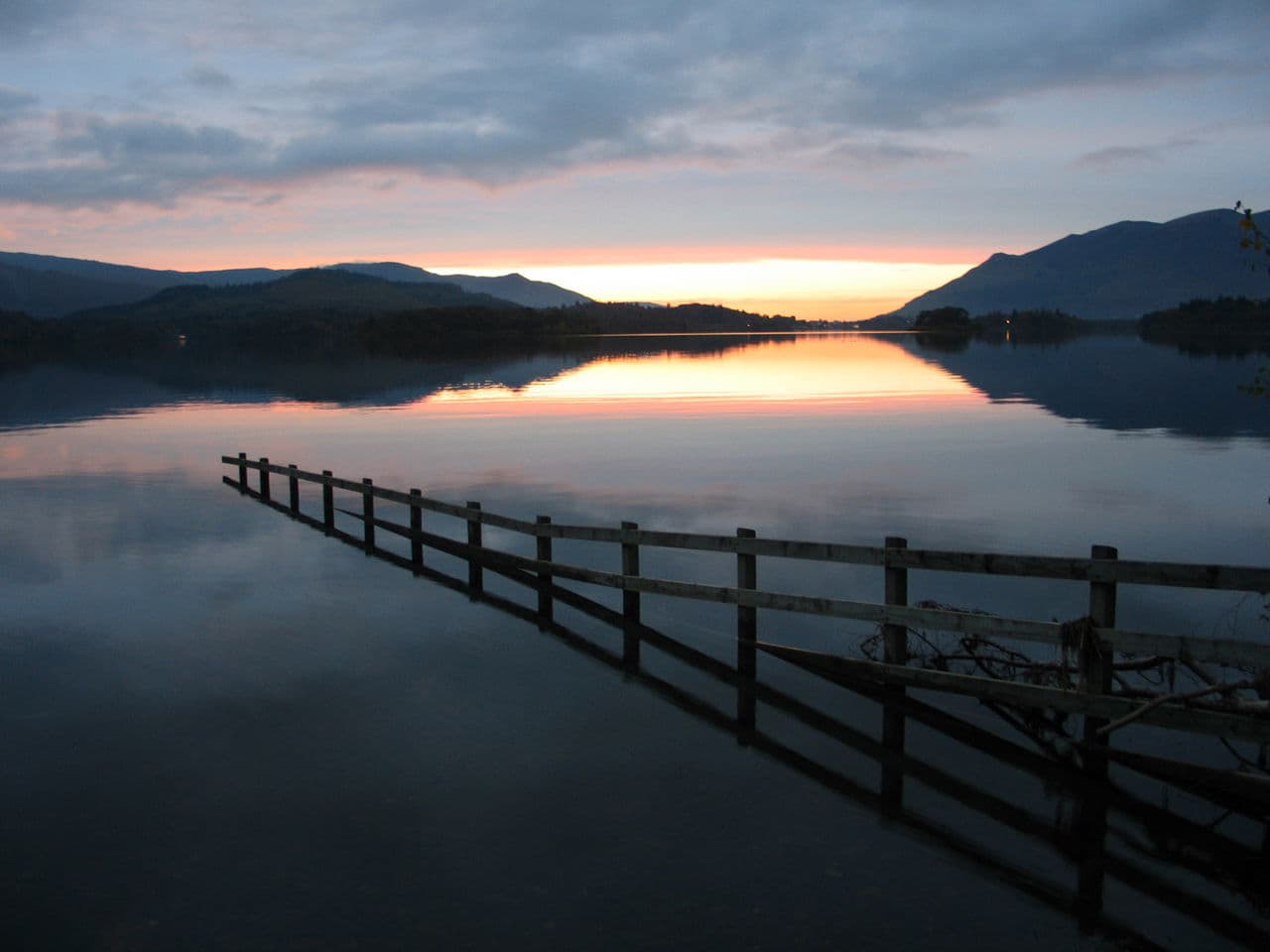
The UK's largest national park (2,362 km²) and a UNESCO World Heritage Site since 2017 — a glacier-carved Cumbrian landscape of slate-grey peaks, ribbon lakes, and dry-stone-walled fell farms. Despite the name, only Bassenthwaite Lake is technically a 'lake'; the rest are 'meres' (Windermere, Buttermere, Grasmere) or 'waters' (Derwentwater, Ullswater, Coniston Water) — Old Norse and Anglo-Saxon remnants. Scafell Pike (978 m) is England's highest mountain, a serious 6–7 hour return walk in often atrocious weather. The Romantic poetry movement was effectively born here — William Wordsworth's Dove Cottage in Grasmere is preserved as he left it, and Beatrix Potter (Peter Rabbit royalties) bought 4,000 acres of fellside farmland over her lifetime and bequeathed every acre to the National Trust. Seathwaite in Borrowdale receives 3,500 mm of rain a year — the wettest inhabited place in the British Isles. Pack waterproofs even in July. Closest airport: Manchester (MAN); the train to Windermere connects via Oxenholme.

Lofoten Islands
Norway
A Norwegian archipelago of jagged granite peaks rising straight from the Norwegian Sea — among Europe's most photographed landscapes. Iconic red fishermen's cabins (rorbuer) in Reine, Hamnøy, Å, and Henningsvær; the Reinebringen staircase hike, Haukland and Uttakleiv beaches, and centuries-old cod-drying racks. Midnight sun late May to mid-July, Northern Lights mid-September to April. Access via Tromsø or Bodø → LKN/EVE airports, or the iconic E10 scenic drive.

Provence
France
The first Roman province outside Italy (Provincia Romana, 121 BCE) and the lavender-and-ochre southeast of France — a region rather than a single city, comprising Avignon's Palais des Papes (the largest Gothic palace in Europe, seat of seven popes 1309–1376), Aix-en-Provence's plane-tree boulevards and Cézanne's Mont Sainte-Victoire, and the Luberon hill villages of Gordes, Roussillon, Bonnieux, and Ménerbes. The Plateau de Valensole's 800 km² of cultivated lavender produces half of France's crop and peaks for three weeks in late June through mid-July; outside that window the fields are green or dormant. Roman engineering survives at the Pont du Gard aqueduct and the Arles Arena (still hosting bullfights), and Europe's deepest canyon — the 700-metre Verdon Gorge — runs 25 km through limestone with a turquoise river at the bottom. Gateway airport: Marseille (MRS).

Scottish Highlands
United Kingdom
The Scottish Highlands are raw, wild, and hauntingly beautiful — ancient mountains, deep lochs, and vast empty landscapes stretching to the horizon. Drive the NC500 coastal route, hike in Glen Coe, visit the Isle of Skye, and sample single malt whisky at the source. One of Europe's last great wildernesses.

Svalbard
Norway
The Norwegian Arctic archipelago at 78°N — halfway between mainland Norway and the North Pole. Longyearbyen is the only real settlement (~2,400 people, more polar bears than residents on the archipelago). Global Seed Vault, the ghost Soviet mining town of Pyramiden, snowmobile tours across frozen fjords, and the unique Svalbard Treaty making it visa-free for every passport holder — though Schengen transit is the practical gateway. Rifle required outside settlements for polar bear defense.

Tuscany
Italy
Rolling hills, cypress-lined roads, medieval hilltop towns, and some of the world's best wine. Tuscany is the Italy of postcards — and it delivers. Florence anchors the region with Renaissance art, but the real magic is in the countryside: Siena, San Gimignano, Val d'Orcia, and the Chianti wine region. Renting a car is the best way to explore.