Compare 576 Travel Destinations
173 of 576 guides match

Dublin
Ireland
Dublin punches well above its weight — a compact, walkable city with world-class pubs, a legendary literary heritage (Joyce, Beckett, Wilde), and some of the friendliest people you'll meet. The Guinness Storehouse, Temple Bar, and Trinity College's Book of Kells are must-sees, but the real magic is in the conversation at a local pub.

Dubrovnik
Croatia
Dubrovnik's walled old town is one of Europe's most stunning medieval cities — limestone streets, terracotta rooftops, and the Adriatic glittering below. Walk the famous city walls, take the cable car to Mount Srd, and island-hop to Lokrum and the Elafiti Islands. Game of Thrones put it on the map, but the city has been captivating visitors for centuries.

Edinburgh
United Kingdom
Edinburgh is a city of two halves — the medieval Old Town cascading down from the Castle to Holyrood, and the elegant Georgian New Town below. The world's largest arts festival (the Fringe) takes over every August, Harry Potter was born in its cafes, and Arthur's Seat offers a proper hike without leaving the city limits.

Eger
Hungary
A baroque town of 53,000 in northern Hungary that punches above its weight: Eger Castle, where Captain István Dobó and 2,000 defenders held off a 40,000-strong Ottoman army in 1552; a 40-metre minaret left from 91 years of later Turkish rule, the northernmost in Europe; and the Szépasszony-völgy (Valley of the Beautiful Women) just outside town, where a horseshoe of 50-plus rock-cut wine cellars pours Egri Bikávér (Bull's Blood) for the price of a coffee. Two hours east of Budapest by train, an easy weekend with cobbled streets, the country's second-largest basilica, and Habsburg-era thermal baths.

Evora
Portugal
The walled UNESCO capital of the Alentejo, an hour and a half east of Lisbon by bus or train through cork-oak plains and olive groves. The Roman Temple of Diana from the 1st century stands almost intact in the upper square; the Cathedral of Evora, the Aqueduto da Agua de Prata, and the macabre Capela dos Ossos with its walls lined in 5,000 monk skeletons all sit within ten walking minutes of each other. The countryside around it holds more than 100 working wineries: Esporao, Cartuxa, and Mouchao among them, all open for tastings and lunch.

Faroe Islands
Faroe Islands
18 volcanic islands in the North Atlantic between Iceland and Norway — basalt cliffs falling sheer into the sea, grass-roofed villages, and sheep that outnumber humans 2:1 (the name literally means "Sheep Islands"). Sub-sea tunnels with roundabouts in the middle of the ocean connect the main islands. Sørvágsvatn lake-over-ocean optical illusion at Trælanípan, Múlafossur waterfall plunging off the cliff at Gásadalur, the grass-roof village of Saksun, and puffin colonies on Mykines (Jun-Aug). Self-governing within the Kingdom of Denmark — but NOT in Schengen.

Fethiye
Turkey
A Lycian harbour town of 170,000 wrapped around a sheltered bay, with the famous Blue Lagoon at Ölüdeniz 14 km south — the photo of paragliders launching off Mount Babadağ (1,969 m) toward the turquoise lagoon is one of Turkey's most-shared images. Fethiye itself anchors the western Lycian Way trail, the 12-island gulet cruise route, and access to Saklıkent Gorge, the rock-cut Tomb of Amyntas, and the abandoned Greek ghost village of Kayaköy. The eastern Mediterranean's most accomplished sailing base, with Göcek Bay's six 5-star marinas just 25 km west.

Florence
Italy
The birthplace of the Renaissance is an open-air museum — the Duomo, the Uffizi, Michelangelo's David, and the Ponte Vecchio are just the start. Florence rewards slow exploration of its neighborhoods, from the artisan workshops of the Oltrarno to the markets of San Lorenzo. The Tuscan food and Chianti wine are unforgettable.

Frankfurt
Germany
Germany's only true skyline city — home to the European Central Bank and a financial district nicknamed Mainhattan that puts a dozen 200-metre-plus towers along the Main River. The flip side sits across the river in Sachsenhausen, where Apfelwein taverns serve cloudy fermented apple wine in ribbed Geripptes glasses with handkerchief-pattern Bembel jugs. Römerberg square holds the half-timbered city hall, the Goethe House recreates the writer's birthplace room by room, and FRA airport pushes 65 million passengers a year through Europe's third-busiest hub — most travellers' first or last German city.

Galway
Ireland
Ireland's festival capital and gateway to the wild west — the Latin Quarter and Shop Street have been a trading hub since the 14th century. The Aran Islands (Inis Mór's Dún Aonghasa cliff fort is 3,500 years old) are 45 minutes by ferry. Connemara's mountains and Kylemore Abbey are an hour's drive. The Crane Bar has hosted traditional music every night for decades.

Gdańsk
Poland
The great Hanseatic port at the mouth of the Vistula — narrow Dutch-gabled merchants' houses crowd the Long Market (Długi Targ) under Neptune's Fountain, and the brick crane (Żuraw) still squats on the Motława waterfront where ships once loaded amber and grain. Almost everything you see was rebuilt brick-by-brick after 1945 (the Old Town was 90% flattened). The European Solidarity Centre at the old Lenin Shipyard tells the story of how Poland's 1980 strikes brought down the Eastern Bloc; Westerplatte, where WWII began on 1 September 1939, is a tram ride away. Sopot's pier and Baltic beaches sit 20 minutes north on the SKM commuter train.

Geneva
Switzerland
Switzerland's French-speaking diplomatic capital on the western tip of Lake Geneva, home to the UN's European headquarters, the Red Cross, the WHO, the WTO, and roughly 40 percent of Geneva's residents being foreign nationals. The 140 m Jet d'Eau plumes from the lake's edge as the city's signature image, the medieval Old Town climbs to St. Pierre Cathedral where Calvin preached, and CERN sits 8 km west on the French border. Expensive even by Swiss standards, with a watch-and-chocolate shopping district that rivals Zurich's.
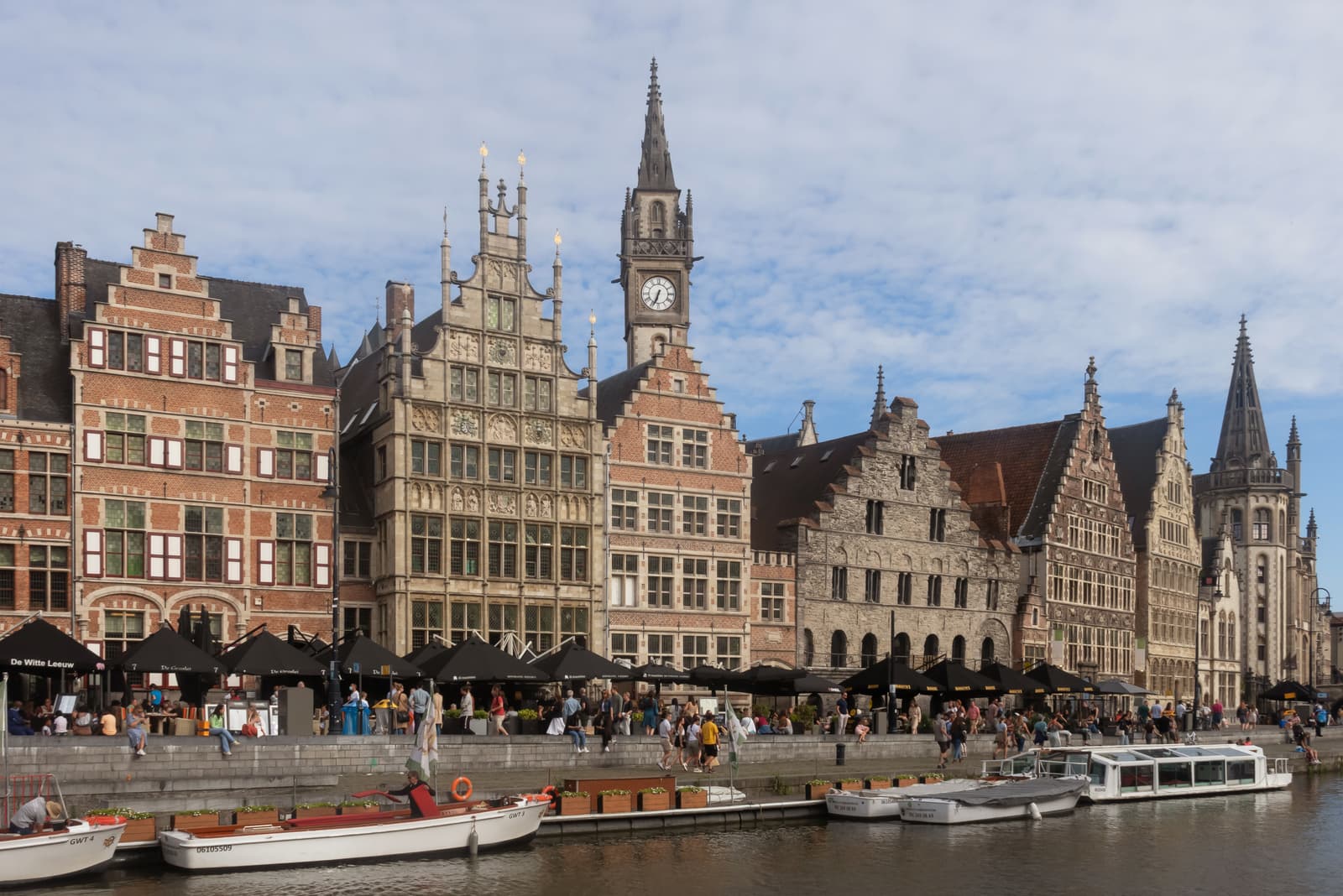
Ghent
Belgium
Belgium's best-kept secret — a medieval canal city with Gravensteen castle, the Ghent Altarpiece masterpiece, a thriving student scene, and all the beer and chocolate you'd expect, minus the Bruges crowds.
.jpg%3Fwidth%3D1280&w=1600&q=75)
Gothenburg
Sweden
Sweden's second city and largest port, founded by Dutch engineers in 1621 and still organised around their canal grid — a working harbour with a softer, friendlier feel than Stockholm, plus the country's best concentration of fish-market food, the wooden-house quarter of Haga, and Liseberg, the largest amusement park in Scandinavia. The Volvo and SKF factories anchor a strong industrial economy, but the visitor draws are the Feskekorka fish-market church on the canal, fika in the wooden cafes of Haga, and a half-day's boat hop to the car-free islands of the southern archipelago. Direct SJ high-speed trains reach Stockholm in 3 hours and Copenhagen in 3 hours 30.

Granada
Spain
The Alhambra is the most visited monument in Spain — and justifiably so. The 14th-century Nasrid Palace complex, with its Generalife gardens cascading down the hillside above the whitewashed Albayzín quarter (both UNESCO), represents the pinnacle of Islamic art in the West. Granada was the last Moorish kingdom in Europe, falling to Ferdinand and Isabella in 1492, the same year Columbus sailed. One more gift: Granada is one of the last Spanish cities where tapas are still served free with every drink.

Hallstatt
Austria
Hallstatt is the postcard — a single 800-person village clinging to a sliver of land between Lake Hallstatt and the vertical Salzberg, with pastel houses stacked five-deep and a Lutheran church spire rising over a wooden boathouse for the photograph everyone has already seen. The salt mine above the village has been operated continuously for 7,000 years (the oldest active mine in the world), the Iron Age Hallstatt culture is named after this exact valley, and the entire Salzkammergut region is UNESCO listed. The trick is that 10,000 day-trippers arrive between 11:00 and 15:00 and the village empties by 17:00 — so stay overnight, walk at dawn, and you have one of Europe's most beautiful places almost to yourself.

Hamburg
Germany
Germany's second-largest city and largest port — a Hanseatic League trading capital that has more bridges than Venice, Amsterdam, and London combined, with Europe's largest contiguous warehouse complex (the UNESCO Speicherstadt) and the wave-roofed €866M Elbphilharmonie concert hall on top of an old harbour warehouse. The Reeperbahn in St. Pauli is Europe's most famous red-light district where The Beatles played 281 nights 1960–1962, the Sunday Fischmarkt has been operating for 320 years (05:00–09:30, with a live band), and the Inner and Outer Alster lakes give central Hamburg a sailing-club energy unique among major European cities.

Hardangerfjord
Norway
The fourth-longest fjord in the world at 179km — the Queen of the Fjords — softer and more agricultural than Sognefjord or Geirangerfjord, with apple and pear orchards on the slopes and Norway's only DOP cider. Trolltunga, the rock tongue jutting 700m above Lake Ringedalsvatnet, is the headline hike (10–12 hours round-trip from Skjeggedal, safe mid-June to mid-September). Vøringsfossen thunders 182m near Eidfjord. Europe's largest mountain plateau, Hardangervidda, is just beyond.

Heidelberg
Germany
Germany's most romantic university town — the half-ruined red-sandstone Schloss looking down on the Neckar River, the cobbled Hauptstrasse threading through a pristine Old Town that was spared Allied bombing, and Ruperto Carola, the country's oldest university (1386). The Karl-Theodor-Brücke arches across to the Philosophenweg, where Hegel and Goethe both walked. Day-trippers from Frankfurt outnumber overnight stays, but the early-morning and late-evening hours when the tour buses leave are when Heidelberg becomes itself.

Helsinki
Finland
Finland's Baltic capital is a design capital, a sauna capital, and the European jumping-off point for Tallinn by 2-hour ferry. Löyly harborside sauna, Suomenlinna sea fortress, Temppeliaukio rock church, Senate Square's Lutheran white, and 19-hour June daylight. Finnish is Finno-Ugric — closer to Estonian than Swedish.

Hjørundfjord
Norway
A 35km fjord in the Sunnmøre Alps — one of Norway's most spectacular fjords and somehow still one of its least visited. No cruise ships call. The mountains rise nearly sheer from the water to 1,500m peaks: Slogen, Kolåstinden, Saksa. In April–May this is arguably the world's best summit-to-sea ski touring; in summer the Sagafjord ferry still links Sæbø, Urke and Øye, where historic Hotel Union Øye hosted Kaiser Wilhelm II. If you want the fjords without the crowds of Geiranger, this is it.

Höfn
Iceland
A working langoustine port on a flat tongue of land that pokes into the Hornafjörður lagoon, with the white wall of Vatnajökull — Europe's largest ice cap — filling the entire western horizon. Höfn (the name just means "harbour") is the obvious base for the Glacier Lagoon (Jökulsárlón), the Diamond Beach, and ice-cave excursions onto Vatnajökull's outlet glaciers. 459 km / 6 hours from Reykjavík on the Ring Road; the eastern fjords begin 30 minutes north.

Hvar
Croatia
Croatia's sunniest island receives over 2,700 hours of sunshine per year — more than anywhere else in the country. The Stari Grad Plain (UNESCO) was laid out by Greek colonists in 384 BC in a geometric field system unchanged for 2,400 years. Hvar Town's limestone piazza, backed by the Fortica fortress and facing the Pakleni Islands, is the most glamorous harbour scene in the Adriatic.

Ibiza
Spain
The third-largest Balearic Island wraps two completely different identities into one Mediterranean idyll — the UNESCO-listed Renaissance walls of Dalt Vila, the most complete coastal fortifications in the Mediterranean, sit above an island that hosts the world's most influential club scene (Pacha since 1973, Amnesia, Ushuaïa, DC10, Hï Ibiza). Two-thirds of the island is protected: Ses Salines Natural Park where Phoenicians have harvested salt for 2,700 years, the underwater Posidonia seagrass meadows that produce the clearest water in Spain, and the rural north of pine-forested fincas and almond groves. Cala Comte sunsets, Es Vedrà mythology, and 30-minute ferry rides to Formentera's white-sand beaches round out an island that delivers everything from teenage stag weekends to UNESCO archaeology.