All Destinations
10 of 576 guides match

Atlas Mountains
Morocco
The Atlas Mountains run 2,500 km across northwest Africa, with the High Atlas of Morocco as the trekking heart and Toubkal (4,167m) the highest peak in North Africa. Imlil village, 1.5 hours from Marrakech, is the standard launch pad — a cluster of stone Berber villages strung along walnut groves, where mule trails climb into snow-capped peaks and tagine homestays end most days. Aït Ben Haddou, the UNESCO red-clay ksar 3 hours south on the desert edge, doubled for ancient Egypt and Westeros in Lawrence of Arabia, Gladiator and Game of Thrones, and anchors the southern road circuit out of the range.

Bwindi Impenetrable Forest
Uganda
UNESCO 1994 ancient montane forest (25,000+ years continuous) — home to roughly half the world's mountain gorillas (~450 of ~1,000 total). Gorilla trekking permits in Uganda cost $800 per person (vs Rwanda $1,500, DRC $400); book 6–12 months ahead. Four sectors — Buhoma, Ruhija, Rushaga, Nkuringo — with variable trek difficulty from 1 hr to 8 hr. 350+ bird species including Albertine Rift endemics. Access via Entebbe → charter to Kihihi, or 8–10 hr drive on rough roads. Best June–August + December–February.
.jpg%3Fwidth%3D1280&w=1600&q=75)
Drakensberg
South Africa
The 'Dragon Mountain' is a 1,000 km basalt escarpment along the Lesotho border — the tallest range in southern Africa, with Thabana Ntlenyana on the Lesotho side topping out at 3,482 m. The UNESCO Maloti-Drakensberg Park protects the highest reaches plus 600+ San rock-art sites, the largest concentration of rock paintings in Africa, and Tugela Falls (948 m, second-tallest in the world) plunges off the Amphitheatre cliff in the Royal Natal section. Hiking, horseback riding, zip-lining and trout streams cluster around mountain lodges roughly four hours from both Johannesburg and Durban.
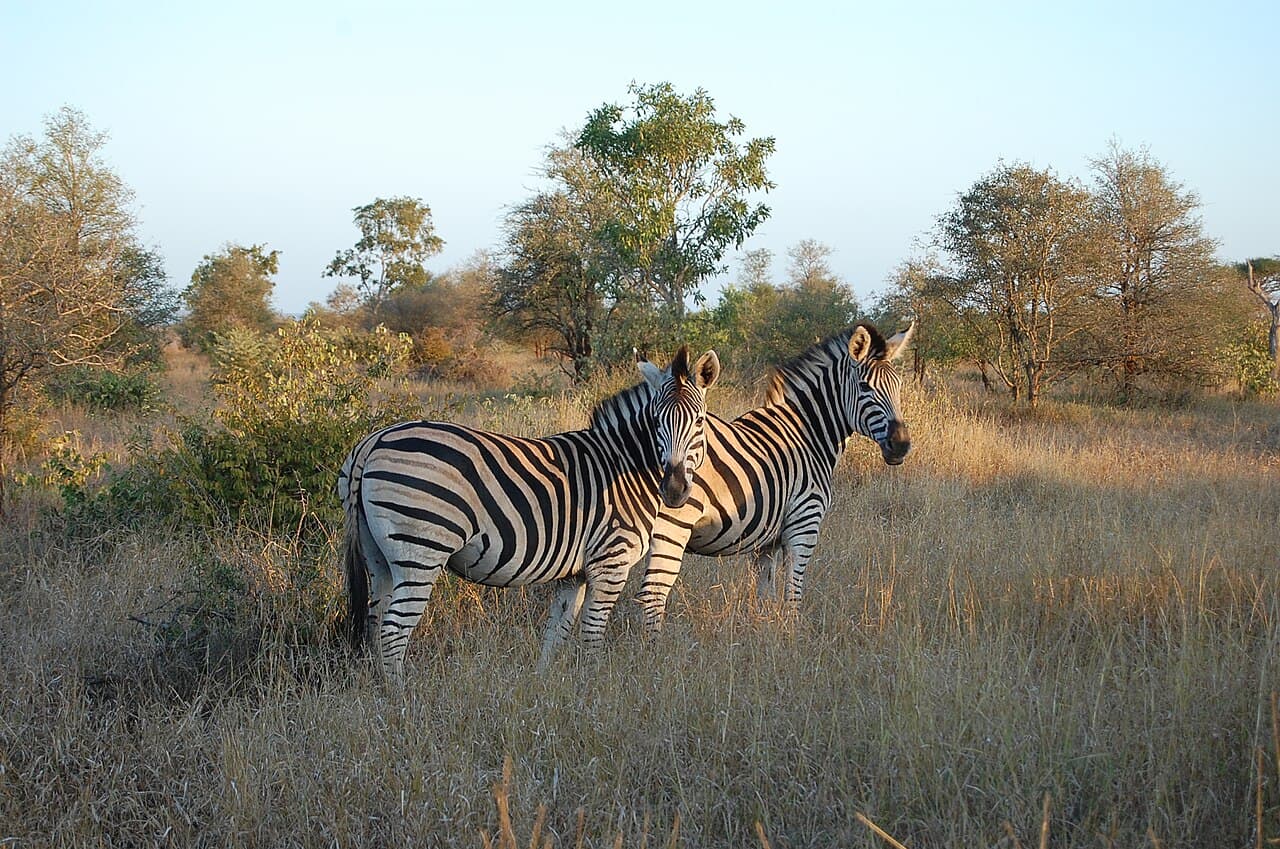
Kruger National Park
South Africa
South Africa's flagship safari park and one of Africa's largest game reserves — home to the Big Five and an incredible diversity of wildlife across nearly 2 million hectares.

Lake Malawi
Malawi
Africa's third-largest lake stretches 560 km along Malawi's eastern flank — a freshwater inland sea so clear that the UNESCO Lake Malawi National Park around Cape Maclear is the cichlid biodiversity capital of the world, with 1,000+ endemic species. Beach lodges hug the southern shores at Cape Maclear and Senga Bay, the historic MV Ilala steamer still threads weekly up the lake, and Likoma Island's Anglican cathedral sits improbably mid-water. Snorkel and dive in bilharzia-safe deep water; the lake replaces the ocean most travellers expect from a southern African trip.

Maasai Mara
Kenya
1,510 km² of rolling savannah in southwestern Kenya — the northern extension of Tanzania's Serengeti ecosystem and arguably the highest density of large mammals on Earth. The Big Five (lion, leopard, elephant, buffalo, rhino) are all resident year-round; July-October brings the Great Migration when 1.5 million wildebeest, 200,000 zebra, and 350,000 Thomson's gazelle thunder across the Mara River in crocodile-strewn crossings. Hot-air balloon safaris at dawn (300-450 USD), bush flights from Nairobi's Wilson Airport (45min — far quicker than the 5-6hr drive on bone-rattling C12), and conservancy stays in the bordering 14 community-owned reserves (Mara North, Olare Motorogi, Naboisho) which allow off-road driving and night drives forbidden inside the main reserve. Maasai cultural villages dot the perimeter.

Okavango Delta
Botswana
UNESCO World Heritage Site (2014) — the world's largest inland delta, 15,000 km² of wetlands where the Okavango River ends in the Kalahari rather than reaching the sea. The paradox season: floodwaters from Angolan rains peak in June–August, making Botswana's dry winter months the wildlife spectacle. Mokoro canoe safaris, luxury fly-in camps (Mombo, Vumbura, Duba Plains), Big 5 game plus African wild dogs, and Maun as the MUB gateway town.

Serengeti National Park
Tanzania
The world's most famous safari destination — 14,750 km² of golden savanna where 1.5 million wildebeest and 200,000 zebra cycle clockwise each year. Mara River crossings draw the cameras July-October; the southern Ndutu plains host the calving in January-February. Big Five all present (rhino rare — Ngorongoro is the play). Standard "northern circuit" pairs Serengeti with Ngorongoro Crater + Tarangire from Arusha. Hot-air balloon safaris an Out-of-Africa indulgence.
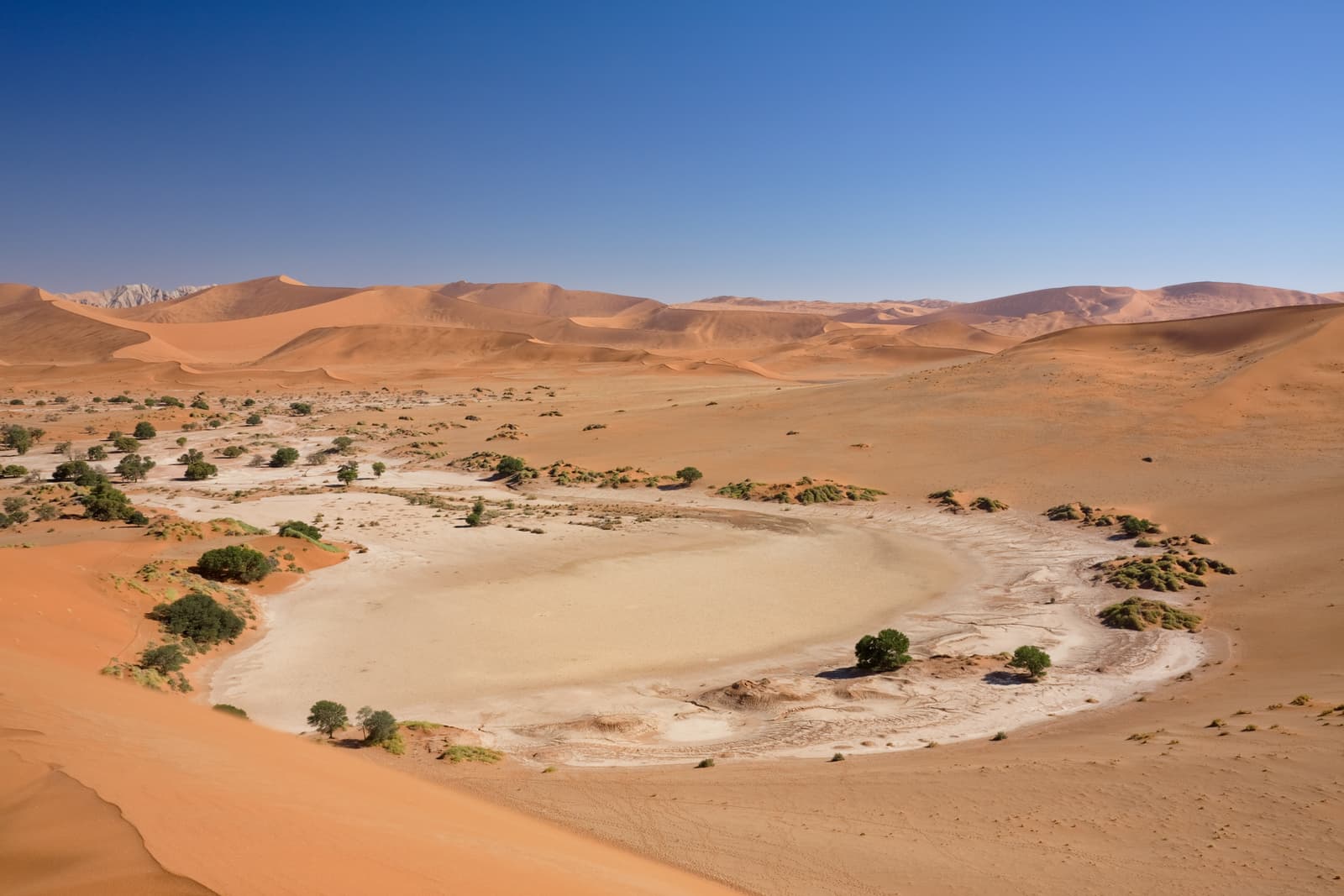
Sossusvlei
Namibia
A salt-and-clay pan deep inside Namib-Naukluft National Park, ringed by the world's highest sand dunes — Big Daddy peaks above 325m and Dune 45 draws the sunrise crowds. The adjacent Deadvlei pan holds 900-year-old camel-thorn skeletons against blindingly white clay and orange dune walls — one of the most photographed landscapes on Earth. Access via Sesriem gate; the final 5 km requires 4WD or a shuttle. Part of the Namib Sand Sea UNESCO site.

Victoria Falls
Zimbabwe
The largest sheet of falling water on Earth — 1,708m wide and twice as tall as Niagara. Locally called Mosi-oa-Tunya ("the smoke that thunders"). Zimbabwe's side delivers ~75% of the views and the postcard panoramas; Zambia's side has the Devil's Pool experience at Livingstone Island in the dry season (Sep-Dec). Adventure capital of southern Africa: bungee from the 111m Victoria Falls Bridge, Zambezi Class V rafting, helicopter Flight of Angels, lunar rainbows on full moons. Hwange NP nearby for safari combos.