Quick Verdict
Pick Charleston for Rainbow Row pastels, Battery harbor mansions, and Husk-FIG-Ordinary low-country dinners. Pick Sedona if Cathedral Rock hikes, the Holy Cross chapel, and Dark Sky Milky Way views from your hotel courtyard win out.
🏆 Charleston wins 73 OVR vs 69 · attribute matchup 4–4

Sedona
United States
Charleston
United States
Sedona
Charleston
How do Sedona and Charleston compare?
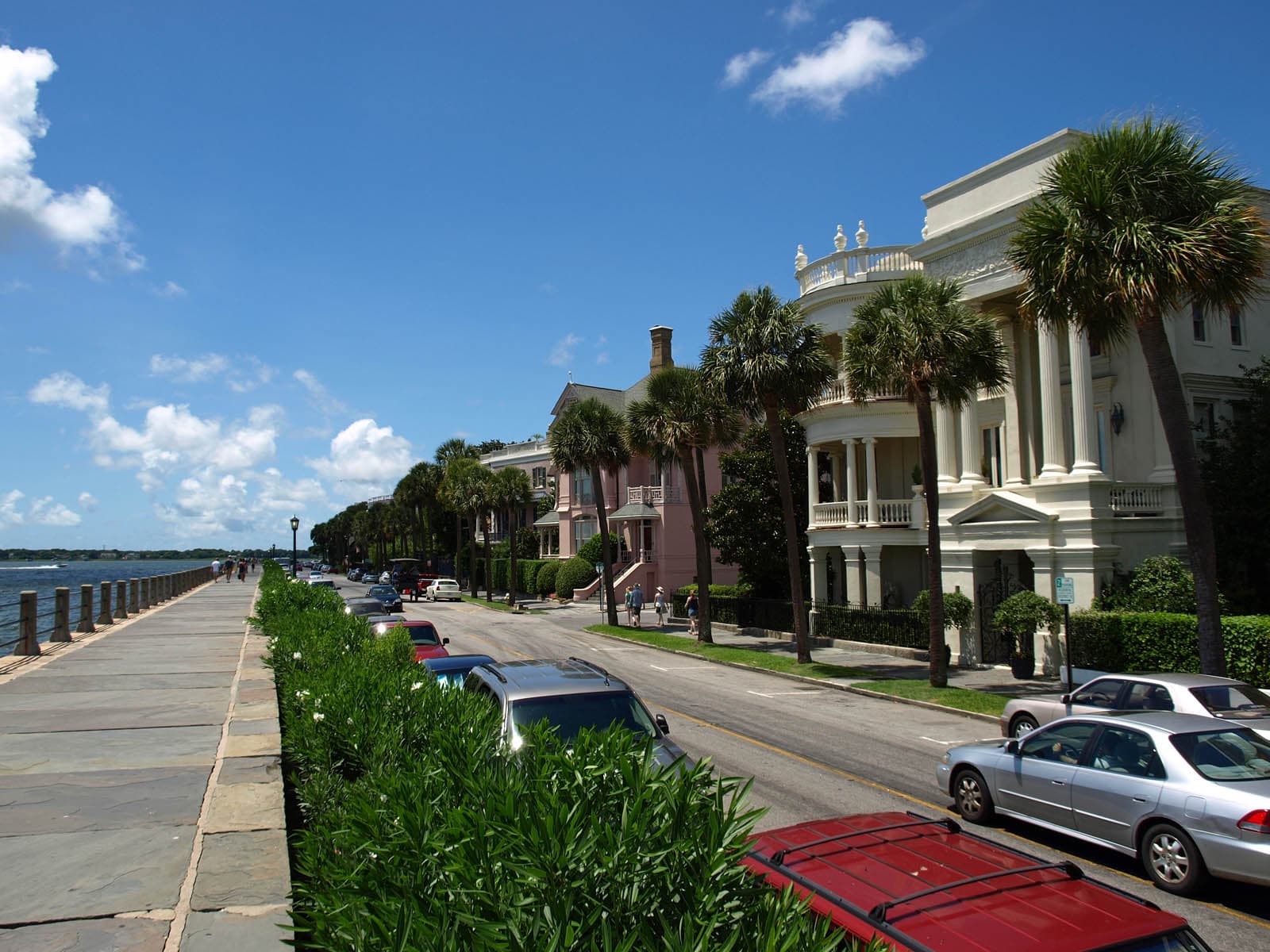
Two American long-weekend escapes that show up on the same shortlist for couples planning a romantic break, and the only thing they share is the hotel price tag. Charleston is the southern coastal port — pastel Rainbow Row, Battery harbor mansions facing Fort Sumter, horse carriages on cobblestone, and a low-country restaurant scene anchored by Husk, FIG, and The Ordinary that essentially wrote the modern southern cookbook. Sedona is the Arizona red-rock town of about 10,000 people set among 270-million-year-old iron-stained sandstone, where Cathedral Rock and Bell Rock anchor the hiking, the Chapel of the Holy Cross rises straight out of the wall, and four named energy vortexes drive a wellness economy that has run since the 1980s.
Mid-range budgets diverge — Charleston runs about $310 a day, Sedona closer to $240 — but Sedona's hidden cost is the rental car and the parking permit system at popular trailheads like Cathedral Rock, where summer overflow fills the lots by 7 a.m. Charleston is walkable on the historic peninsula; Sedona requires SR-89A and the Pink Jeep tours for the iconic Schnebly Hill viewpoints. Charleston peaks March-May and October-November (summer humidity is genuinely punishing); Sedona peaks March-May and September-November when the desert is 25°C rather than 38°C and the trails are not melting.
There is no logical combination — these are 1,800 miles apart and built for completely different moods. Pro tip: Sedona is also the world's 8th International Dark Sky Community, so book a guided astronomy tour with a Celestron telescope rather than driving yourself out to Bell Rock at midnight. Pick Charleston for harbor history, antebellum architecture, oysters at The Ordinary, and warm coastal evenings on a piazza with a glass of bourbon. Pick Sedona for red-rock day hikes, Slide Rock State Park's natural sandstone water slide, vortex meditation if you're so inclined, and a Milky Way naked-eye visible from your hotel courtyard.
💰 Budget
🛡️ Safety
Sedona
Sedona is very safe — violent crime is rare, the town and trail systems are well-managed, and the typical risks are outdoor-related: heat, dehydration, monsoon flash floods, and trail injuries on slickrock terrain. The town's 3M+ annual visitor count creates traffic and parking pressure but no real crime risk.
Charleston
The historic peninsula and the surrounding beach/barrier islands are very safe for visitors, with low violent crime and a heavy tourist-police presence downtown. Property crime (car break-ins, package theft) is the most common issue. Some outlying neighborhoods on the West Side and in North Charleston have higher crime rates but are not places most tourists end up.
🌤️ Weather
Sedona
Sedona sits at 4,500 ft elevation — hot but not Phoenix-hot in summer (95-100°F vs. 110°F+), cool nights year-round, occasional snow in winter (1-3 events/year that usually melt within hours), and the brief but intense July-August monsoon afternoon thunderstorms. Spring (April-May) and fall (September-November) are the optimal hiking and sightseeing windows.
Charleston
Charleston has a humid subtropical climate — mild winters, long warm springs, and punishingly hot and humid summers. Hurricane season runs June through November with peak risk in August-September. Spring (March-May) and fall (October-November) are the sweet spots.
🚇 Getting Around
Sedona
Sedona has no airport, no taxi-rich downtown, no rideshare abundance — a rental car is essentially mandatory. The town launched Sedona Shuttle in 2022 to address parking pressure at popular trailheads (Cathedral Rock, Soldier Pass, Devil's Bridge); it now carries 200,000+ riders annually. For most visitors, a car covers everything else.
Walkability: Uptown Sedona (SR-89A from the "Y" intersection north) is the only meaningfully walkable area — 4-5 blocks of restaurants, galleries, gear shops, and gift stores. West Sedona is car-only. The trailheads are all outside walking distance from any accommodation.
Charleston
The historic peninsula is small — about 2 miles north-to-south at its widest — and extremely walkable. Charleston has very limited public transit for a US city: CARTA buses exist but run infrequently and cover downtown poorly for tourists. Most visitors walk everything downtown and rent a car or use Uber/Lyft for beaches, plantations, and the airport.
Walkability: Charleston's historic peninsula is one of the most walkable neighborhoods in the American South — flat, shaded by live oaks, well-maintained sidewalks (some brick and uneven), and tightly packed with destinations. Outside the peninsula, however, the metro is car-dependent and pedestrian infrastructure thins out fast.
📅 Best Time to Visit
Sedona
Mar–May, Sep–Nov
Peak travel window
Charleston
Mar–May, Oct–Nov
Peak travel window
The Verdict
Choose Sedona if...
you want Arizona's red-rock spiritual town — Cathedral Rock and Bell Rock hikes, the Chapel of the Holy Cross, the four energy vortexes, dark-sky stargazing, Slide Rock, and a 2-hour drive to the Grand Canyon
Choose Charleston if...
you want pastel antebellum architecture, harbor-side history, modern Southern cuisine's spiritual home, and Gullah-Geechee heritage
Charleston
You might also compare
SedonavsCharleston
Try another