Quick Verdict
Pick Boston for the Freedom Trail's red brick line, Fenway's Green Monster, and North End cannoli at Mike's. Pick Charleston if Battery harbor walks to Fort Sumter, Husk shrimp-and-grits, and Magnolia Plantation gardens define the trip.
🏆 Boston wins 76 OVR vs 73 · attribute matchup 1–4
Charleston
United States

Boston
United States
Charleston
Boston
How do Charleston and Boston compare?
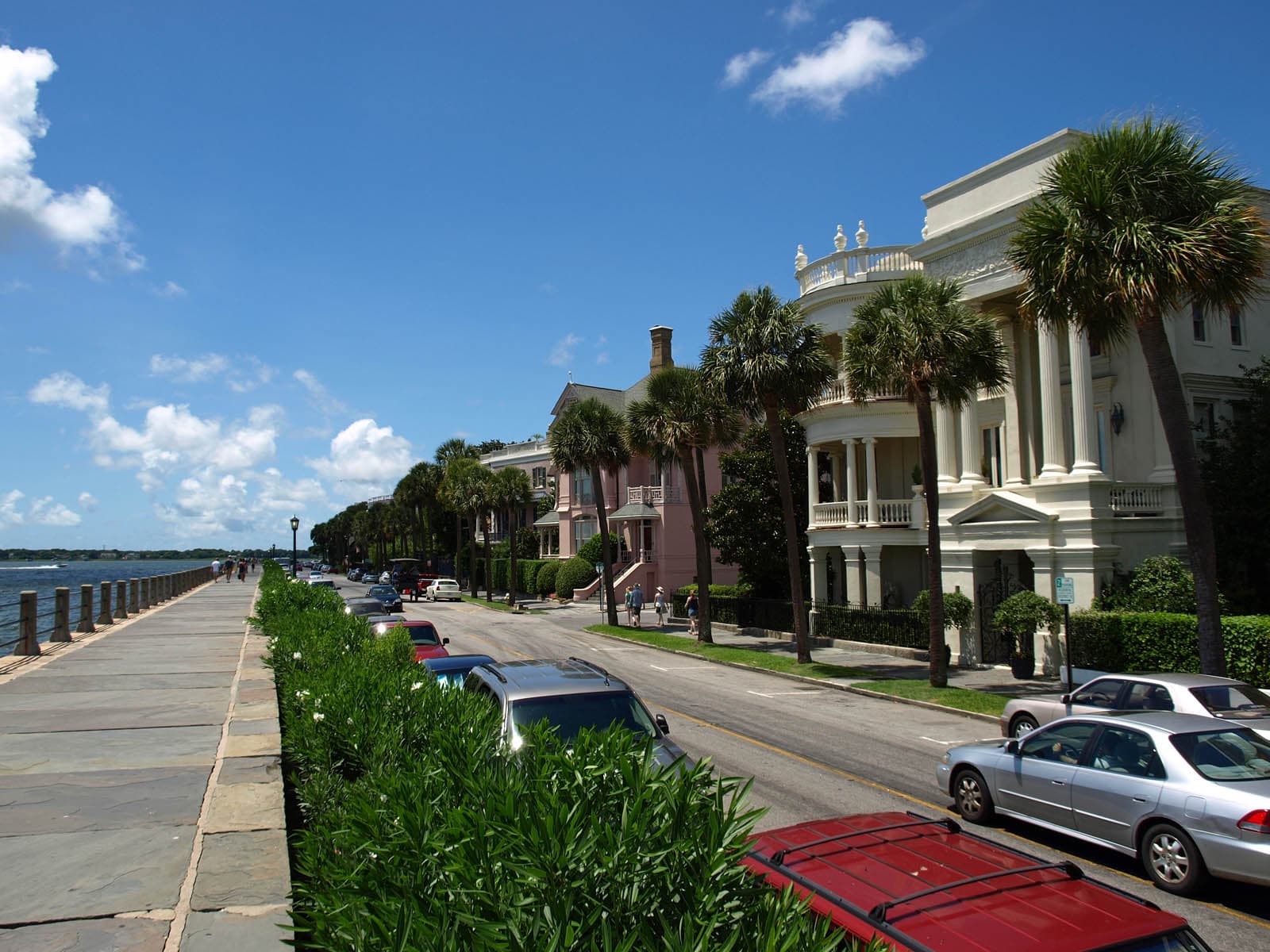
The historic-East-Coast city comparison — Revolutionary Boston vs. antebellum Charleston. Boston is the original American city — the Freedom Trail's red brick line linking Faneuil Hall to the Old North Church, the Public Garden swan boats, Beacon Hill's gas-lit cobbles, North End cannoli at Mike's or Modern, Fenway's Green Monster, and the T (the country's first subway, 1897). Charleston is the Lowcountry showpiece — Rainbow Row's pastel single-houses, the Battery's harbor walk to Fort Sumter, shrimp and grits at Husk, Magnolia Plantation's antebellum gardens, and Sullivan's Island beaches a 20-minute drive out. Both are walkable historic cores; one wears wool, the other wears linen.
Boston is the pricier mid — $70 hostel / $170 mid / $460 luxe with safety around 78. Charleston runs $60 / $150 / $405 with safety also around 78. A craft beer is $9-10 in Boston, $7-8 in Charleston; a Husk or FIG dinner runs $90+, Boston's Neptune Oyster or Saltie Girl is similar. Boston has the T at $2.40 a ride and is genuinely walkable; Charleston's historic peninsula is walkable too but everything else needs a car or Uber. Climate is the bigger fork — Boston is brutal Northeast (90F humid summers, 20F winters with nor'easters), Charleston is humid subtropical (95F dripping summers, mild 60F winters, hurricane risk Aug-Oct). Cultural depth is comparable but different vintages — Boston's Revolution-era, Charleston's antebellum.
Boston peaks May-June and September-October (avoid Marathon weekend in April and college move-in early September). Charleston is best March-May (azaleas) and October-November — summer is sweat-through-your-shirt humid and Aug-Sep is hurricane season. Pro tip: in Boston, walk the entire Freedom Trail in one day (2.5 miles, free, brick line marked on the sidewalk) — every paid "tour" follows it. In Charleston, book a Gullah-Geechee walking tour with Alphonso Brown rather than a generic carriage ride; you get the actual layered history of the city. Pick Boston for Revolutionary history, Fenway, and a real walkable Northeast city. Pick Charleston for harbor sunsets, antebellum architecture, and Lowcountry seafood.
💰 Budget
🛡️ Safety
Charleston
The historic peninsula and the surrounding beach/barrier islands are very safe for visitors, with low violent crime and a heavy tourist-police presence downtown. Property crime (car break-ins, package theft) is the most common issue. Some outlying neighborhoods on the West Side and in North Charleston have higher crime rates but are not places most tourists end up.
Boston
Boston is consistently rated among the safer large US cities. Tourist areas — Back Bay, Beacon Hill, North End, Seaport, Cambridge, Fenway — are very safe by day and evening. Petty crime (phone theft, bike theft, pickpocketing in crowded tourist spots) is the most common issue for visitors.
🌤️ Weather
Charleston
Charleston has a humid subtropical climate — mild winters, long warm springs, and punishingly hot and humid summers. Hurricane season runs June through November with peak risk in August-September. Spring (March-May) and fall (October-November) are the sweet spots.
Boston
Boston has a humid continental climate with four sharply defined seasons. Winters are cold and snowy, summers are warm and humid, and spring and fall can be glorious. Proximity to the Atlantic moderates extremes but also brings nor'easter storms in winter and occasional sea fog in summer.
🚇 Getting Around
Charleston
The historic peninsula is small — about 2 miles north-to-south at its widest — and extremely walkable. Charleston has very limited public transit for a US city: CARTA buses exist but run infrequently and cover downtown poorly for tourists. Most visitors walk everything downtown and rent a car or use Uber/Lyft for beaches, plantations, and the airport.
Walkability: Charleston's historic peninsula is one of the most walkable neighborhoods in the American South — flat, shaded by live oaks, well-maintained sidewalks (some brick and uneven), and tightly packed with destinations. Outside the peninsula, however, the metro is car-dependent and pedestrian infrastructure thins out fast.
Boston
Boston's MBTA — simply "the T" — covers the city with subway, trolley, commuter rail, bus, and ferry. The subway is the oldest in the Americas, compact, and perfect for most visitor itineraries. A CharlieCard (reloadable) or CharlieTicket (paper) is used across the system. Driving is painful — narrow one-way colonial street grids, no numbered system, and notoriously aggressive drivers.
Walkability: Central Boston is one of the most walkable areas in the US. Beacon Hill, the North End, Back Bay, Downtown, and the Waterfront are tightly packed and best explored on foot. The Freedom Trail is literally a walking itinerary. Cambridge is also very walkable once you cross the river. Winter ice is the main challenge; summer heat rarely stops walking.
📅 Best Time to Visit
Charleston
Mar–May, Oct–Nov
Peak travel window
Boston
May–Jun, Sep–Oct
Peak travel window
The Verdict
Choose Charleston if...
you want pastel antebellum architecture, harbor-side history, modern Southern cuisine's spiritual home, and Gullah-Geechee heritage
Choose Boston if...
you want America's most walkable historic city — Freedom Trail, Fenway, cannoli, and four centuries of Revolutionary-era history
Charleston
You might also compare
CharlestonvsBoston
Try another