Quick Verdict
Pick Portland for Powell's Books, eastside food cart pods, and Forest Park's 80 trail miles inside the city. Pick Seattle for Pike Place fish-tossing, Capitol Hill coffee, and Bainbridge Island ferries past Mount Rainier.
🏆 Seattle wins 76 OVR vs 74 · attribute matchup 2–4

Seattle
United States
Portland
United States
Seattle
Portland
How do Seattle and Portland compare?
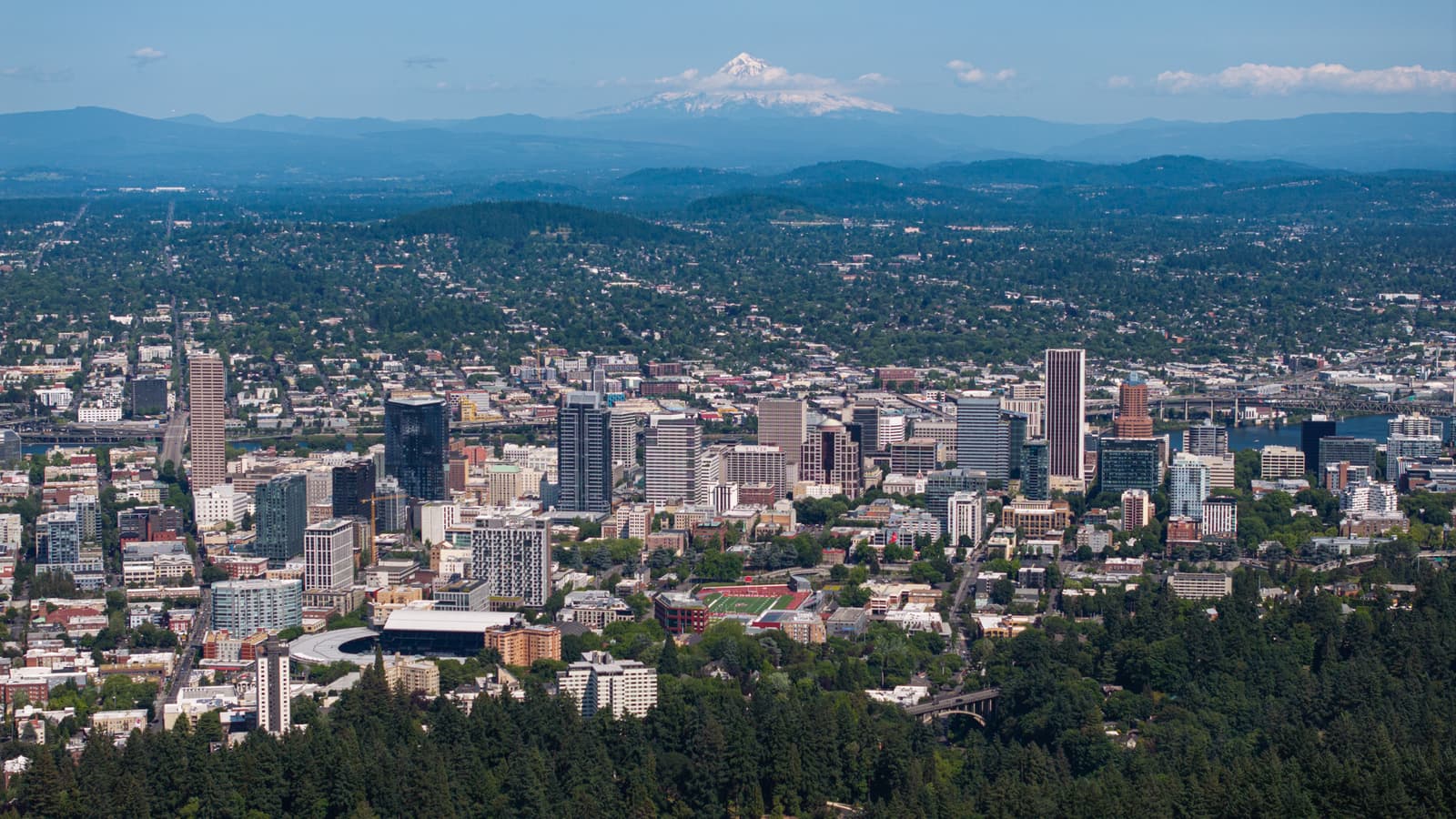
Pacific Northwest siblings, three hours apart on I-5 and constantly compared. Portland is smaller, weirder, and more food-cart driven — Powell's Books occupying a full city block, food cart pods clustered downtown and on the eastside, Mississippi Avenue's bar scene, Forest Park's 80-mile trail network inside the city limits, and Pittock Mansion view at dusk over the Willamette. Seattle is bigger, more corporate, and water-shaped — Pike Place Market still throwing fish at 9 AM, Space Needle still anchoring the skyline, Capitol Hill's coffee scene (Victrola, Analog), Bainbridge Island ferry as a 35-minute escape, and Mount Rainier looming on clear afternoons.
Mid-range travel runs $150/day in Portland and $160 in Seattle — Portland is a small but real discount, mostly on accommodation and dinner prices. Portland is genuinely walkable across downtown, the Pearl District, and over the Burnside Bridge to the eastside food carts. Seattle requires more transit — light rail to Capitol Hill, ferries to islands, Ubers to Ballard. Portland wins on food carts, indie bookstores, and a quirkier downtown that hasn't been corporatized. Seattle wins on water access (Puget Sound is right there), seafood quality, and the genuinely impressive day-trip options to Mount Rainier and the Olympic Peninsula.
Both peak June through September — the Pacific Northwest summer is short and nearly rainless, and the rest of the year is gray drizzle. The 3-hour Amtrak Cascades between them is one of the most pleasant North American train rides; book early for $40 fares. Pro tip for Portland: hit the food cart pods at Pioneer Place and Cartlandia for lunch, never dinner — most carts close by 7. Pro tip for Seattle: take the early ferry to Bainbridge, walk the town, lunch at Hitchcock, and ferry back by 3. Pick Portland for a weekend of food carts and bookstores. Pick Seattle for a longer week with water, coffee, and mountain day trips.
💰 Budget
🛡️ Safety
Seattle
Seattle is generally safe for visitors, with low rates of violent crime in tourist areas. Property crime (car break-ins, package theft, bike theft) is common. Homelessness is visible in parts of downtown, Pioneer Square, and SoDo. Avoid empty downtown streets and Third Avenue late at night.
Portland
Portland is generally safe for tourists but the city has genuinely struggled since 2020. Downtown and Old Town lost considerable foot traffic, and visible homelessness and open drug use are more apparent than in most American cities. West side neighborhoods (Pearl, Nob Hill/NW 23rd, Washington Park) and most east side neighborhoods (Hawthorne, Division, Alberta, Mississippi) feel comfortable day and night. Downtown is improving in 2025-2026 but still patchy after dark.
🌤️ Weather
Seattle
Seattle has a temperate oceanic climate — mild year-round with a pronounced wet season from October through April. Summers are dry, sunny, and cool. The famous rain is usually a fine drizzle ("Seattle mist") rather than downpours. Snow at sea level is rare.
Portland
Portland has a cool marine climate — famously rainy, but not in the way visitors expect. The rain is a persistent drizzle, not heavy downpours. Portland actually receives less annual rainfall (about 36 inches) than New York or Houston, but it is spread over 150+ rainy days from October through May. Summers (July through September) are gloriously dry, sunny, and warm. Winter brings occasional snow that typically melts within a day or two.
🚇 Getting Around
Seattle
Seattle transit is run by Sound Transit (regional) and King County Metro (buses, streetcar, water taxi). Light rail, buses, streetcars, and Washington State Ferries form a useful network. An ORCA card works across all systems. Driving downtown is painful — traffic is consistently ranked among America's worst.
Walkability: Downtown, Pike Place Market, Pioneer Square, and Seattle Center are all walkable — but prepare for steep hills. Capitol Hill, Ballard, and Fremont are each walkable neighborhoods, but you'll want transit between them. The Link light rail plus walking will cover most of what you want to see.
Portland
Portland has the most useful public transit of any city its size on the West Coast. MAX light rail (5 lines) connects the airport, downtown, and key suburbs. The Portland Streetcar loops through downtown, the Pearl, and east side neighborhoods. TriMet buses fill in the gaps. Within individual neighborhoods — Pearl, Hawthorne, Alberta, Mississippi, NW 23rd — walking is the right answer. Portland is also one of the best US cycling cities with protected lanes and a cyclists-first culture.
Walkability: Portland is one of the most walkable large cities in the American West — grid-patterned, flat on the east side, and most interesting neighborhoods (Pearl, NW 23rd, Hawthorne, Division, Alberta, Mississippi, Belmont) have dense commercial strips. Downtown blocks are short (only 200 ft) which makes walking feel quicker. Expect rain 9 months of the year — a good waterproof shell is more useful than an umbrella in the Portland wind.
📅 Best Time to Visit
Seattle
Jun–Sep
Peak travel window
Portland
Jun–Sep
Peak travel window
The Verdict
Choose Seattle if...
you want Pike Place Market, coffee culture, Puget Sound ferries, and Mt. Rainier & Olympic National Park at the doorstep
Choose Portland if...
you want craft beer everywhere, no sales tax, food carts, Powell's Books, and the Cascades plus Coast at the doorstep
Seattle
Portland
You might also compare
SeattlevsPortland
Try another