Quick Verdict
Pick New York City for $1 dollar slices, all-night subway, and neighborhoods that each function as their own city. Pick Portland for 70+ breweries, Powell's full-block bookstore, and a Mount Hood ski-before-lunch lifestyle at half the price.
🏆 New York City wins 82 OVR vs 74 · attribute matchup 2–7
Portland
United States

New York City
United States
Portland
New York City
How do Portland and New York City compare?
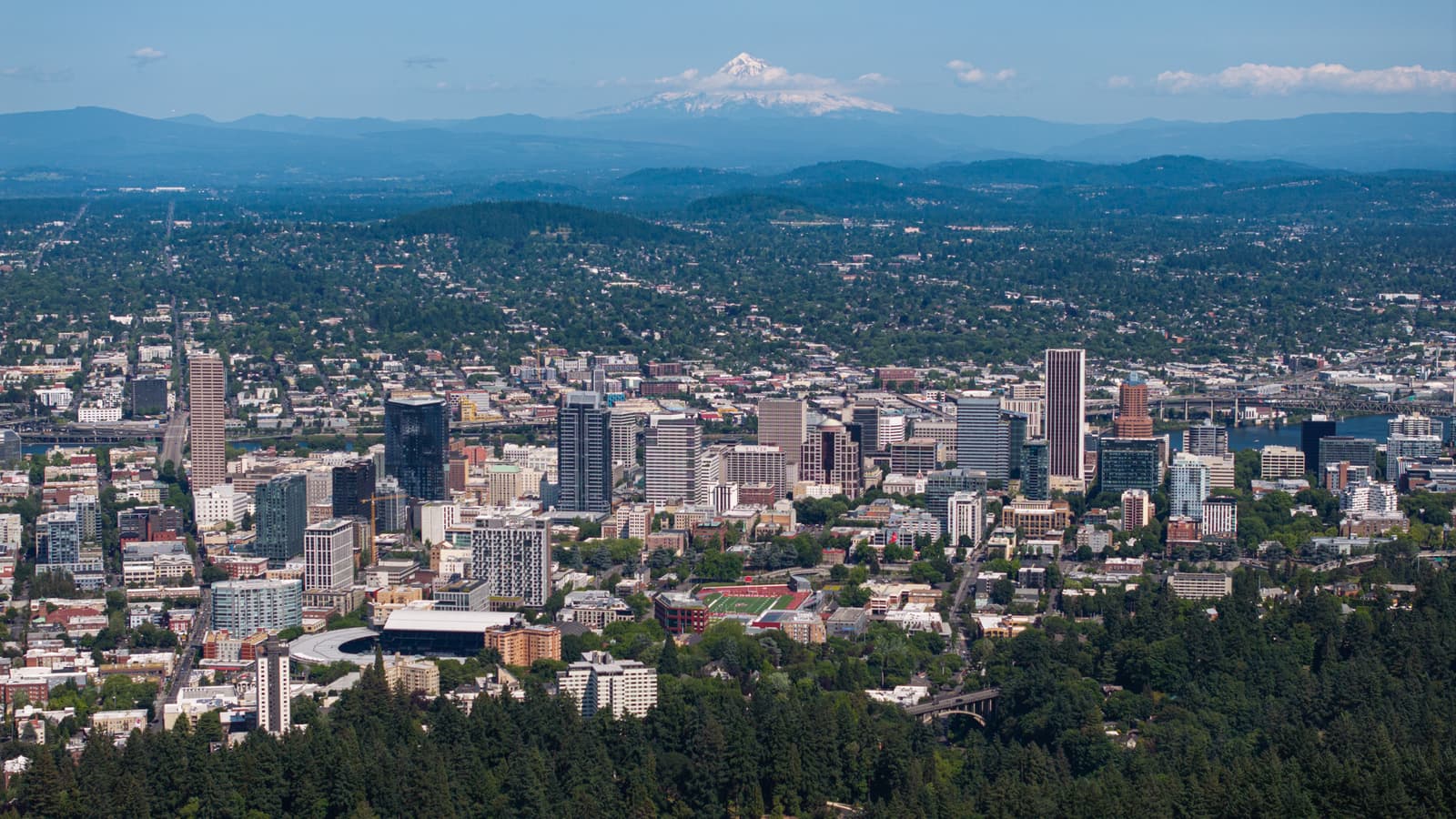
Two American cities at opposite ends of the dial. New York is sheer concentrated everything — eight million people across five boroughs, Broadway shows, the Met and MoMA, $4 dollar-pizza slices and $400 tasting menus on the same block, neighbourhoods that each function as their own city (West Village to Williamsburg to Astoria), and a transit system that runs all night. Portland is the West Coast's quirky offset — craft beer on every corner (over 70 breweries inside city limits), no sales tax, food carts in Pod-style lots, Powell's City of Books occupying a full city block, and Mount Hood close enough that you can ski before lunch.
The price gap is enormous — $200/day mid-range in NYC against $150 in Portland, with the difference largely driven by hotel costs. Eating well is doable in both: New York's Greenmarket-supplied restaurant scene is unmatched in scale, while Portland punches well above its size on coffee (Stumptown, Heart, Coava), donuts (Voodoo and Blue Star), and farm-to-table dinners that are still cheaper than most NYC neighbourhood spots. Where NYC wins is everything you'd expect — culture, diversity, late nights. Portland wins on green space, walkability outside the city centre, and an actually-livable rhythm.
New York peaks April through June and September through November; Portland is firmly a summer city, June through September, when the rain finally stops. Pro tip: the cross-country flight is six hours, and JetBlue has been running NYC–PDX for $250–300 round-trip on the right day. Pick New York for energy, scale, and the world distilled into one island; pick Portland for craft culture, easy access to Mount Hood and the Oregon Coast, and a slower rhythm at half the price.
💰 Budget
🛡️ Safety
Portland
Portland is generally safe for tourists but the city has genuinely struggled since 2020. Downtown and Old Town lost considerable foot traffic, and visible homelessness and open drug use are more apparent than in most American cities. West side neighborhoods (Pearl, Nob Hill/NW 23rd, Washington Park) and most east side neighborhoods (Hawthorne, Division, Alberta, Mississippi) feel comfortable day and night. Downtown is improving in 2025-2026 but still patchy after dark.
New York City
New York City is far safer than its reputation suggests, with crime rates at historic lows. Violent crime is concentrated in specific neighborhoods away from tourist areas. The main risks for visitors are petty theft, subway scams, and traffic.
🌤️ Weather
Portland
Portland has a cool marine climate — famously rainy, but not in the way visitors expect. The rain is a persistent drizzle, not heavy downpours. Portland actually receives less annual rainfall (about 36 inches) than New York or Houston, but it is spread over 150+ rainy days from October through May. Summers (July through September) are gloriously dry, sunny, and warm. Winter brings occasional snow that typically melts within a day or two.
New York City
New York City has a humid subtropical climate with four distinct seasons. Summers are hot and humid, winters are cold with occasional snowstorms, and spring and fall offer the most comfortable conditions for sightseeing.
🚇 Getting Around
Portland
Portland has the most useful public transit of any city its size on the West Coast. MAX light rail (5 lines) connects the airport, downtown, and key suburbs. The Portland Streetcar loops through downtown, the Pearl, and east side neighborhoods. TriMet buses fill in the gaps. Within individual neighborhoods — Pearl, Hawthorne, Alberta, Mississippi, NW 23rd — walking is the right answer. Portland is also one of the best US cycling cities with protected lanes and a cyclists-first culture.
Walkability: Portland is one of the most walkable large cities in the American West — grid-patterned, flat on the east side, and most interesting neighborhoods (Pearl, NW 23rd, Hawthorne, Division, Alberta, Mississippi, Belmont) have dense commercial strips. Downtown blocks are short (only 200 ft) which makes walking feel quicker. Expect rain 9 months of the year — a good waterproof shell is more useful than an umbrella in the Portland wind.
New York City
New York City has the most extensive public transit system in the US, operated by the MTA. The subway is the backbone of daily life, running 24/7. Taxis and rideshares fill the gaps, while buses cover outer-borough routes. Driving in Manhattan is strongly discouraged.
Walkability: Manhattan below 60th Street is extremely walkable with a simple grid system — avenues run north-south and streets run east-west. The numbered streets make navigation intuitive. Brooklyn neighborhoods like Williamsburg and Park Slope are also very walkable. Citi Bike stations are plentiful for short trips.
📅 Best Time to Visit
Portland
Jun–Sep
Peak travel window
New York City
Apr–Jun, Sep–Nov
Peak travel window
The Verdict
Choose Portland if...
you want craft beer everywhere, no sales tax, food carts, Powell's Books, and the Cascades plus Coast at the doorstep
Choose New York City if...
you want the world's most iconic skyline — Broadway, Times Square, Central Park, world-class museums, and every cuisine on earth on a 24-hour grid
Portland
New York City
You might also compare
PortlandvsNew York City
Try another