Quick Verdict
Pick Minneapolis if 22-lake summers, Walker sculpture gardens, and Prince's First Avenue trump Pacific drizzle. Pick Portland if food carts, Powell's, craft beer, and Forest Park hikes beat Skyway winters.
🏆 Portland wins 74 OVR vs 72 · attribute matchup 1–4

Minneapolis
United States
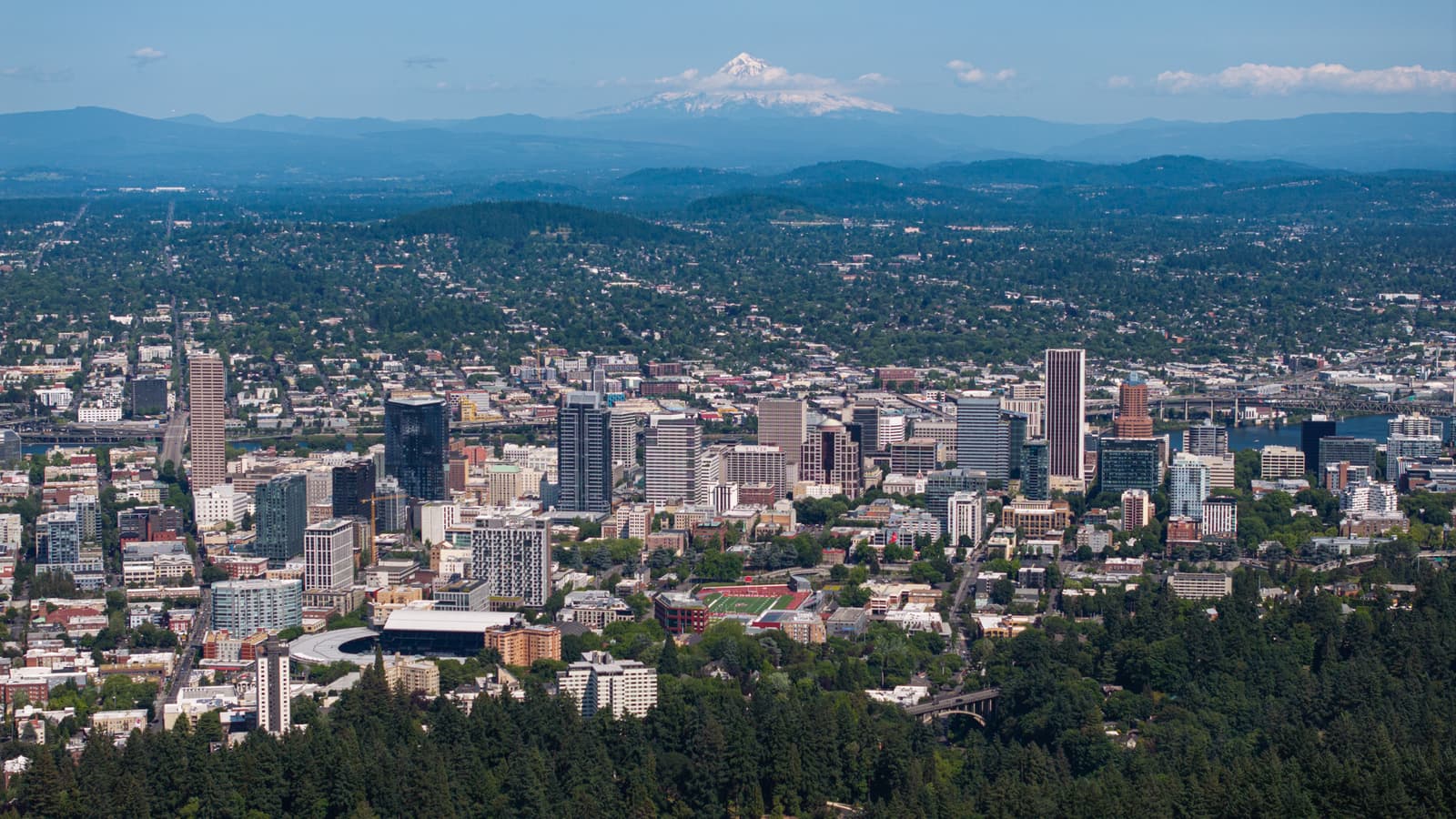
Portland
United States
Minneapolis
Portland
How do Minneapolis and Portland compare?
Two of the most quietly livable mid-sized US cities, and the dilemma is really about lake-and-Skyway flat winters vs Pacific drizzle and food-cart density. Minneapolis is Mississippi-River Midwestern: 22 lakes inside the city (Bde Maka Ska, Lake Harriet, Cedar all swimmable in summer), the Walker Art Center sculpture garden with the Spoonbridge cherry, Surly Brewing's industrial taproom, and a Skyway system that lets you walk 10 city blocks without putting on a coat in February. Portland is the gray-green Pacific Northwest counterpart — a 1km food-cart pod on Hawthorne, Powell's City of Books eating a whole afternoon, Forest Park's 5,200 acres of urban hiking 10 minutes from downtown, and craft brewers (Cascade, Hair of the Dog, Breakside) at every other intersection.
Mid-range budgets are tied at $260, but the daily spend tilts toward Portland on tax — Oregon's 0% sales tax adds up at restaurants and shops, while Minneapolis adds 8.025%. Portland wins on walkability (a 5 vs Minneapolis's 4), food-cart density, and craft-beer breadth. Minneapolis wins on safety (72 vs 62 — Portland's downtown still wears 2020 fingerprints), on transit (the Blue and Green light-rail lines beat MAX), and on a music-and-theater scene built on Prince's First Avenue legacy and the Guthrie.
Both peak June–September; Minneapolis runs May–October, Portland runs June–September. Skip Portland in November–March (drizzle, 4 PM dark) and Minneapolis in January–February (-20°F real). The State Fair (late August) and Art-A-Whirl (May) make Minneapolis trips; Pickathon (early August) and Feast (September) anchor Portland.
💰 Budget
🛡️ Safety
Minneapolis
Minneapolis is overall a moderately safe US city — violent crime is concentrated in specific neighborhoods (parts of North Minneapolis, parts of South Minneapolis around Lake Street) that visitors rarely enter. Tourist neighborhoods (Downtown, North Loop, Mill District, Uptown, the Chain of Lakes, Northeast, Whittier) are comfortable day and night. The city saw elevated crime concerns 2020–2022 following the Floyd protests and police staffing changes; rates have moderated since 2023 but remain higher than pre-2020 baseline.
Portland
Portland is generally safe for tourists but the city has genuinely struggled since 2020. Downtown and Old Town lost considerable foot traffic, and visible homelessness and open drug use are more apparent than in most American cities. West side neighborhoods (Pearl, Nob Hill/NW 23rd, Washington Park) and most east side neighborhoods (Hawthorne, Division, Alberta, Mississippi) feel comfortable day and night. Downtown is improving in 2025-2026 but still patchy after dark.
🌤️ Weather
Minneapolis
Minneapolis has one of the most extreme four-season climates of any major US city — hot humid summers (highs 28–32°C with serious thunderstorms), brutally cold winters (lows -25°C in January, snow on the ground November–March), and pleasant transitional spring and autumn. The city is built for cold; the 9.5-mile downtown Skyway system means you can spend a week downtown in -20°C weather without a coat. Summers are surprisingly humid and outdoor-oriented.
Portland
Portland has a cool marine climate — famously rainy, but not in the way visitors expect. The rain is a persistent drizzle, not heavy downpours. Portland actually receives less annual rainfall (about 36 inches) than New York or Houston, but it is spread over 150+ rainy days from October through May. Summers (July through September) are gloriously dry, sunny, and warm. Winter brings occasional snow that typically melts within a day or two.
🚇 Getting Around
Minneapolis
Minneapolis has good but not excellent public transit for an American city of its size — Metro Transit runs the Blue Line and Green Line light rail (connecting the airport, downtown Minneapolis, the U of Minnesota, and downtown St. Paul) plus an extensive bus network. The Skyway system connects 80 downtown blocks at the second floor (an indoor walking network for cold weather). Lakes and outer neighborhoods need a bike, bus, or car. Driving and parking are easy by big-city standards.
Walkability: Downtown Minneapolis is fully walkable in summer (flat, generous sidewalks, the Nicollet Mall central spine) and in winter via the Skyway system (the largest indoor walking network in the world). Uptown and the Chain of Lakes are walkable in their own context but require transit/bike to reach from downtown. Mill District, North Loop, and Northeast are all walkable internally with bike or bus connections to each other.
Portland
Portland has the most useful public transit of any city its size on the West Coast. MAX light rail (5 lines) connects the airport, downtown, and key suburbs. The Portland Streetcar loops through downtown, the Pearl, and east side neighborhoods. TriMet buses fill in the gaps. Within individual neighborhoods — Pearl, Hawthorne, Alberta, Mississippi, NW 23rd — walking is the right answer. Portland is also one of the best US cycling cities with protected lanes and a cyclists-first culture.
Walkability: Portland is one of the most walkable large cities in the American West — grid-patterned, flat on the east side, and most interesting neighborhoods (Pearl, NW 23rd, Hawthorne, Division, Alberta, Mississippi, Belmont) have dense commercial strips. Downtown blocks are short (only 200 ft) which makes walking feel quicker. Expect rain 9 months of the year — a good waterproof shell is more useful than an umbrella in the Portland wind.
📅 Best Time to Visit
Minneapolis
Jun–Oct
Peak travel window
Portland
Jun–Sep
Peak travel window
The Verdict
Choose Minneapolis if...
you want a Mississippi River city with 22 lakes, the world's largest indoor Skyway system for brutal winters, Prince pilgrimage sites (Paisley Park, First Avenue), permanently-free Minneapolis Institute of Art, and the second-largest US state fair
Choose Portland if...
you want craft beer everywhere, no sales tax, food carts, Powell's Books, and the Cascades plus Coast at the doorstep
Minneapolis
Portland
You might also compare
MinneapolisvsPortland
Try another