Quick Verdict
Pick Agadir for a 10km Atlantic crescent, Taghazout surf 45 minutes north, and year-round 18-28°C hotel-pool weather. Pick Merzouga if Erg Chebbi's 150m dunes, sandboarding, and tagines under unobstructed star skies define it.
🏆 Agadir wins 74 OVR vs 66 · attribute matchup 1–7

Merzouga
Morocco
Agadir
Morocco
Merzouga
Agadir
How do Merzouga and Agadir compare?
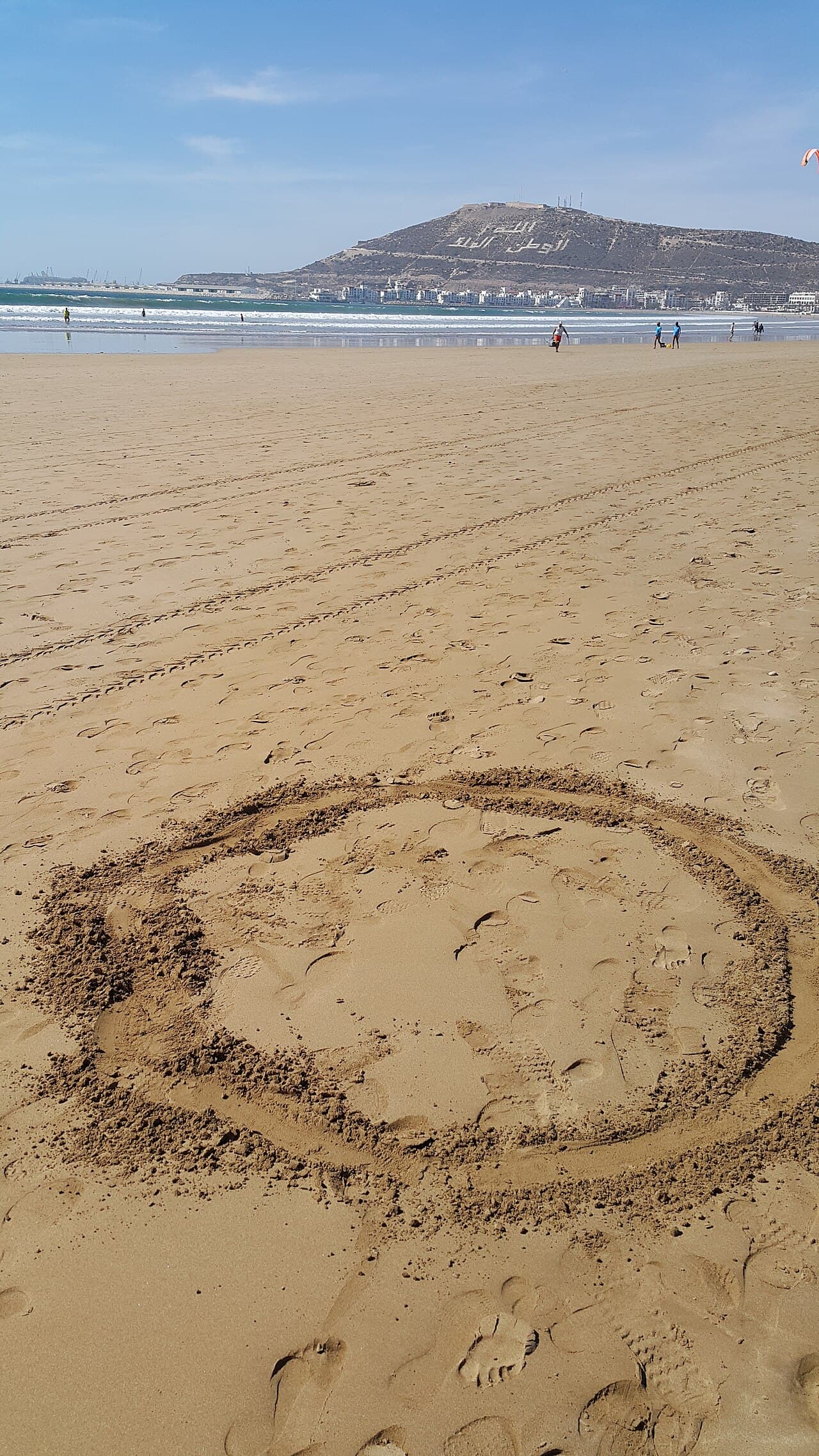
These two Morocco destinations sit at opposite climate poles of the country — Atlantic beach versus Saharan dune sea — and the trip you build around each is completely different. Agadir is the southern Atlantic resort city, a 10km crescent of soft sand backed by promenade hotels, with year-round 18-28C weather and surf at Taghazout 45 minutes north. Merzouga is the tiny village (population 1,000) at the edge of Erg Chebbi — Morocco's iconic dune sea where apricot-coloured sand rises 150m above the pre-Saharan plain, the camel trek into the dunes at sunset is the actual experience, and dinner is a tagine under the stars at a Berber desert camp.
Mid-range budgets land close at $80-90 per day, but the spend is opposite — Agadir buys you a hotel pool and beach club; Merzouga buys you a luxury glamping tent at Erg Chebbi Luxury Desert Camp or a budget bivouac for $50. Getting between them is a brutal 9-10 hour drive via Ouarzazate, or a Royal Air Maroc flight to Errachidia (ERH) followed by a 90-minute transfer; almost no one combines them in less than 10 days. Agadir runs year-round (best March-November); Merzouga's window is October-November and February-April — winter nights freeze and summer days exceed 45C in the dunes.
Pro tip: at Merzouga, book a 2-night camp stay rather than the standard one-night — the second day buys you sandboarding, a 4WD trip to Khamlia village for Gnawa music, and the chance to see Dayet Srij's flamingos before riding camels back at sunset for round two of the dune sky. Pick Agadir for an Atlantic beach week with surf, sun, and easy international flights. Pick Merzouga for the Sahara experience travelers actually mean — camel trek, dune sunset, Berber camp, and a stargazing night you remember for years.
💰 Budget
🛡️ Safety
Merzouga
Merzouga is physically safe from crime — the village is tiny, the community knows everyone, and the tourism economy depends entirely on visitors returning unharmed. The real risks are environmental: heat exhaustion, dehydration, disorientation in the dunes, and the Algerian border 20 km east (not a practical risk for organised camp trips, but worth respecting — do not set out into the dunes alone or eastward without a guide). Scams are common but low-intensity: aggressive upselling on longer camel treks, unofficial "guides" intercepting arriving taxis, and budget camps that are not at the location advertised. Book with a reputable camp operator in advance.
Agadir
Agadir is among the safer cities in Morocco for tourists — a major package-holiday destination with a strong tourist-police presence, well-lit promenades, and visible security around the marina, corniche, and souk. Violent crime against visitors is rare. The main hassles are persistent souk vendors, unofficial "guides" offering services, taxi overcharging, and (occasionally) more aggressive scams around the marina at night. Beach safety is generally good but the Atlantic has rip currents — observe the lifeguard flags.
🌤️ Weather
Merzouga
Merzouga sits in a hot desert climate (Köppen BWh) and is one of the hotter places in Morocco — the Saharan heat is uncompromising, the diurnal range is enormous, and there is essentially no rain. Summer daytime highs routinely clear 45°C in the shade; there is no shade in the dunes. Winter daytime highs are a pleasant 18–22°C but nights drop to freezing. The practical travel window is narrow: late September to mid-November and late February to late April. Everything else is either too hot or too cold for the overnight camping that defines the experience.
Agadir
Agadir has one of the most temperate year-round climates on the African Atlantic — 300+ sunny days per year, no cold winter, no extreme summer heat (the Atlantic moderates summer temperatures to a comfortable 27-30°C while inland Marrakech bakes at 42°C+). Ocean water 18-22°C year-round; swimmable for most visitors year-round. Rain is rare and concentrated in November-February.
🚇 Getting Around
Merzouga
There is no public transit in Merzouga — the village is roughly 1 km from end to end and walkable in 15 minutes. All onward movement is by hired car, shared grand taxi, 4WD excursion, or camel into the dunes. The main "strip" is the single paved road running south from Erfoud, with guesthouses and camp offices clustered along it. Most camps include a pick-up from Merzouga village as part of the overnight package; many also offer pickup from Rissani, Erfoud, or the Errachidia bus station for an added fee.
Walkability: The village itself is fully walkable in 10 minutes. The dunes are walkable but hot and disorienting beyond 500m from a landmark — use a guide for anything longer than a short sunset walk. Regional movement all requires hired transport.
Agadir
Agadir is a low-rise spread-out city; petits taxis (small red taxis, metered) are the standard intra-city transport. The corniche and main beachfront are walkable; the Souk El Had is reachable on foot from most central hotels. Inter-city travel uses CTM, Supratours coach buses or grand taxis (shared old Mercedes). No tram or metro. Careem app operates in limited capacity.
Walkability: The central tourist belt (corniche, marina, beachfront hotels, Souk El Had) is walkable and well-lit. The wider city is sprawling and best covered by petit taxi. The beach itself is the main pedestrian artery and the most pleasant way to traverse the bay end to end.
📅 Best Time to Visit
Merzouga
Feb–Apr, Oct–Nov
Peak travel window
Agadir
Mar–May, Sep–Nov
Peak travel window
The Verdict
Choose Merzouga if...
you want the Sahara experience travelers actually mean — a camel trek up 150m Erg Chebbi dunes at sunset, overnight in a Berber desert camp under the stars, and Gnawa drumming in Khamlia village
Choose Agadir if...
you want Morocco's Atlantic beach resort — surf at Taghazout, Souss-Massa NP, and a calmer alternative to Marrakech's medina chaos
Merzouga
You might also compare
MerzougavsAgadir
Try another