Quick Verdict
Pick Memphis if Sun Studio, Beale blues, and the Lorraine Motel anchor your music pilgrimage. Pick Portland if Powell's afternoons, food-cart lunches, and Cannon Beach day-trips beat Mississippi heat.
🏆 Portland wins 74 OVR vs 68 · attribute matchup 2–6

Memphis
United States
Portland
United States
Memphis
Portland
How do Memphis and Portland compare?
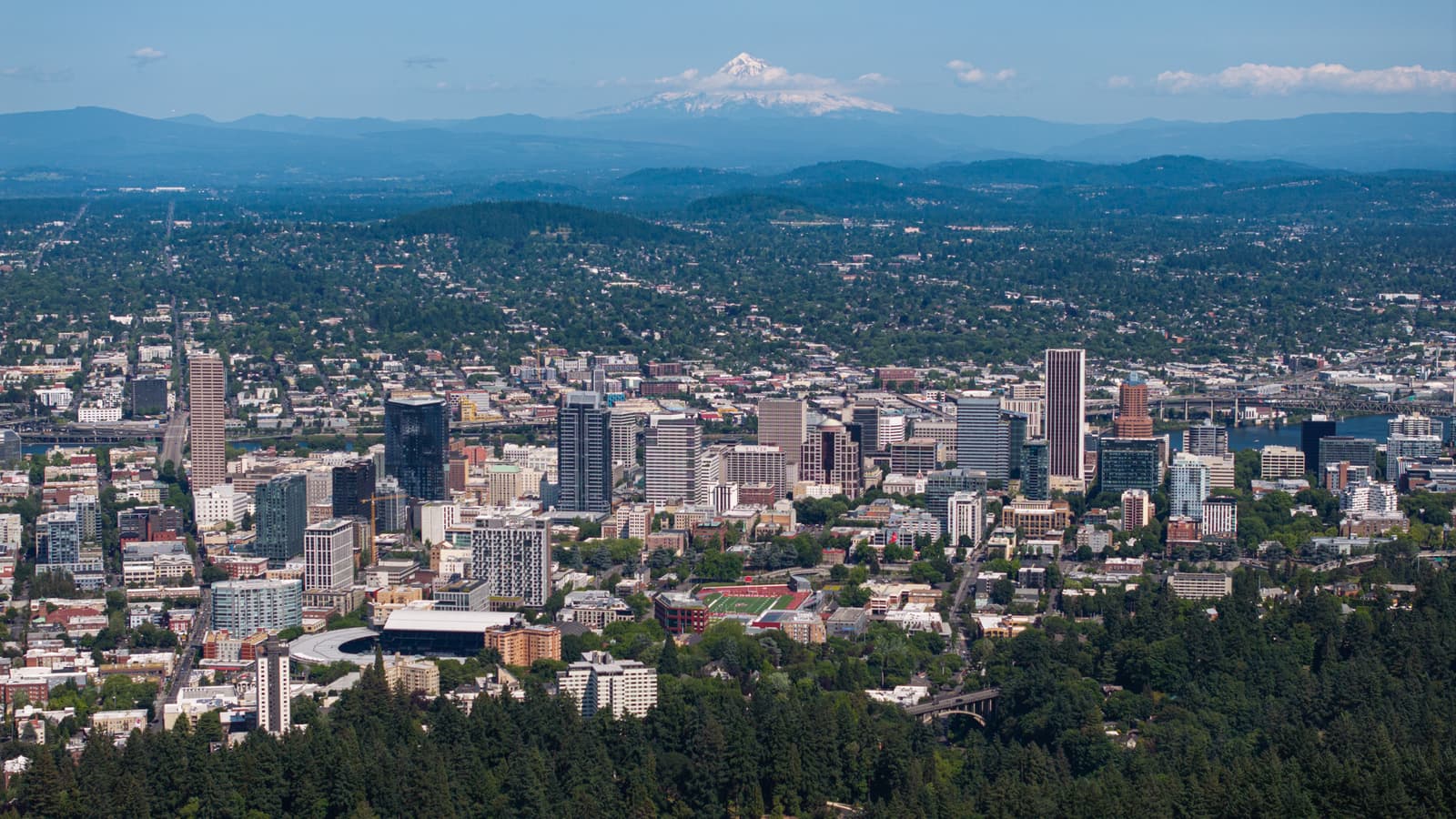
Memphis and Portland sit on opposite sides of the country and the music spectrum — Mississippi-blues capital versus Pacific-Northwest indie-and-craft-beer hub. Memphis is the deepest American music pilgrimage compressed into 10 miles: Sun Studio, Stax Records, Beale Street's neon-and-blues bar strip, Graceland, and the National Civil Rights Museum at the Lorraine Motel. Portland is the soft-Pacific-rain weirdness of the I-5 corridor — Powell's City of Books occupies a full city block, Stumptown Coffee Roasters, the food-cart pods at Hawthorne and 12th, and a craft-beer scene where 80+ breweries make IPAs that locals genuinely argue about.
Mid-range budgets diverge sharply — $150 in Memphis against $260 in Portland. A Central BBQ pulled-pork plate is $18; a Le Pigeon tasting menu in the Pearl is $95. Memphis wins on music history (you're at the actual sites where Howlin' Wolf, Otis Redding, Elvis, and Sam Cooke recorded), Civil Rights pilgrimage depth, and value. Portland wins on food-cart density (700+ active carts citywide), no sales tax, and Pacific Northwest day-trip access (Mt. Hood is 60 minutes east, Cannon Beach is 90 minutes west, Columbia Gorge waterfalls are 30 minutes east).
Practical tip: target Memphis for April or October for cool patio weather; July hits 95°F with humidity. Portland is best June through September — the wet October-through-May stretch is real, and the perpetual grey hits travelers harder than they expect. They combine via a 4.5-hour direct flight on Alaska. Pick Memphis for Sun Studio sessions, Beale Street blues nights, and Civil Rights Museum mornings. Pick Portland for Powell's afternoons, food-cart lunches, and Cannon Beach day-trips.
💰 Budget
🛡️ Safety
Memphis
Memphis has one of the higher violent-crime rates among large American cities — but the crime is overwhelmingly concentrated in specific neighbourhoods (Frayser, Hickory Hill, parts of South Memphis) far from the tourist core. Downtown, Beale Street, the South Main Arts District, Midtown, and the Overton Park / Cooper-Young districts are well-patrolled and safe day and night. Use normal urban precautions; Uber/Lyft to and from Graceland and Stax (don't walk) and don't leave valuables in cars.
Portland
Portland is generally safe for tourists but the city has genuinely struggled since 2020. Downtown and Old Town lost considerable foot traffic, and visible homelessness and open drug use are more apparent than in most American cities. West side neighborhoods (Pearl, Nob Hill/NW 23rd, Washington Park) and most east side neighborhoods (Hawthorne, Division, Alberta, Mississippi) feel comfortable day and night. Downtown is improving in 2025-2026 but still patchy after dark.
🌤️ Weather
Memphis
Memphis has a humid subtropical climate — long, hot, humid summers (32°C+ regular, frequent thunderstorms), short and mild winters (occasional snow but rarely sticks), and short pleasant spring and autumn windows. Summer afternoon thunderstorms are common; tornado season is March–May (Memphis is on the eastern edge of Tornado Alley). Spring (April–May) and autumn (September–October) are dramatically more comfortable than summer.
Portland
Portland has a cool marine climate — famously rainy, but not in the way visitors expect. The rain is a persistent drizzle, not heavy downpours. Portland actually receives less annual rainfall (about 36 inches) than New York or Houston, but it is spread over 150+ rainy days from October through May. Summers (July through September) are gloriously dry, sunny, and warm. Winter brings occasional snow that typically melts within a day or two.
🚇 Getting Around
Memphis
Memphis is car-first like most American Sun Belt cities — public transit (MATA buses + the downtown trolley) covers limited useful tourist routes. The classic Main Street trolley loops through downtown and is genuinely useful for hopping between hotels, Beale Street, and South Main. For everywhere else (Graceland, Stax, the airport), Uber/Lyft or a rental car is the answer.
Walkability: Downtown core (Beale Street + South Main + Riverfront) is genuinely walkable. Everything else (Graceland 9 miles south, Stax 3 miles south, Sun Studio just east of downtown but in a transit-light pocket) is rideshare or rental car. The Main Street Trolley extends the walkable downtown north–south.
Portland
Portland has the most useful public transit of any city its size on the West Coast. MAX light rail (5 lines) connects the airport, downtown, and key suburbs. The Portland Streetcar loops through downtown, the Pearl, and east side neighborhoods. TriMet buses fill in the gaps. Within individual neighborhoods — Pearl, Hawthorne, Alberta, Mississippi, NW 23rd — walking is the right answer. Portland is also one of the best US cycling cities with protected lanes and a cyclists-first culture.
Walkability: Portland is one of the most walkable large cities in the American West — grid-patterned, flat on the east side, and most interesting neighborhoods (Pearl, NW 23rd, Hawthorne, Division, Alberta, Mississippi, Belmont) have dense commercial strips. Downtown blocks are short (only 200 ft) which makes walking feel quicker. Expect rain 9 months of the year — a good waterproof shell is more useful than an umbrella in the Portland wind.
📅 Best Time to Visit
Memphis
Apr–May, Sep–Oct
Peak travel window
Portland
Jun–Sep
Peak travel window
The Verdict
Choose Memphis if...
You want the deepest single-city American music pilgrimage — Sun, Stax, Beale Street, Graceland, and the Civil Rights Museum all within 10 miles.
Choose Portland if...
you want craft beer everywhere, no sales tax, food carts, Powell's Books, and the Cascades plus Coast at the doorstep
Memphis
Portland
You might also compare
MemphisvsPortland
Try another