Quick Verdict
Pick Indianapolis if Cultural Trail laps, Mass Ave restaurants, and Indy 500 racing beat Pacific Northwest rain. Pick Portland if Powell's bookstore floors, food-cart pods, and Forest Park trails trump Midwestern flat.
🏆 Portland wins 74 OVR vs 69 · attribute matchup 1–6

Indianapolis
United States
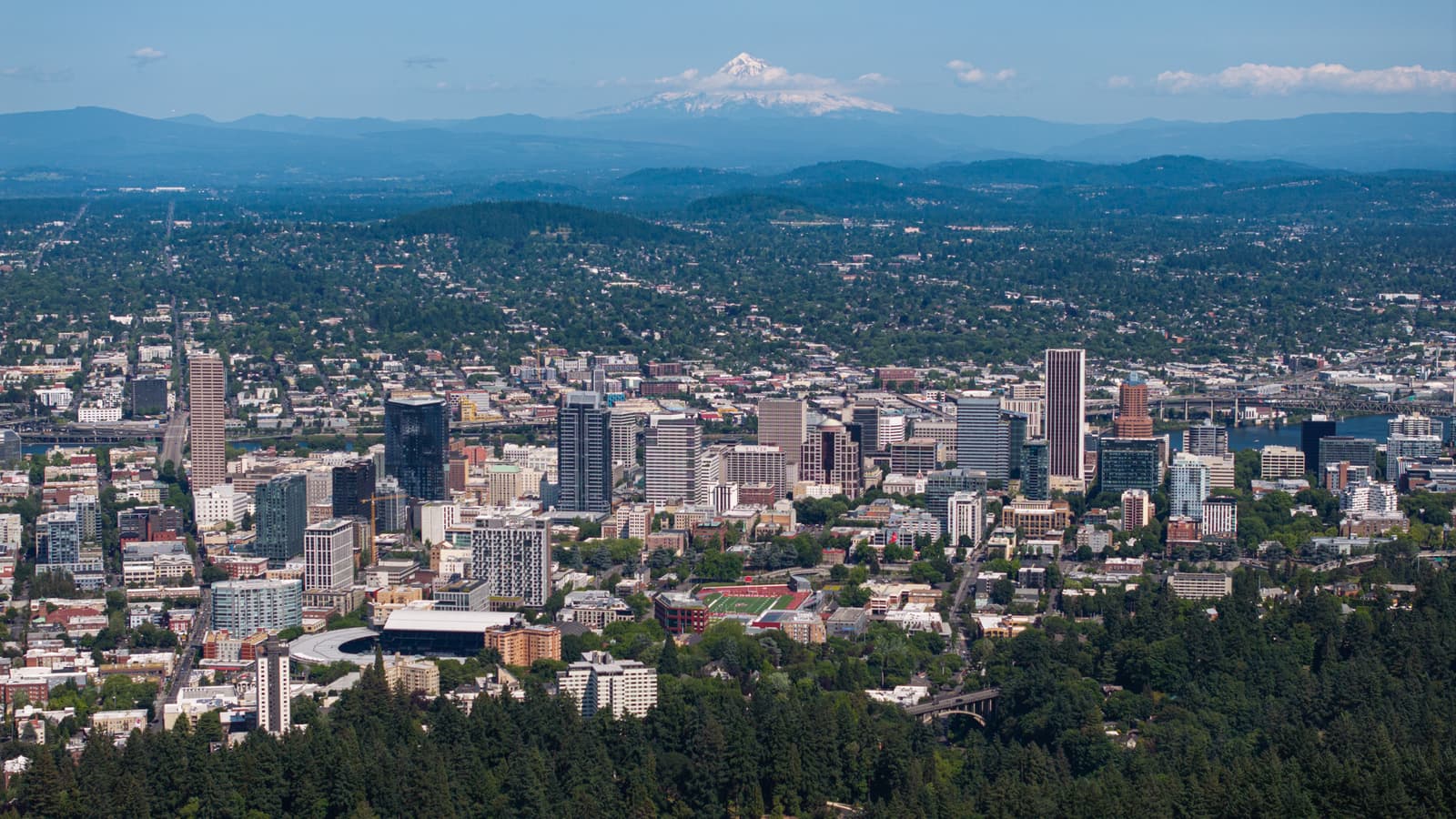
Portland
United States
Indianapolis
Portland
How do Indianapolis and Portland compare?
Indianapolis and Portland sit at opposite ends of American urbanism — flat Midwestern grid versus Pacific Northwest counter-culture — and the budget gap is sharp: $180 a day in Indy against $260 in Portland. Indy is the 8-mile Cultural Trail, Mass Ave restaurants, the Indianapolis Museum of Art's 152-acre Newfields campus, and Lucas Oil Stadium with the May Indy 500. Portland is craft-beer capital (90+ breweries), Powell's City of Books occupying a full city block, food carts on Alder Street smelling of pho and Korean BBQ, no sales tax, and Forest Park's 5,200 acres of urban forest.
Portland wins on walkability (5 vs 3), public transit (MAX light rail), nature access (5 vs 3 — Mt Hood is 90 minutes east, the Oregon coast 90 minutes west), and food carts as a whole category — the cart pods serve dinner under string lights with the smell of Voodoo Doughnut down the block. Indy wins on value, downtown safety, and racing history. Both have similar food ratings but Portland has more restaurants per capita than any US city except SF.
Practical tip: Portland peaks June-September when the rain stops. Indy is best May-June and September-October. Direct Alaska Airlines IND-PDX flights run $250 round-trip, 5 hours each way. They combine on a 10-day cross-country trip via Denver and Salt Lake City.
💰 Budget
🛡️ Safety
Indianapolis
Indianapolis has middling crime statistics by big-city standards — overall crime is down from 2010s peaks, and the visitor zones (downtown, Mass Ave, Fountain Square, Broad Ripple, Newfields/Mid-North, the Speedway suburb) are safe day-and-evening with normal urban precautions. The eastside between downtown and the airport (sections of Brookside, Holy Cross, Cottage Home) has higher property crime; rideshare around them. The downtown core is heavily patrolled, especially during conventions and Final Four / Indy 500 weekends.
Portland
Portland is generally safe for tourists but the city has genuinely struggled since 2020. Downtown and Old Town lost considerable foot traffic, and visible homelessness and open drug use are more apparent than in most American cities. West side neighborhoods (Pearl, Nob Hill/NW 23rd, Washington Park) and most east side neighborhoods (Hawthorne, Division, Alberta, Mississippi) feel comfortable day and night. Downtown is improving in 2025-2026 but still patchy after dark.
🌤️ Weather
Indianapolis
Indianapolis has a humid continental climate — warm humid summers (July averages 30°C / 86°F daytime), cold winters (January averages -1°C / 30°F daytime), and dramatic fall color thanks to the surrounding Brown County hills. Indy gets less snow than Cleveland or Detroit (~55 cm / 22 inches per year) and is generally drier. Spring is unpredictable; fall is the gem season.
Portland
Portland has a cool marine climate — famously rainy, but not in the way visitors expect. The rain is a persistent drizzle, not heavy downpours. Portland actually receives less annual rainfall (about 36 inches) than New York or Houston, but it is spread over 150+ rainy days from October through May. Summers (July through September) are gloriously dry, sunny, and warm. Winter brings occasional snow that typically melts within a day or two.
🚇 Getting Around
Indianapolis
Indianapolis has limited public transit — IndyGo bus network (decent), the Red Line bus rapid transit (downtown to Broad Ripple), and no rapid rail. Lyft/Uber + walking + the Cultural Trail (with Pacers Bikeshare) handle most visitor needs within the central neighborhoods. A rental car is useful for the Indianapolis Motor Speedway, suburban day trips, or Brown County.
Walkability: Within downtown / Mass Ave / Fountain Square / Broad Ripple, Indianapolis is genuinely walkable thanks to the Cultural Trail. Between districts the gaps are sometimes too long; the Red Line BRT or Lyft fills them. The 8-mile Cultural Trail loop is the single best urban walking experience in the Midwest.
Portland
Portland has the most useful public transit of any city its size on the West Coast. MAX light rail (5 lines) connects the airport, downtown, and key suburbs. The Portland Streetcar loops through downtown, the Pearl, and east side neighborhoods. TriMet buses fill in the gaps. Within individual neighborhoods — Pearl, Hawthorne, Alberta, Mississippi, NW 23rd — walking is the right answer. Portland is also one of the best US cycling cities with protected lanes and a cyclists-first culture.
Walkability: Portland is one of the most walkable large cities in the American West — grid-patterned, flat on the east side, and most interesting neighborhoods (Pearl, NW 23rd, Hawthorne, Division, Alberta, Mississippi, Belmont) have dense commercial strips. Downtown blocks are short (only 200 ft) which makes walking feel quicker. Expect rain 9 months of the year — a good waterproof shell is more useful than an umbrella in the Portland wind.
📅 Best Time to Visit
Indianapolis
Apr–Jun, Sep–Oct
Peak travel window
Portland
Jun–Sep
Peak travel window
The Verdict
Choose Indianapolis if...
You want the Indy 500, a genuinely walkable downtown via the 8-mile Cultural Trail, and one of the best food corridors in the Midwest (Mass Ave) — at well below Chicago prices.
Choose Portland if...
you want craft beer everywhere, no sales tax, food carts, Powell's Books, and the Cascades plus Coast at the doorstep
Indianapolis
Portland
You might also compare
IndianapolisvsPortland
Try another