Quick Verdict
Pick Denver for Santiago's green chile, LoDo brewery crawls, and a 90-minute drive to a 14,000-foot peak. Pick Portland for Powell's afternoons, Multnomah Falls forest mist, and food carts shaving $15 off any meal.
Can't pick? Visit both.
Build a trip that includes Denver and Portland, with complementary stops we'll suggest.
🏆 Portland wins 74 OVR vs 71 · attribute matchup 1–4
Keep exploring

Denver
United States
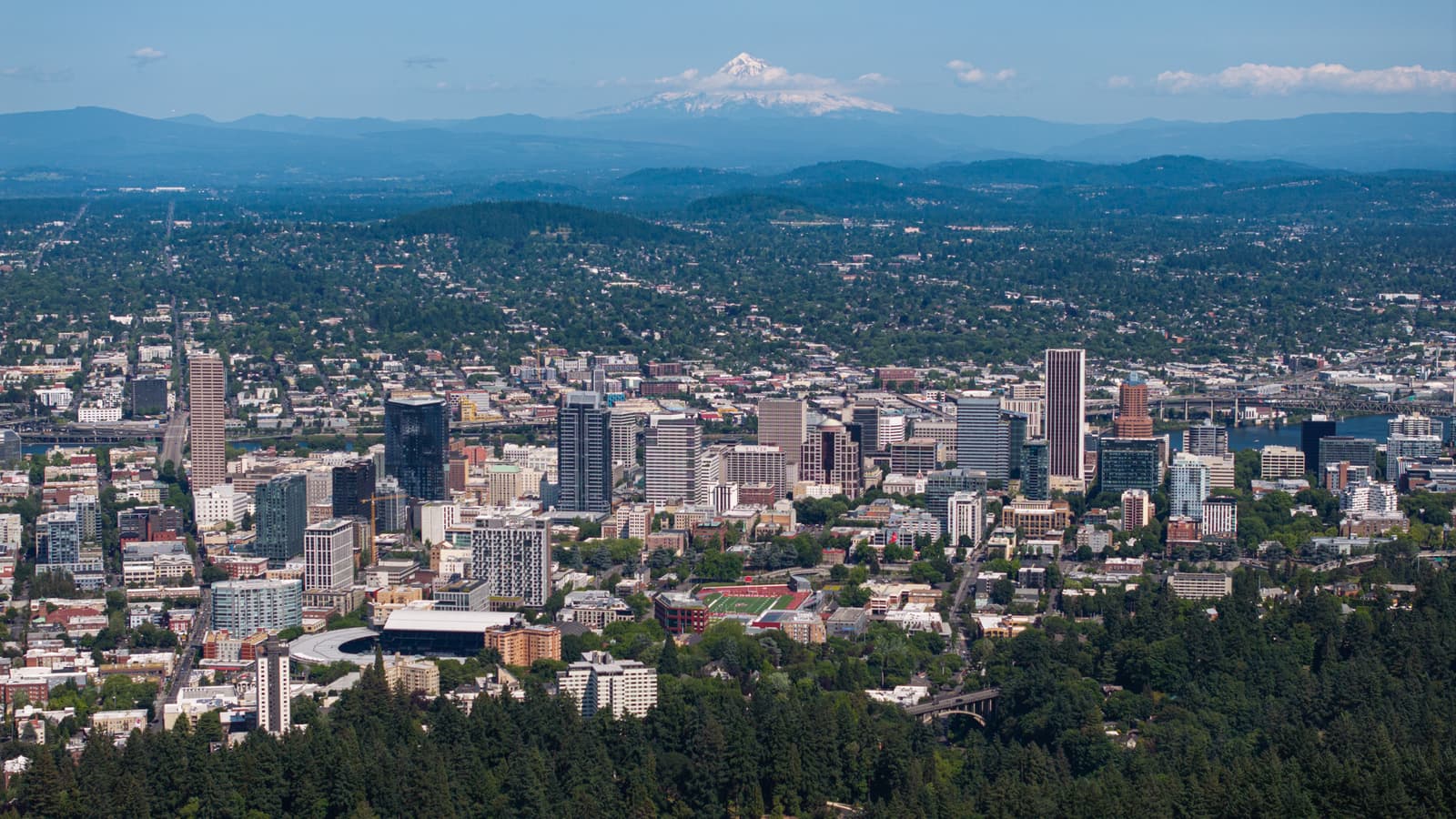
Portland
United States
Denver
Portland
How do Denver and Portland compare?
This is the West-of-the-Rockies decision that hinges on terrain. Denver is the mile-high gateway: dry mountain air, breweries on every corner of LoDo, green chile burritos at Santiago's, and a 90-minute drive that puts you on a 14,000-foot summit by lunch. Portland is the Pacific Northwest counterweight — drizzle on Burnside, food carts crammed into downtown lots, Powell's City of Books for an entire afternoon, and Cascadian rainforest 40 minutes east at Multnomah Falls. The light is different in each city by 11 AM, and so are the wardrobes on the street.
Portland is slightly easier on the wallet at about $150/day mid-range against $160 in Denver, and food carts knock another $10–15 off any given meal. Denver wins on outdoor access — mountain biking, skiing, and rafting are all within an hour, and the airport runs nonstops to every Western trail town. Portland wins on coffee, food variety, and the particular joy of Voodoo Doughnut at midnight. Both feel reasonably safe in tourist cores, though Portland's downtown has visible homelessness that genuinely affects how the city reads at street level after 9 PM.
Denver shines May through October; winter is for skiers willing to drive the I-70 corridor in chains. Portland peaks late June through September when the rain pauses; October–April is functional but gray. The Denver–Portland nonstop runs 2 hours 35 minutes on Southwest or Alaska, usually $160–220 round-trip. Pro tip: rent a car in Denver day one and drive Boulder, Estes Park, and Rocky Mountain National Park as a three-day arc — the city itself is a base, not a destination. Pick Denver for mountains, brewing, and altitude; pick Portland for coffee, weirdness, and the green wet edge of the Pacific.
💰 Budget
🛡️ Safety
Denver
Denver is generally safe for visitors in core neighborhoods (LoDo, RiNo, Capitol Hill, Cherry Creek, Wash Park), but property crime and visible homelessness have both risen sharply since 2020. Car break-ins are extremely common — never leave anything visible. The 16th Street Mall and stretches of Colfax Avenue have a rougher feel at night. The bigger danger for most travelers is environmental: altitude, sun, and weather catch visitors off guard.
Portland
Portland is generally safe for tourists but the city has genuinely struggled since 2020. Downtown and Old Town lost considerable foot traffic, and visible homelessness and open drug use are more apparent than in most American cities. West side neighborhoods (Pearl, Nob Hill/NW 23rd, Washington Park) and most east side neighborhoods (Hawthorne, Division, Alberta, Mississippi) feel comfortable day and night. Downtown is improving in 2025-2026 but still patchy after dark.
🌤️ Weather
Denver
Denver has a semi-arid, high-altitude climate with 300+ days of sunshine a year and very low humidity. The altitude and dry air make the sun intense — UV levels are routinely "very high" even in winter. Weather is famously volatile: 70°F one afternoon and snowing the next morning is standard. Afternoon thunderstorms roll off the Front Range most summer days; big snowstorms punctuate winter. Hydrate aggressively regardless of the season — the combination of altitude and dry air dehydrates visitors fast.
Portland
Portland has a cool marine climate — famously rainy, but not in the way visitors expect. The rain is a persistent drizzle, not heavy downpours. Portland actually receives less annual rainfall (about 36 inches) than New York or Houston, but it is spread over 150+ rainy days from October through May. Summers (July through September) are gloriously dry, sunny, and warm. Winter brings occasional snow that typically melts within a day or two.
🚇 Getting Around
Denver
Denver is a sprawling car-oriented metro with a workable (by US standards) light rail and commuter rail network operated by RTD. The A Line train from Union Station to the airport is one of the best airport transit links in any US city. Core neighborhoods (LoDo, RiNo, Capitol Hill, Wash Park) are walkable individually, but connecting them typically means rideshare or transit. Rideshare is cheap and ubiquitous.
Walkability: Denver is walkable within neighborhoods but sprawling overall. LoDo, RiNo, Capitol Hill, Cherry Creek, and Wash Park each work on foot. Connecting them means rideshare, transit, or cycling. The altitude makes the first 24-48 hours of walking unexpectedly tiring — go slower than you think you should. Summer sun at 5,280 ft is aggressive even in cooler temperatures.
Portland
Portland has the most useful public transit of any city its size on the West Coast. MAX light rail (5 lines) connects the airport, downtown, and key suburbs. The Portland Streetcar loops through downtown, the Pearl, and east side neighborhoods. TriMet buses fill in the gaps. Within individual neighborhoods — Pearl, Hawthorne, Alberta, Mississippi, NW 23rd — walking is the right answer. Portland is also one of the best US cycling cities with protected lanes and a cyclists-first culture.
Walkability: Portland is one of the most walkable large cities in the American West — grid-patterned, flat on the east side, and most interesting neighborhoods (Pearl, NW 23rd, Hawthorne, Division, Alberta, Mississippi, Belmont) have dense commercial strips. Downtown blocks are short (only 200 ft) which makes walking feel quicker. Expect rain 9 months of the year — a good waterproof shell is more useful than an umbrella in the Portland wind.
📅 Best Time to Visit
Denver
May–Jun, Sep–Oct
Peak travel window
Portland
Jun–Sep
Peak travel window
The Verdict
Choose Denver if...
you want a mile-high Rockies gateway — breweries, legal cannabis, Red Rocks, and ski towns an hour west
Choose Portland if...
you want craft beer everywhere, no sales tax, food carts, Powell's Books, and the Cascades plus Coast at the doorstep
Portland
Frequently asked
Is Denver or Portland cheaper?
Portland is cheaper on average. A mid-range day in Denver costs about $305 vs $260 in Portland, so Portland saves you roughly $45 per day compared to Denver.
Is Denver or Portland safer?
Denver scores higher on our safety index (70/100 vs 62/100). Denver is generally safe for visitors in core neighborhoods (LoDo, RiNo, Capitol Hill, Cherry Creek, Wash Park), but property crime and visible homelessness have both risen sharply since 2020.
Which has better weather, Denver or Portland?
Portland has the more temperate climate year-round. Portland has a cool marine climate — famously rainy, but not in the way visitors expect. The rain is a persistent drizzle, not heavy downpours. Portland actually receives less annual rainfall (about 36 inches) than New York or Houston, but it is spread over 150+ rainy days from October through May. Summers (July through September) are gloriously dry, sunny, and warm. Winter brings occasional snow that typically melts within a day or two.
When is the best time to visit Denver vs Portland?
Denver peaks in May–Jun, Sep–Oct. Portland peaks in Jun–Sep. Both peak in Jun, Sep, so a single trip pairs them naturally.
How long is the flight from Denver to Portland?
Roughly 2h 26m on a direct flight (about 1,579 km / 980 mi). One-way fares typically run $250-700 depending on season and how far in advance you book.
How do daily costs in Denver and Portland compare?
In Denver: budget ~$110-160/day, mid-range ~$230-380/day, luxury ~$600+/day. In Portland: budget ~$90-140/day, mid-range ~$200-320/day, luxury ~$500+/day.
You might also compare
DenvervsPortland
Try another